 Bắc Ninh


Bac Ninh creates high quality workforce to meet global standards
BAC NINH – The Northern industrial hub Bac Ninh is accelerating efforts to develop a highly skilled workforce capable of meeting international standards, as the province seeks to attract investment in advanced manufacturing and strengthen its role as one of Vietnam’s key growth engines.
Located in the Northern Key Economic Region and along the country’s major north-south economic corridor, Bac Ninh has emerged as a manufacturing powerhouse, driven by rapid industrialization and a strong influx of foreign investment.
 |
|
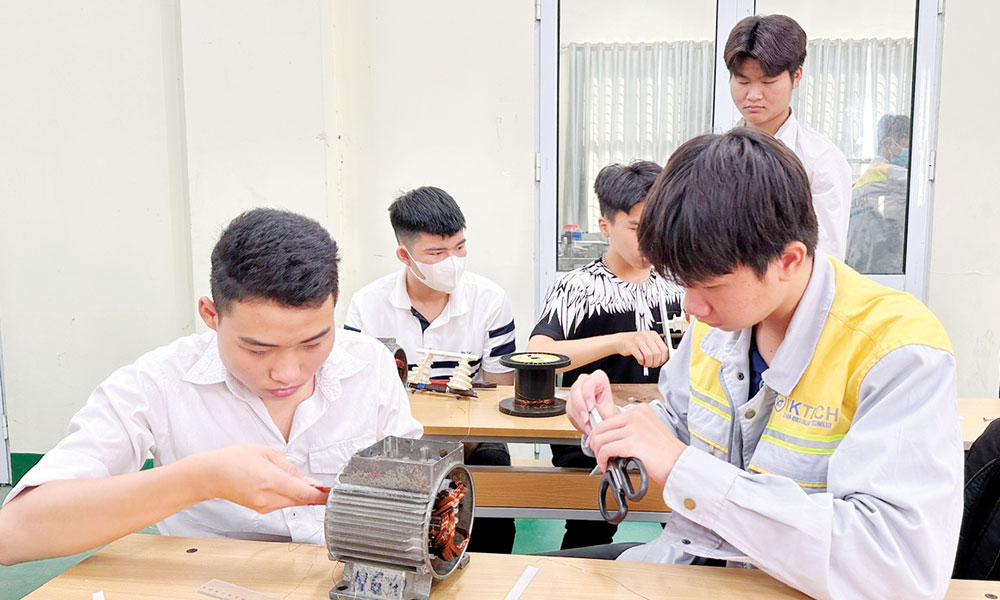
Students of the Vietnam–Korea College of Technology Bac Giang participate in a practical training session. |
The province currently has 35 industrial parks approved for development.
As industrial expansion continues, labor patterns are shifting. Workers are increasingly moving from non-industrial areas into industrial parks and from domestic private enterprises to foreign-invested companies.
Electronics manufacturing and assembly account for around 60% of the province’s workforce, while garment production represents 16%, with other sectors making up the remainder.
The demand for highly qualified workers is expected to rise sharply. In 2026, businesses in Bac Ninh are seeking personnel in engineering, supply chain management, automation and quality control to support high-tech production standards.
By 2030, enterprises across the province are projected to require approximately 1.4 million workers as production capacity expands, particularly those with technical and professional qualifications.
Several vocational disciplines already enjoy near-full employment rates. Graduates in industrial electricity, metal cutting, automotive technology and welding are almost immediately recruited by businesses, with starting monthly salaries ranging from 10 million to 12 million VND. Companies are also facing shortages of workers in semiconductor and microchip-related industries.
Industry demand is evolving beyond traditional vocational skills. Employers increasingly require workers with internationally recognized competencies, foreign-language proficiency, digital capabilities, technological literacy and the ability to operate in multinational environments.
To address these challenges, vocational institutions across Bac Ninh have begun overhauling training programmes and introducing courses aligned with emerging technologies, including artificial intelligence and advanced manufacturing.
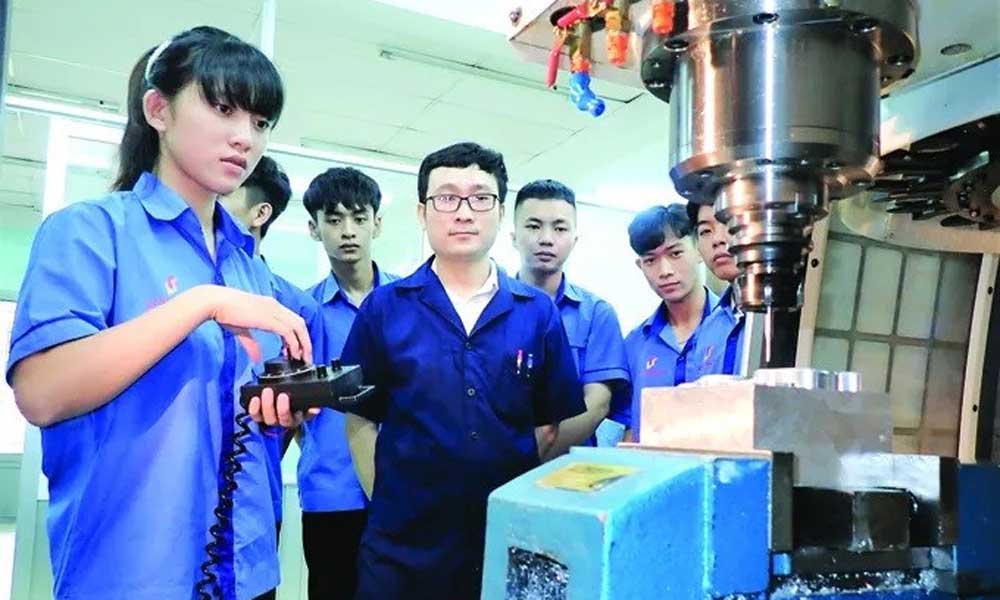
The Bac Giang College of Industrial Technique in Bac Giang ward, one of the province’s leading vocational institutions, has launched new programmes in mold manufacturing, mechatronics engineering technology, electronics technology and building energy systems. Training programmes emphasize practical learning and the application of advanced technologies in industrial settings.
Than Van Hung, Vice Principal of the college, said curricula are designed around the requirements of modern production lines and developed in close cooperation with major enterprises.
Students are given opportunities to work with industrial equipment, operate machinery and gain experience in professional workplace discipline before graduation.
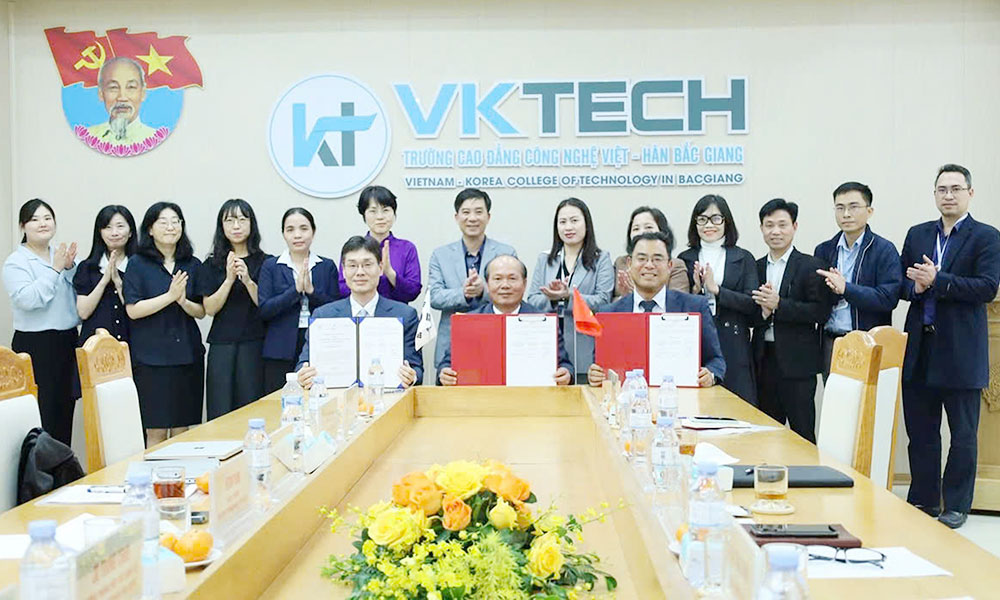
International cooperation has also become a central component of workforce development. In May 2026, Bac Ninh College of Electromechanics and Construction partnered with Yantai Vocational College in China to provide vocational training based on international standards.
The cooperation includes enhanced foreign-language instruction, technical skills development, faculty and student exchanges, business networking and employment support. Students participating in the program will receive tuition waivers during 18 months of study in China.
Local authorities are also introducing policy support. In December 2025, the provincial People’s Council approved a resolution establishing incentives for vocational training and workforce development in semiconductors, artificial intelligence and digital technologies for the 2025-2030 period.
The policy aims to reduce training costs for students while encouraging enrollment in sectors experiencing labor shortages and requiring advanced technical skills.
Looking ahead, provincial authorities are considering investment in key training institutions, university urban zones, scientific research centers and innovation hubs. Bac Ninh also plans to attract major corporations to invest in vocational education linked to strategic industries.
Doan Xuan Thanh, Deputy Director of the provincial Department of Education and Training, said vocational institutions are being directed to prioritize training in artificial intelligence, semiconductors, microelectronics, information technology, automation, precision engineering, logistics, industrial management and high-value service industries.
He added that schools are strengthening cooperation with businesses in curriculum design and research, while expanding partnerships with leading international universities.
Training programmes are also being updated to international standards and supported by advanced educational technologies to keep pace with rapid technological change.
With high-tech industrial parks preparing to welcome new investors and manufacturing projects, provincial officials view workforce development as a critical factor in sustaining Bac Ninh’s next phase of economic growth and industrial transformation.








Reader's comments (0)