 Bắc Ninh


Vietnam eyes stronger education cooperation with UK
At a meeting with Baroness Smith of Malvern, Minister of State (Minister for Skills) at the Department for Education, the two sides exchanged experience in general education reform, digital transformation, teacher development policies and efforts to make English a second language in schools.
A Vietnamese delegation led by Standing Deputy Minister of Education and Training Pham Ngoc Thuong has held a series of meetings with UK government agencies and education organisations on November 23-24 to promote bilateral cooperation, focusing on making English a second language in Vietnamese schools.
 |
|
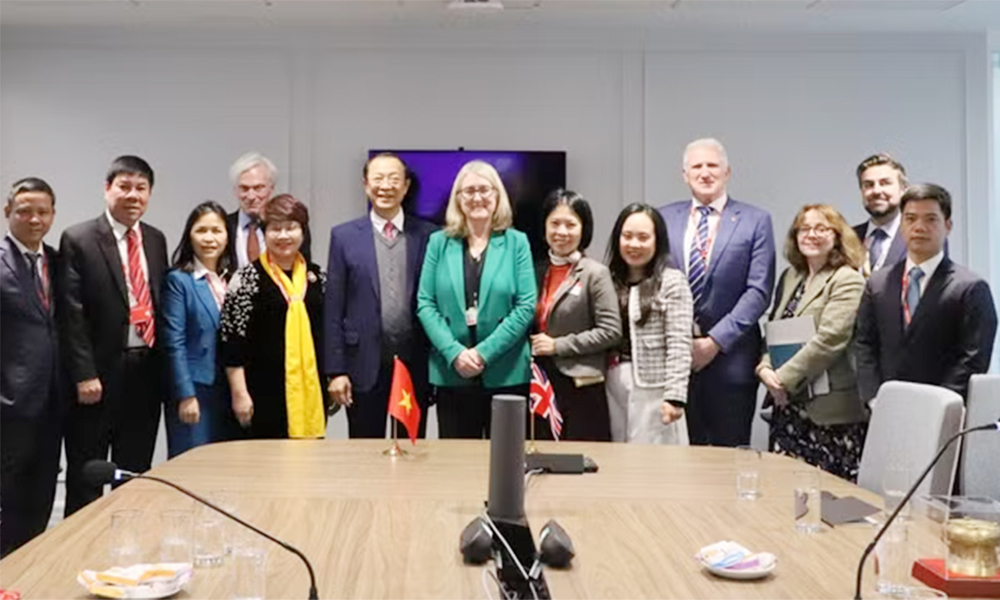
Officials of the Vietnamese Ministry of Education and Training and the UK Department for Education pose for a group photo. (Photo: VNA) |
At a meeting with Baroness Smith of Malvern, Minister of State (Minister for Skills) at the Department for Education, the two sides exchanged experience in general education reform, digital transformation, teacher development policies and efforts to make English a second language in schools.
The meeting aimed to translate into practical cooperation the memorandum of understanding signed between the two sides in Hanoi in October 2026.
The Vietnamese side sought UK experience in developing general education curricula in the context of the Fourth Industrial Revolution, applying digital technologies to student testing and assessment, and training and developing teachers.
It also emphasised the need to shift from teaching English merely as a foreign language towards creating an environment where it is regularly used in schools.
The UK side expressed interest in this direction and affirmed its commitment to supporting connections between the Vietnamese Ministry of Education and Training and UK businesses and educational institutions.
At the working session with the UK Department for Business, Innovation and Science and Trade, the two sides discussed how the UK's strengths in educational technology, teacher training, English-language learning materials, digital platforms and artificial intelligence (AI) can support Vietnam's priorities.
They also exchanged views on challenges in improving English proficiency and policies governing international schools.
The discussions identified two key areas for cooperation related to teacher development and the application of educational technology and AI.
The two sides will continue sharing experience in training, professional development and assessing English teachers' competencies, while exploring policies, working conditions and remuneration to attract and retain teachers.
The UK side would connect capable businesses and organisations providing digital platforms, learning materials and AI solutions suited to Vietnam's needs and implementation conditions, in line with each country's regulations.
During a visit to the Vietnamese Embassy in the UK, Thuong praised the reputation and contributions of British education to Vietnam's human resource development.
He affirmed that Vietnam welcomes reputable UK education groups and organisations offering technological solutions and platforms to support the implementation of the scheme to make English a second language in Vietnamese schools.
The delegation also had a working session with the British Council, attended a Vietnam–UK roundtable on English as a second language, and held discussions with experienced English-language training and educational technology providers, including Efekta Education, uTalk Language Learning and Pearson.
The Ministry of Education and Training and the Vietnamese Embassy agreed to maintain regular exchanges to follow up on the outcomes of the visit and turn agreed directions into concrete cooperation activities.




Reader's comments (0)