 Bắc Ninh


Bac Ninh expands smart factory model
BAC NINH - Bac Ninh province is expanding the smart factory model among local manufacturers as part of efforts to improve productivity, cut costs and help Vietnamese firms join global supply chains.
On September 21, 2020, the Ministry of Industry and Trade, the provincial People's Committee and Samsung Electronics Vietnam Co Ltd in Bac Ninh signed a memorandum of understanding to strengthen the competitiveness of Vietnamese businesses and enhance their participation in supply chains.
 |
|
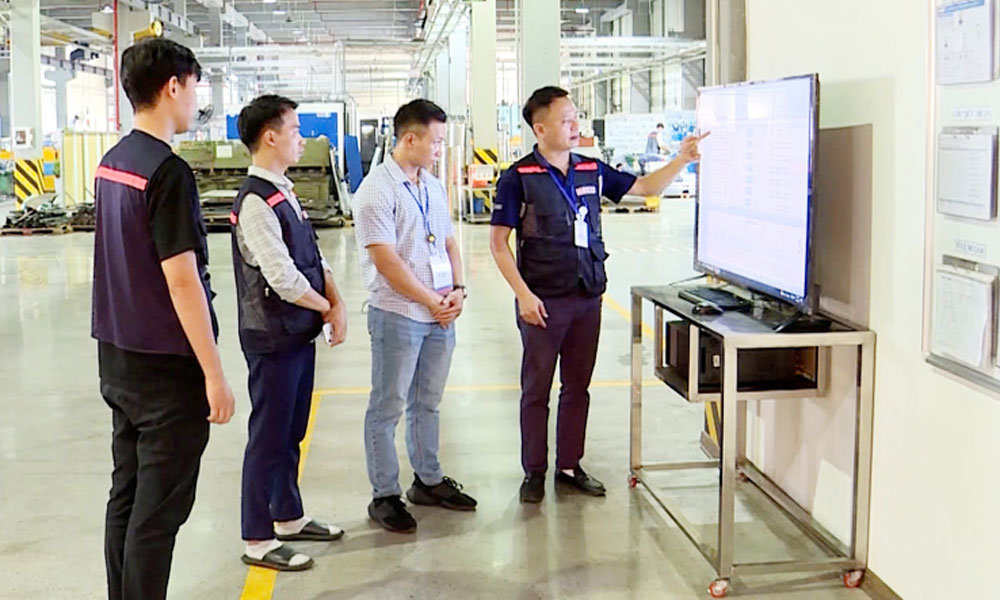
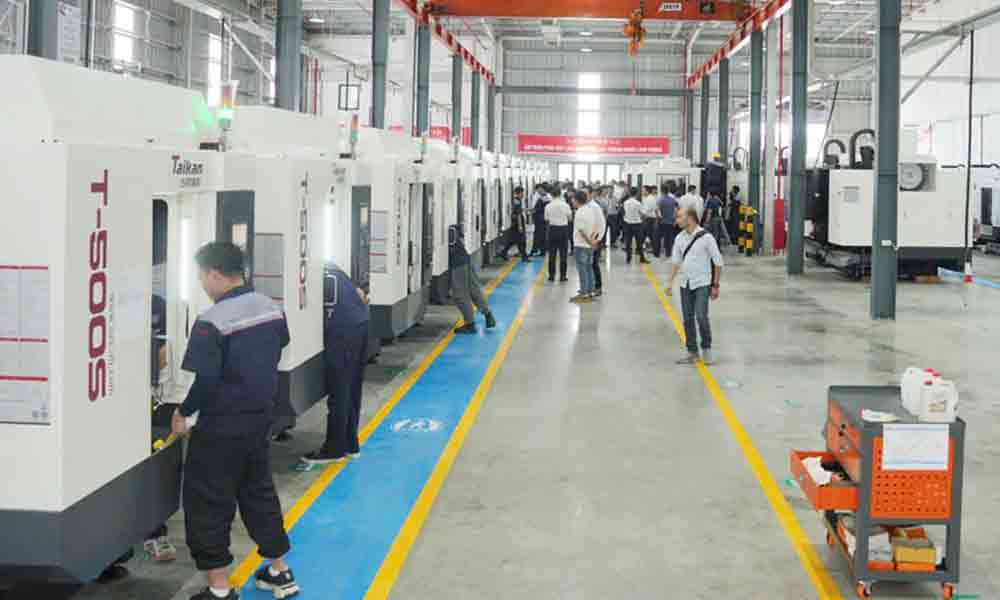
A Samsung expert guides the operation of the smart factory model at AMA Holdings Investment JSC in Yen Phong Industrial Park. |
The programme supports companies in improving production, digitising operations, connecting data, adopting automation and developing smart factories, with the aim of gradually expanding the model across industrial parks.
Under the agreement, the Ministry of Industry and Trade, Samsung Vietnam and provincial agencies have implemented programmes to help businesses improve production, apply digital technologies and develop smart factories.
The smart factory development cooperation project focuses on improving production capacity, management and digital transformation at supporting-industry companies.
Businesses are encouraged to identify bottlenecks and adopt suitable solutions, gradually digitising operations and connecting data instead of making widespread investments in machinery and robots.
The transformation is assessed on a smart factory scale with five levels, ranging from information collection and monitoring to integration, analysis and control, with the ultimate goal of autonomous operations.
Most participating companies initially ranked at Level 1 but moved to Level 2 or 3 after receiving consultancy.
At Chien Thang Co Ltd in Que Vo II Industrial Park, the company focused on digitising production management and warehouse operations. Data from its extrusion and painting workshops is updated in real time through the CT-MES system.
Production standards have been standardised, with data displayed on dashboards to allow managers to monitor operations remotely. Mould and buffer warehouses have also been visualised, improving inventory control.
Data-driven management helped cut buffer inventory by 50% and reduce the extrusion cycle time by 30 seconds. The company's smart factory score rose from 1.1 to 2.8 under Samsung's assessment system.
Digital solutions were later expanded to quality control as companies sought to improve operational efficiency.
Manutronics Vietnam JSC in Tien Son Industrial Park developed a data dashboard to update and share production information in real time and automated visual inspection processes.
An early-warning system on the production line helps detect and address problems promptly, reducing production time and repair costs. The company's smart factory score increased from 1.1 to 2.7.
At An Lap Plastics Co Ltd in Dai Dong-Hoan Son Industrial Park, digitalisation was expanded to raw material and warehouse management, covering model changes, mould searches, inventory checks and control of plastic pellet humidity.
Model changeover time fell by 27%, while the defect rate declined by 38%. The company's smart factory score rose from 1.0 to 2.3.
The smart factory model has also been expanded to many other businesses across the province. From 2022 to 2025, 16 companies in Bac Ninh took part in the smart factory development cooperation project.
Kim Tea Hoon, Deputy General Director in charge of the purchasing centre at Samsung Vietnam, said the project had worked with 82 Vietnamese companies since 2022 to improve operations and build smart factory platforms, while training 123 experts.
After the consultancy phase, companies continue to develop their systems with online guidance from South Korean experts.
In Bac Ninh, the programme is tailored to the practical needs of each business. Samsung experts work with provincial agencies to survey and assess existing operations, identify bottlenecks and recommend suitable solutions.
Nguyen Nhu Long, Deputy Head of the provincial Industrial Parks Management Board, said expanding the smart factory model would help companies raise productivity, reduce costs, improve the quality of their workforce and strengthen the competitiveness of the supporting industry.
Better control of production data, quality and delivery schedules gives companies greater capacity to meet the requirements of multinational corporations and participate more deeply in global supply chains.














Reader's comments (0)