 Bắc Ninh


Bac Ninh seeks solutions for sustainable industrial park development in 2026-2030
BAC NINH - Bac Ninh is seeking science and technology-based solutions to address infrastructure, workforce and supply chain bottlenecks in its industrial parks, as the city steps up efforts to promote sustainable development and attract high-tech investment in the 2026-2030 period.
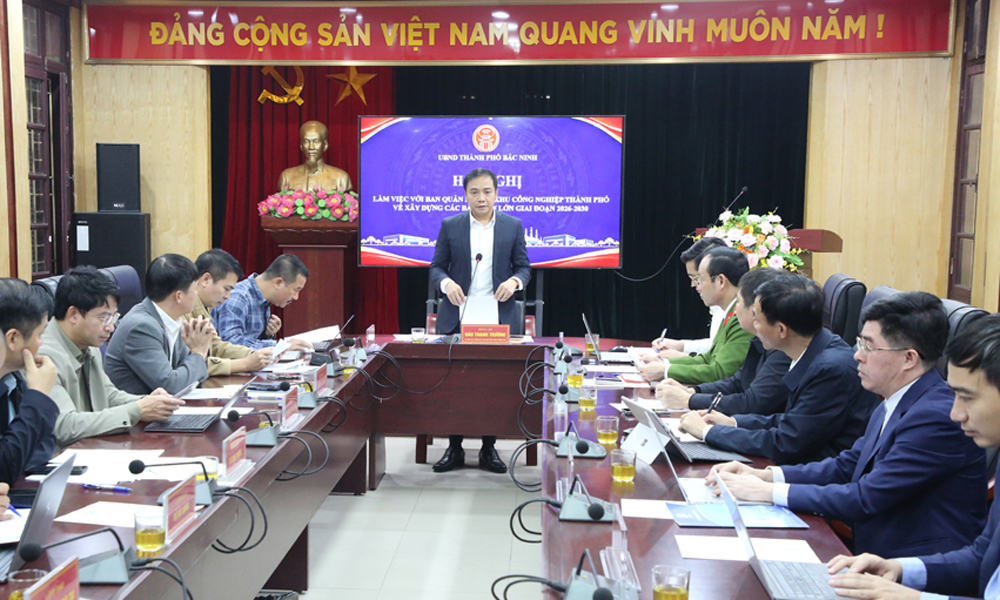
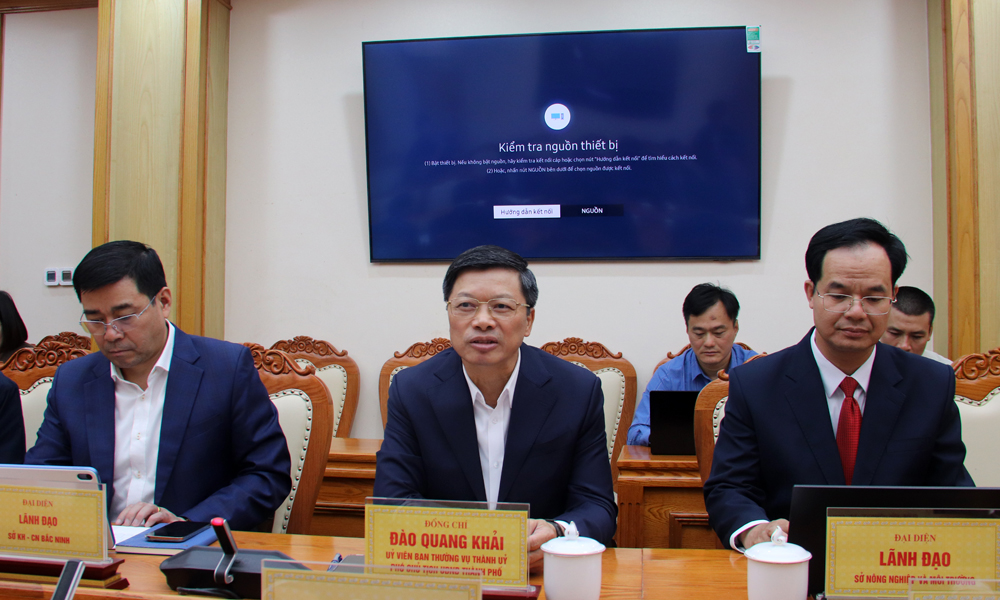
Dao Thanh Truong, member of the municipal Party Standing Committee and Vice Chairman of the municipal People's Committee, chaired a meeting on November 25 with the municipal Industrial Parks Management Board, relevant departments and representatives of Vietnam National University, Hanoi, to identify major and urgent challenges facing the city's industrial parks.
 |
|
An overview of the meeting. |
Under the approved master plan, Bac Ninh has 72 industrial parks covering approximately 21,520 hectares.
So far, 42 have received investment policy approval, spanning about 12,425 hectares, with an occupancy rate of 51.72%. This represents an increase of seven approved industrial parks compared with the same period in 2025.
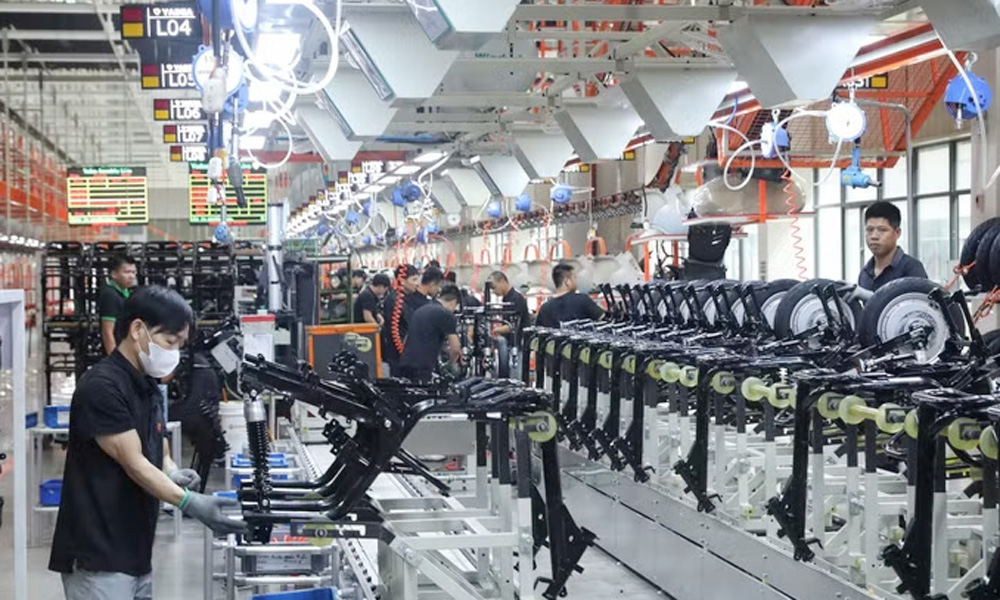
Of these, 25 industrial parks are operational, hosting 2,319 active projects and 2,106 businesses that employ more than 656,500 workers.
In the first 11 months of 2026, businesses in the industrial parks recorded industrial production value of 1,936 trillion VND (about 74.9 billion USD) and revenue of more than 2,267 trillion VND, while contributing nearly 22 trillion VND to the state budget.
Newly registered and adjusted investment capital exceeded 5.36 billion USD, far surpassing the annual target of at least 1.6 billion USD. Disbursed investment reached 1.78 billion USD. All operational industrial parks have centralised wastewater treatment systems meeting environmental standards.
Despite these achievements, the Industrial Parks Management Board identified several bottlenecks threatening sustainable growth and the attraction of high-tech investors.
To address these issues, the board proposed nine major challenges grouped into four priority areas for 2026-2030: ensuring stable electricity supplies and easing traffic congestion; developing shared data systems for operational management, environmental monitoring and incident prevention; expanding domestic supplier networks and training workers to meet actual demand; and preparing specialised infrastructure for high-tech industries.
Participants also discussed comprehensive solutions involving environmental protection, drainage infrastructure, supply chain development, worker housing, high-quality workforce training, shared data systems and the development of the low-altitude economy. They called for closer involvement of businesses, research institutes and universities in tackling these challenges.
Concluding the meeting, the municipal leader stressed that science and technology initiatives must deliver practical results and improve management, governance and production activities in industrial parks.
He called for the development of a shared digital data platform as a fundamental priority, requiring standardised information, unified identification codes and interconnected systems to facilitate data sharing and prevent duplication and waste of resources.
He also urged relevant agencies to review and streamline the proposed challenges, selecting only major interdisciplinary issues requiring collaboration among scientists, universities, research institutes and businesses.
Each initiative must have a clearly defined application, evaluation criteria, expected outputs and measurable benefits, particularly in improving governance and supporting the city's double-digit economic growth target.
 |
|
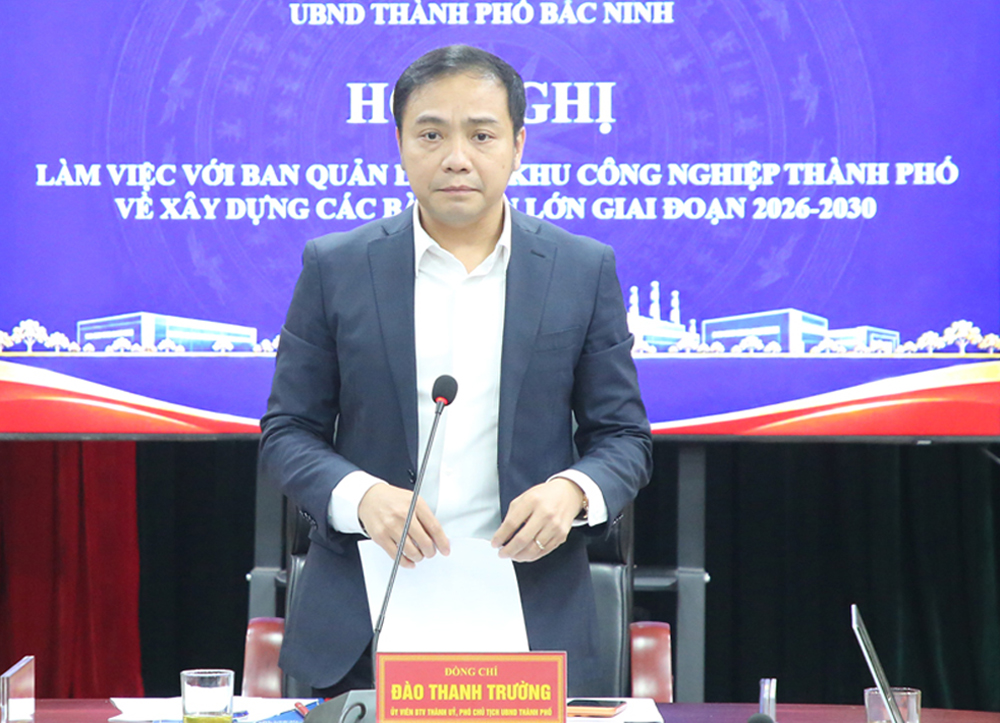
Vice Chairman of the municipal People's Committee Dao Thanh Truong speaks at the meeting. |
The municipal Department of Science and Technology will take the lead in finalising the list and coordinating with relevant partners to determine implementation priorities. Initially, two to three qualified projects are expected to be selected for implementation in 2027.
The Vice Chairman also called for stronger cooperation between authorities, scientists and businesses, encouraging research, pilot projects and technology transfer linked to practical needs.
The city will facilitate data sharing, provide testing sites and consider appropriate mechanisms for commissioning research and assigning tasks to ensure the initiatives are implemented effectively, he said.




Reader's comments (0)