 Bắc Ninh


Phat Tich: A land of Buddha and mythical fairies
BAC NINH - Phat Tich Commune, home to Phat Tich Pagoda and Lan Kha Mountain, is renowned not only for its national treasures dating back to the Ly Dynasty but also for legends of a mythical fairyland. The area is now exploring new development opportunities through its traditional festival and a conservation and restoration plan aimed at preserving and promoting its heritage.
A Buddhist land steeped in fairy legends
In the past, Phat Tich was known as a land of Buddha and fairies, where the tranquillity of Buddhist worship blended with mythical tales, with every stone and pine tree seemingly holding a story.
 |
|
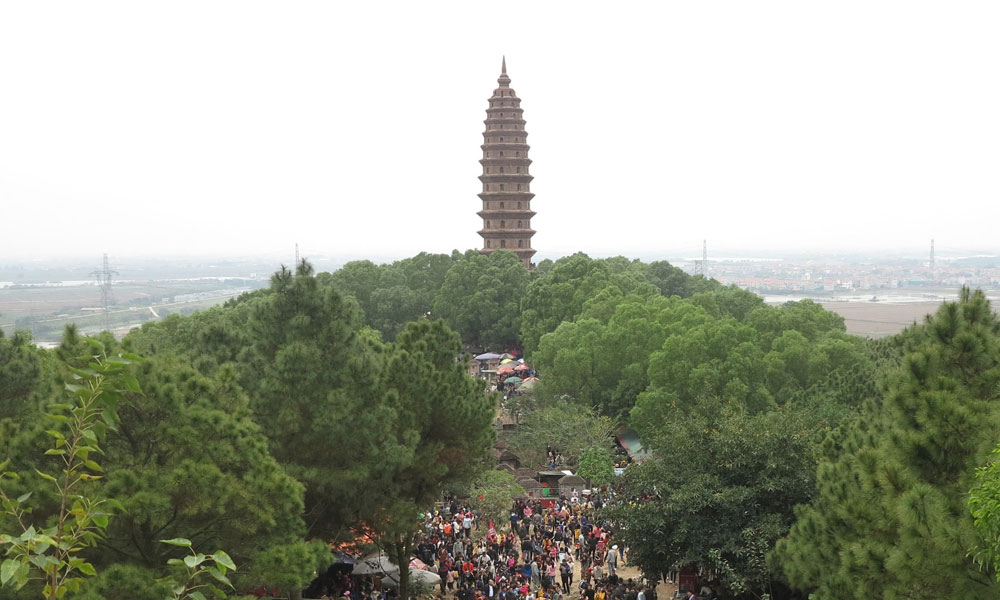
Lan Kha is a low mountain covered in lush greenery. |
Lan Kha is a low rocky mountain covered in lush vegetation, also known as Phat Tich Mountain or Fairy Mountain. Winding paths through rocks and greenery create a natural and peaceful setting. At its summit lies a flat, square-shaped rock, which local residents believe to be the fairy chessboard of legend.
According to folklore, a woodcutter named Vuong Chat once went up the mountain to collect firewood and came across two elderly men with long white beards playing chess on the rock.
As they played, the men ate peaches. Fascinated by the game, Vuong Chat picked up a peach stone and held it in his mouth. When the game ended, he looked down and was astonished to find that the handle of his axe had rotted away.
The two old men had also vanished behind the pine trees. Looking at his reflection in the water, he saw that his hair and beard had turned completely white and realised he had spent years in the fairy realm.
The legend of fairies visiting the area gave rise to the name Tien Du, while Lan Kha Mountain takes its name from the story of the rotting axe handle.
At the foot of the mountain, ancient Phat Tich Pagoda nestles amid lush greenery and is also associated with the legend of Tu Thuc and the fairy Giang Huong.
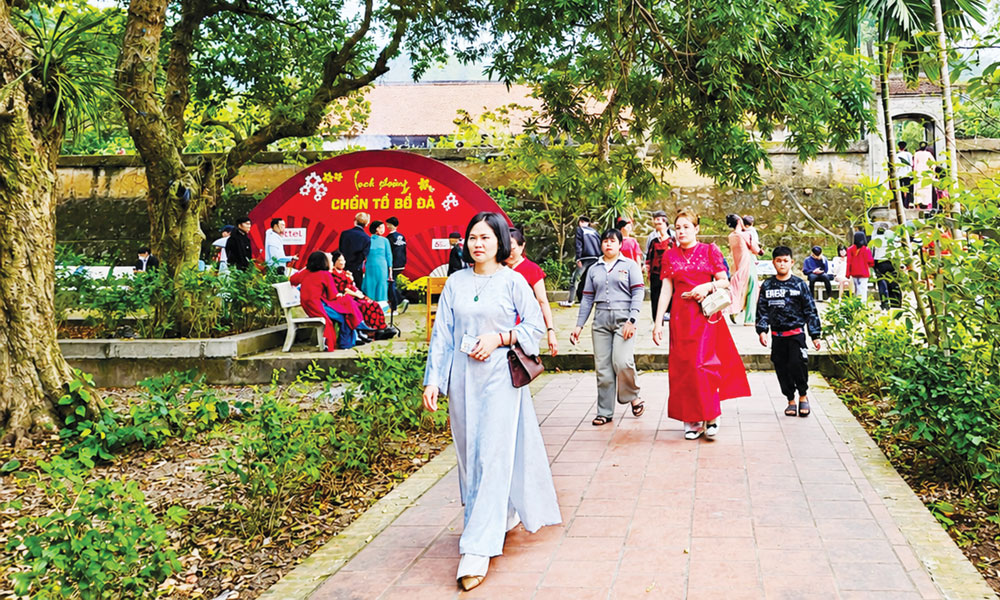
Legend has it that the mountain and pagoda gardens were once filled with peony flowers. Every spring, the flowers bloomed in brilliant red, attracting visitors from far and wide to admire them and attend the festival.
Enchanted by the beauty of the earthly world, the fairy Giang Huong descended to join the festivities. However, she accidentally broke a peony branch in the pagoda garden and was detained by a young monk.
Seeing this, Tu Thuc offered his coat to make amends on her behalf. Touched by his kindness, Giang Huong invited him to the fairy realm, where they pledged their love. Their romance has since remained intertwined with the peonies and the land of Phat Tich.
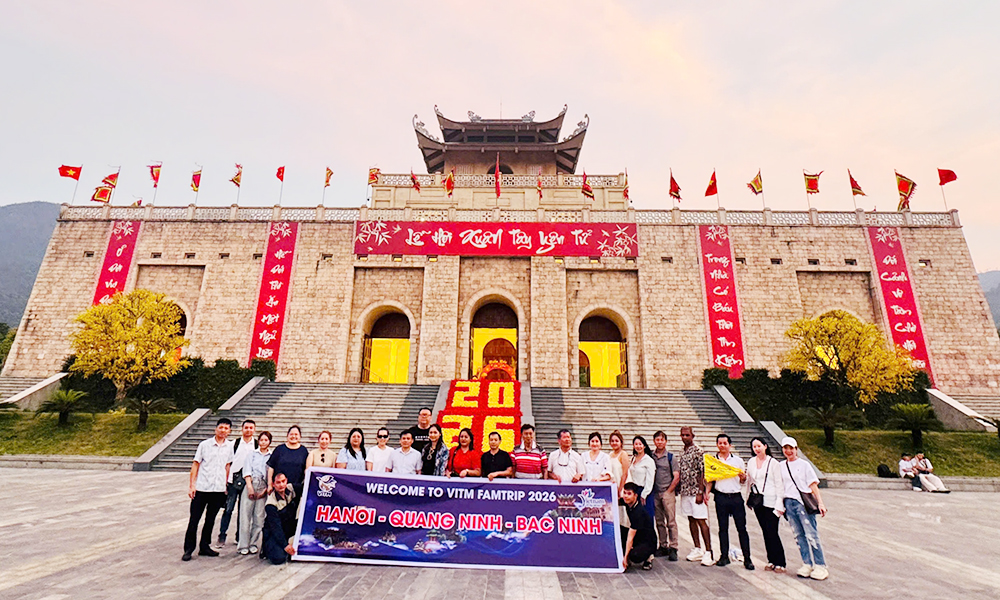
Phat Tich Pagoda was built by King Ly Thanh Tong in 1057 and was originally named Van Phuc Pagoda. In 1066, the king ordered the construction of a tall tower. After the tower collapsed, an intact blue-stone statue of Amitabha Buddha, originally gilded, was discovered inside. In recognition of the remarkable discovery, the neighbouring Hoa Ke hamlet was renamed Phat Tich.
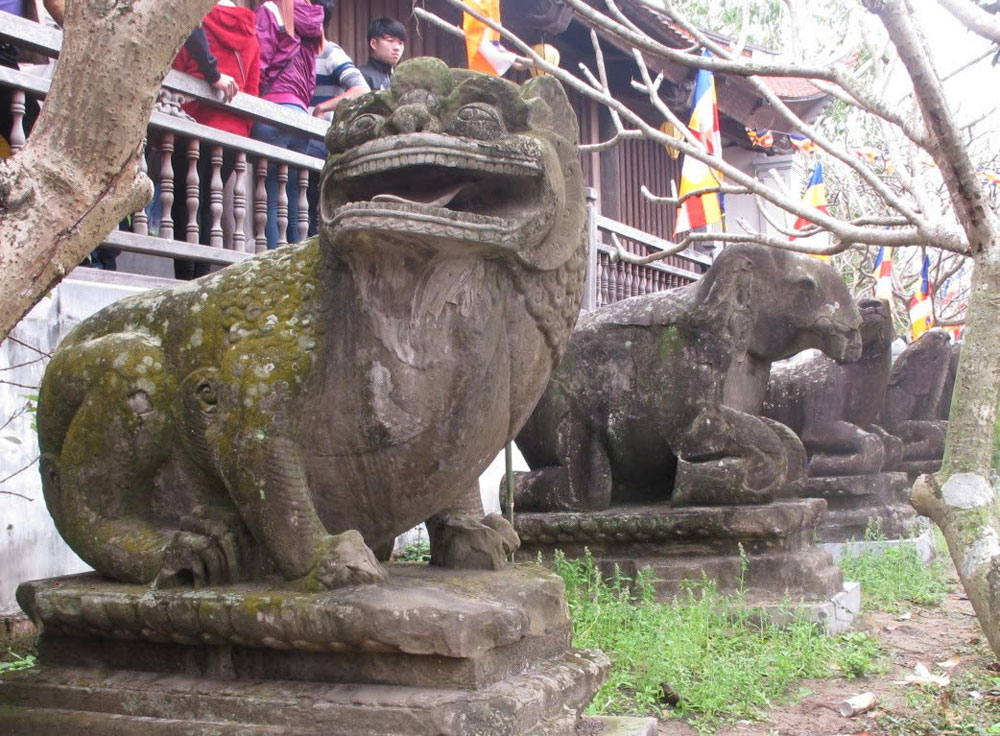
The pagoda was recognised as a national relic in 1962 and designated a special national relic by the Prime Minister in 2014. It houses two groups of national treasures: the blue-stone Amitabha Buddha statue and 10 stone mythical animal sculptures dating from the Ly Dynasty, considered masterpieces of Vietnamese sculpture.
A destination for cultural and spiritual tourism
These legends are being brought back to life each spring through the annual Peony Viewing Festival, while a recently approved conservation and restoration plan is expected to open up new opportunities for cultural and spiritual tourism.
 |
|
Stone mythical animal sculptures at Phat Tich Pagoda. |
Held on the third and fourth days of the Lunar New Year, the festival marks the start of the spring festival season in the Bac Ninh-Kinh Bac region. Rooted in Buddhist cultural traditions, it also offers visitors an opportunity to pray, explore the pagoda and enjoy the early spring scenery.
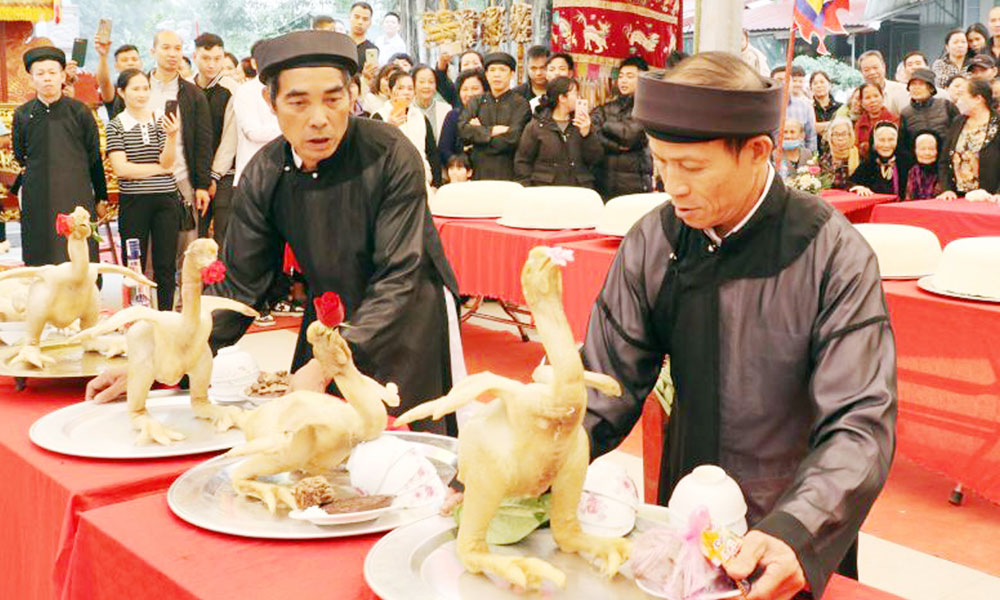
Cultural activities reflect the distinctive traditions of the Kinh Bac region, including Quan ho folk singing performances on boats and stages, as well as traditional games and sports such as To Tom Dien card games, volleyball and wrestling.
On April 14, 2025, the Prime Minister issued Decision No. 757/QD-TTg approving a conservation, restoration and rehabilitation plan for the special national relic of Phat Tich Pagoda.
Covering 33.66 hectares, the plan will be implemented from 2026 to 2035, with a vision to 2050. It aims to develop the site into a cultural, religious and ecological tourism destination for Bac Ninh Province and the Red River Delta.
The plan seeks to combine heritage preservation with tourism development, targeting visitors from within the province, Hanoi and neighbouring localities, particularly festival-goers, religious pilgrims and weekend tourists.
Planned tourism products include sightseeing and exploring the area's cultural, historical and natural heritage, experiencing religious practices and folk culture, expanding festival activities, and promoting local souvenirs and agricultural products.
Phat Tich Pagoda will also be linked with Dau Pagoda, But Thap Pagoda in Tri Qua Ward and Tieu Pagoda in Tam Son Ward, among other sites, to create a themed route showcasing Vietnam's ancient pagodas, alongside festival, spring excursion and Duong River tourism routes.










Reader's comments (0)