 Bắc Ninh


Building sustainable foundation for Dong Ho folk painting craft following its inscription
The inscription of the Dong Ho folk painting craft on UNESCO’s List of Intangible Cultural Heritage in Need of Urgent Safeguarding marks an important milestone for Viet Nam in its efforts to preserve and promote traditional forms of heritage currently facing numerous challenges.
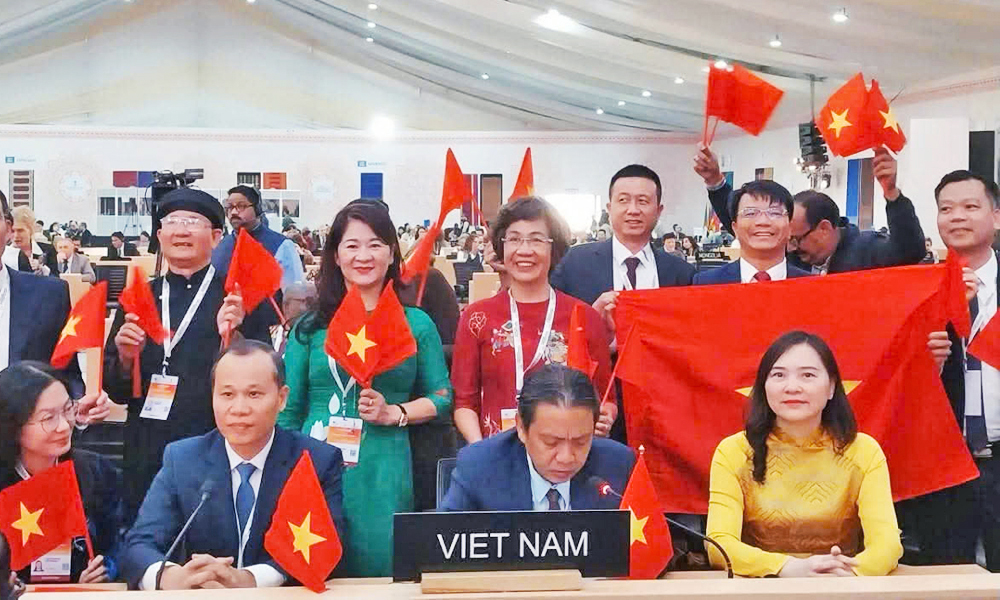
The decision was adopted at the 20th session of the Intergovernmental Committee for the 2003 UNESCO Convention for the Safeguarding of the Intangible Cultural Heritage at 14:38 on December 9 (local time), in New Delhi, India.
 |
|
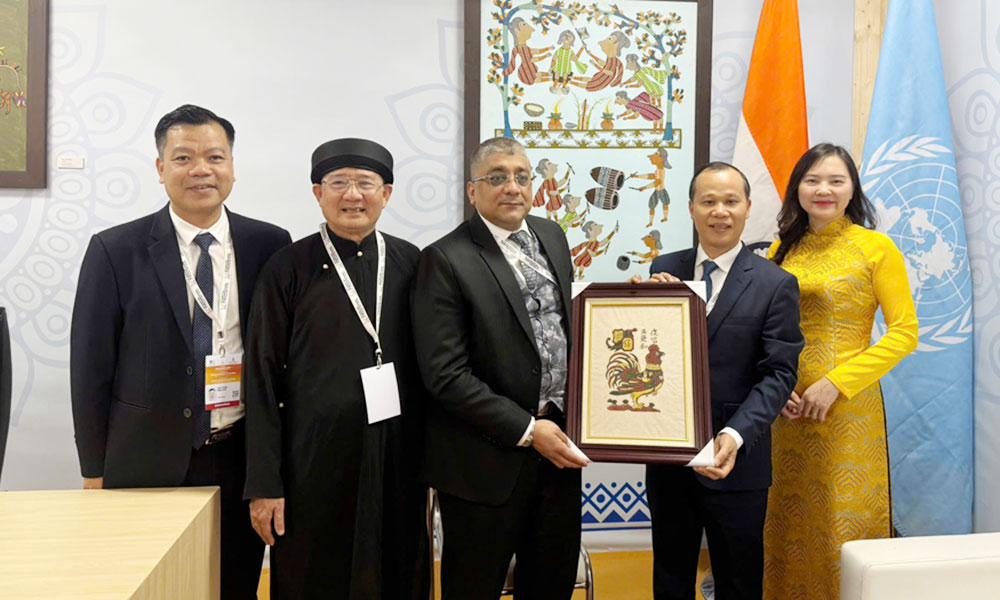
On behalf of Viet Nam and the practitioner community of the Dong Ho folk painting craft, Hoang Dao Cuong, Deputy Minister of Culture, Sports and Tourism and Vice Chairman of the Viet Nam National UNESCO Commission, together with Mai Son, Permanent Vice Chairman of the Bac Ninh Provincial People’s Committee, deliver response remarks and affirm their commitment to implementing safeguarding measures and promoting the heritage’s values following its inscription. |
The inscription ushers in a new phase for safeguarding and enhancing the values of this traditional craft, from the preservation of age-old handmade techniques and the support of artisans to strengthening education and expanding livelihood opportunities linked to the heritage.
Hoang Dao Cuong, Deputy Minister of Culture, Sports and Tourism and Vice Chairman of the Viet Nam National UNESCO Commission granted an interview to further clarify orientations and key tasks following the inscription.
What is the most significant meaning for Viet Nam as the Dong Ho folk painting craft has been inscribed on UNESCO’s List of Intangible Cultural Heritage in Need of Urgent Safeguarding?
The inscription of the Dong Ho folk painting craft on UNESCO’s List of Intangible Cultural Heritage in Need of Urgent Safeguarding carries profound significance for Viet Nam on multiple levels.
 |
|
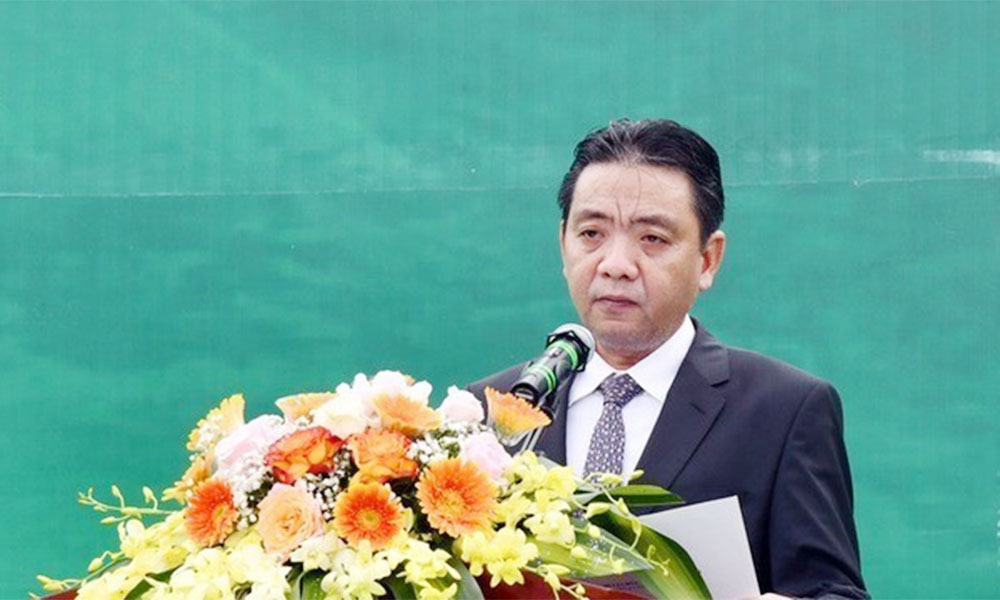
Deputy Minister of Culture, Sports and Tourism and Vice Chairman of the Viet Nam National UNESCO Commission Hoang Dao Cuong. |
First of all, it affirms the unique value of a painting tradition deeply imbued with Vietnamese identity, embodying everything from the craft of making diep paper and the entirely manual woodblock engraving and colour-mixing techniques to the folk philosophy conveyed in each composition and narrative.
The inscription shows that the international community recognises the Dong Ho folk painting craft not merely as a form of fine art, but as a living testament to the thought, aesthetics and way of life of the Vietnamese people across generations.
More importantly, its placement on the urgent safeguarding list is a powerful reminder of the heritage’s fragile state. This is not simply an act of honouring; it represents an international commitment requiring us to act promptly and effectively.
It creates the foundation for the state, local authorities, and artisan communities to access resources, experts, and support programmes aimed at restoring the creative environment, facilitating the transmission of skills, and expanding the space for showcasing Dong Ho folk paintings to the public.
I believe the greatest significance lies in positioning the heritage as a priority — protecting it as an essential part of the nation’s identity amid its rapid modernisation.
 |
|
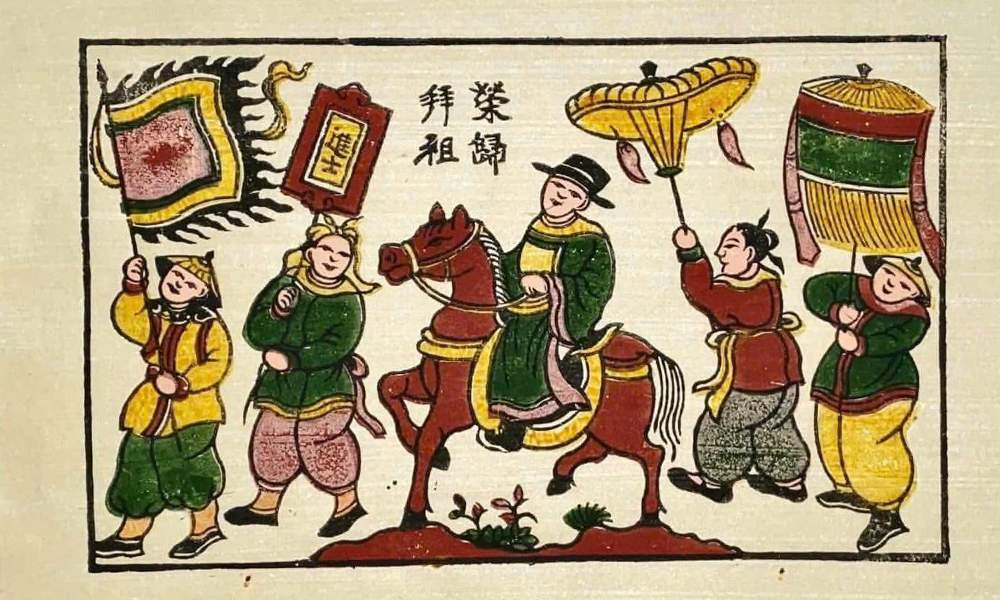
A Dong Ho folk painting entitled "Vinh quy bai to". |
UNESCO’s inscription is also an opportunity to inspire pride and encourage younger generations to engage with the heritage, ensuring its sustainable transmission. This is what makes our responsibility to safeguard the Dong Ho folk painting craft not only substantial, but more urgent than ever.
UNESCO has highlighted several risks indicating that the Dong Ho folk painting craft is under serious threat. How do you assess the biggest challenges facing the craft at this moment?
UNESCO’s assessments accurately reflect the reality that the Dong Ho folk painting craft is undergoing an extremely challenging phase. In my opinion, the most significant challenge is the sharp decline in the number of artisans.
This craft requires highly skilled practitioners and painstaking manual processes, from making diep paper and mixing natural colours to woodblock carving techniques.
Yet the number of people pursuing the craft has dropped rapidly and many young people do not remain committed long-term, leading to disrupted transmission and the risk of losing core techniques.
In addition, the shrinking market creates substantial pressure. Traditional handmade products require considerable time and cost, while modern consumer preferences tend toward mass-produced decorative items.
This mismatch between artistic value and market demand makes it difficult for artisans to sustain their livelihoods, further reducing motivation to preserve the craft.
Another challenge lies in the deterioration of the creative environment compared to its more prosperous periods in the past. Natural materials are no longer as abundant, and many manual processes require significant investment to improve production conditions.
 |
|
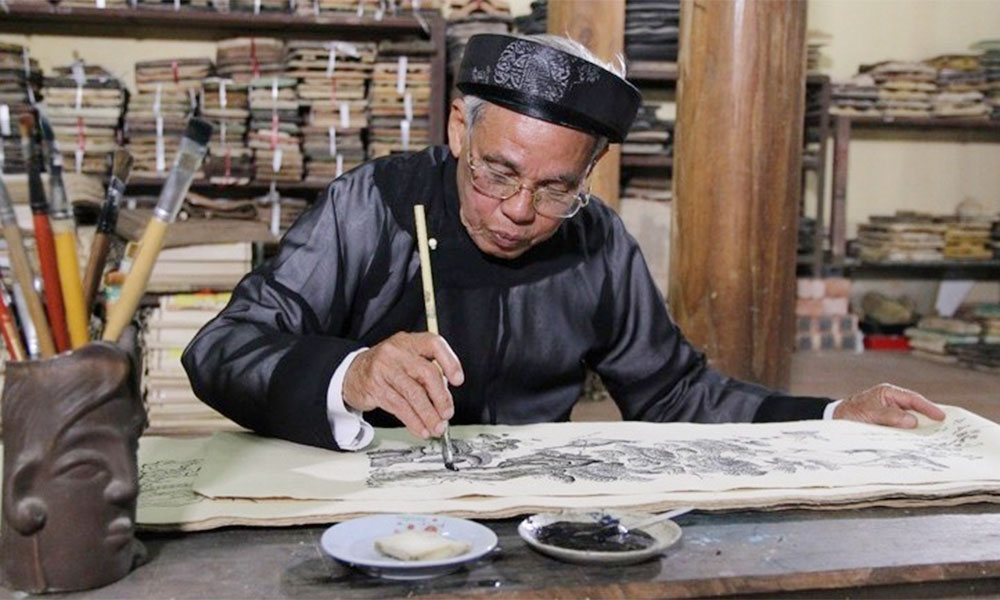
Artisan Nguyen Dang Che makes Dong Ho folk paintings. |
At the same time, urbanisation has altered the traditional village space, disrupting elements that once formed the heritage’s creative ecosystem. I believe that the combination of these factors places substantial strain on the Dong Ho folk painting craft.
It is essential to clearly identify each challenge so that we can apply effective recovery solutions and ensure a sustainable environment for the craft’s development in the coming years.
Given that the number of skilled artisans is decreasing and the transmission of knowledge faces many difficulties, which measures will the Ministry of Culture, Sports and Tourism prioritise to ensure a successor generation and maintain community-based knowledge?
In the context of the number of artisans proficient in the craft declining sharply, the Ministry of Culture, Sports and Tourism has identified an urgent goal: to retain existing master artisans and build a capable successor generation.
On November 23, 2024, the National Assembly passed the 2024 Law on Cultural Heritage, marking an important shift in heritage management and establishing a more comprehensive legal framework for these tasks.
Based on this foundation, priority will be given to programmes that directly support artisans. They are the holders of the core techniques of Dong Ho folk painting, from making diep paper to mastering the woodblock systems and traditional colour palettes.
The ministry will continue reviewing and improving incentive policies to ensure artisans can remain dedicated to the craft, while encouraging them to teach through training classes, practice clubs, and long-term mentorship models.
At the same time, the ministry will strengthen the integration of the craft into schools and cultural institutions through experiential programmes, extracurricular activities, and cooperation with fine arts schools.
Early exposure helps cultivate interest naturally among students, forming a future successor community. We are also studying mechanisms to support learners pursuing specialised training to ensure high-quality, sustainable education.
Another critical direction is to develop a standardised repository of craft knowledge, including detailed records of techniques, procedures, artistic styles and the system of traditional woodblocks. This will serve as a long-term resource for preserving knowledge, ensuring continuity even when artisan numbers decline.
The Ministry of Culture, Sports and Tourism also emphasises combining preservation with development, supporting artisans and craft households in experimenting with new products inspired by Dong Ho aesthetics, thereby expanding market opportunities and motivating young people to stay with the craft.
These initiatives will be implemented synchronously with local authorities and relevant organisations, aiming for the long-term and resilient maintenance of traditional knowledge.
In the nomination dossier submitted to UNESCO, the safeguarding plan with seven groups of tasks has been assessed as a strong point. What concrete steps will the Ministry of Culture, Sports and Tourism take to support livelihoods, expand markets, and create conditions for artisans to remain attached to the craft in the long term?
Within the safeguarding plan’s seven groups of tasks, the Ministry of Culture, Sports and Tourism places strong emphasis on solutions that create sustainable livelihoods and expand the consumption market.
First, the ministry will coordinate with Bac Ninh Province to establish production and business models suited to the craft’s characteristics, helping artisans maintain stable incomes.
Support measures include guidance on accessing preferential loans, investment in improving production facilities, and training courses on market knowledge, promotion, and digital communication.
The ministry will also promote the development of product chains that reflect the Dong Ho identity, from traditional paintings to applied product lines such as decorative items, gifts, and art publications.
A broader market will give the craft more momentum for regular operation and attract younger generations. In addition, the ministry will develop trade promotion programs to bring products to fairs, exhibitions, and cultural festivals at home and abroad, enabling Dong Ho folk paintings to reach a more diverse customer base.
Another important task is creating long-term support mechanisms for artisans. The ministry will continue to refine incentive policies in a practical direction, including healthcare support, periodic allowances, appropriate honorary titles based on contribution levels, and opportunities for artisans to participate in teaching, demonstrations, and creative activities.
These solutions aim to ensure that artisans feel secure in their profession while fostering favourable conditions for the values of Dong Ho folk paintings to be preserved and sustainably developed.
UNESCO’s recommendation that Viet Nam incorporate the heritage into both formal and informal education represents a new direction. How do you assess the prospects and roadmap for integrating the Dong Ho folk painting craft into experiential education programmes for the younger generation?
UNESCO’s recommendation to integrate the heritage into formal and non-formal education creates an important opportunity for Dong Ho folk paintings to reach a broad, sustainable, and long-term audience of young people.
The craft encompasses a distinctive body of knowledge, from the technique of making Diep paper and preparing natural pigments to woodblock carving, visual composition, and the folk philosophies that reflect Vietnamese ways of life, customs, and worldviews.
This rich and evocative material is highly suitable for educational contexts, where it can nurture observation skills, aesthetic capacity, cultural-historical awareness, and creativity among students.
In terms of prospects, the Ministry of Culture, Sports and Tourism assesses that Dong Ho paintings are well aligned with the new national education curriculum, which emphasises competence development, values formation, and hands-on learning.
 |
|
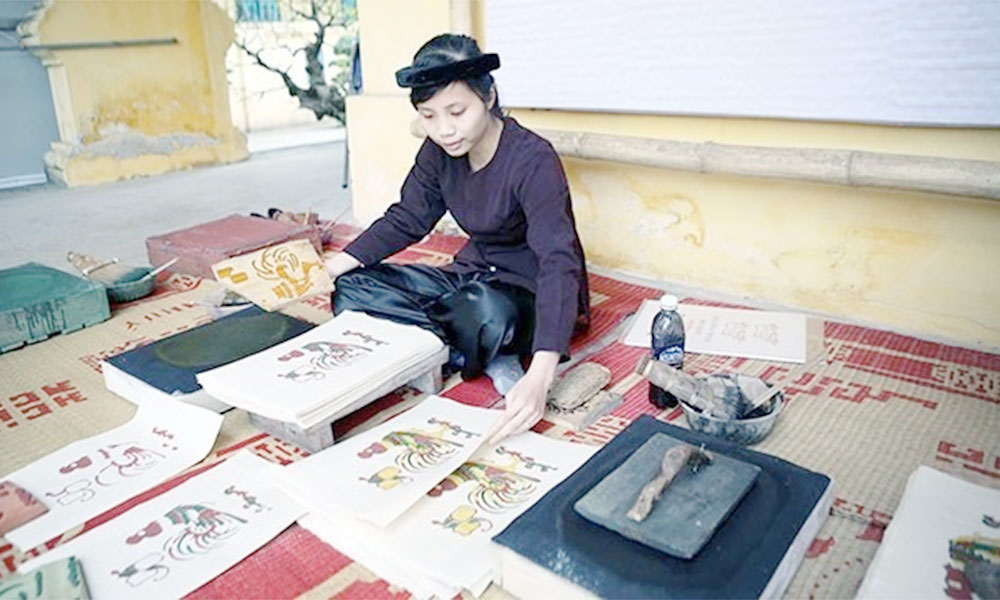
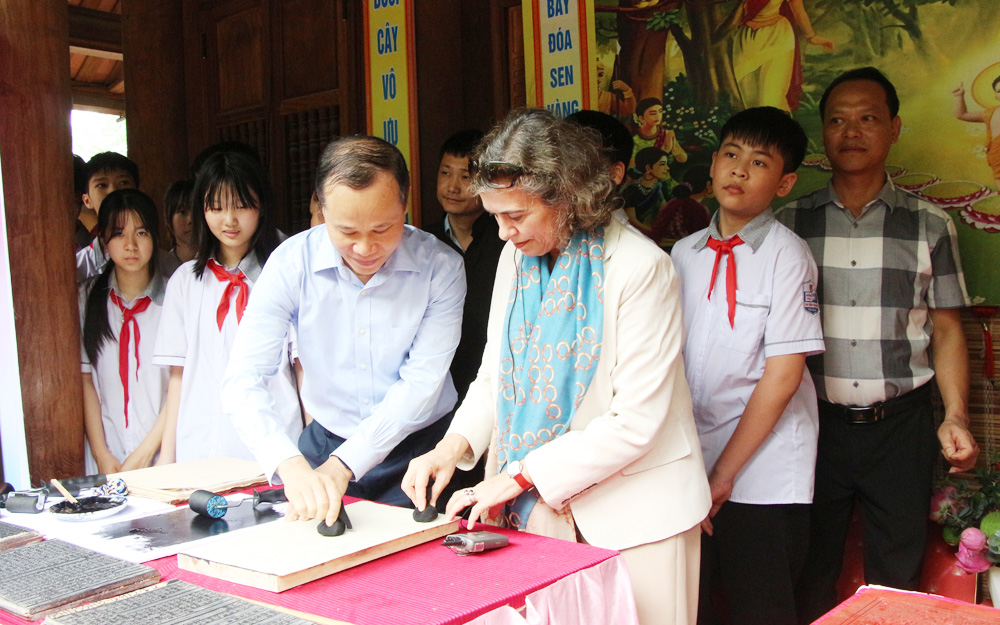
Traditional methods are used to print Dong Ho paintings using traditional methods. |
When students experience the painting-making process directly, they discover the diversity of natural materials, appreciate the meticulousness of handcrafted techniques, and access a visual language deeply rooted in Vietnamese identity.
These elements make the craft a dynamic and inspiring source of learning which is capable of cultivating a genuine appreciation for cultural heritage.
Regarding the implementation roadmap, the Ministry of Culture, Sports and Tourism will work closely with the Ministry of Education and Training to develop standardised teaching resources, including digital materials, technical demonstration videos, lesson plans for teachers, and student learning guides.
At the primary level, the focus will be on experiential activities, such as exploring natural colours, becoming familiar with diep paper, and experimenting with hand-printing colour layers.
At the lower and upper secondary levels, students will delve deeper into thematic systems, visual structures, folk symbols, and the aesthetic values of different painting lines.
For art schools, the ministry will encourage the development of specialised modules involving direct access to original woodblocks and comparative studies between Dong Ho and other traditional painting genres.
Alongside formal education, the ministry plans to expand the non-formal education ecosystem through practice workshops, long-term studios, creative camps for students, and artisan-led art projects.
These activities allow artisans to serve as authentic transmitters of knowledge, helping the craft sustain its vitality in modern life. The ministry also envisions cooperation with cultural institutions, museums, and art centres to organise learning tours, interactive experiences, and youth-focused exhibitions.
If these steps are implemented consistently, incorporating Dong Ho folk paintings into education will establish a strong foundation for young generations to internalise traditional values, motivating them to protect the heritage voluntarily and responsibly.
This pathway ensures the craft’s longevity, reinforces its knowledge system, and opens new opportunities for sustainable development in the future.
Thank you very much!


Reader's comments (0)