 Bắc Ninh


Chip boom pushes Vietnam closer to “high-income” status: Nikkei Asia
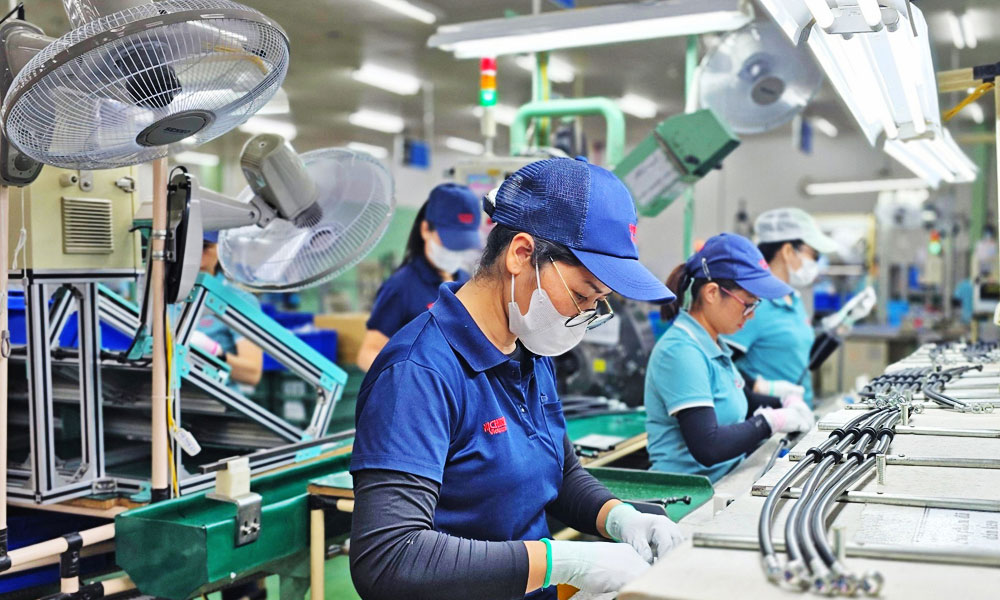
Vietnam’s semiconductor industry offers the country an opportunity to shift from a growth model heavily reliant on low-cost labour and manufacturing toward more technology-intensive, higher value-added sectors, according to Nikkei Asia.
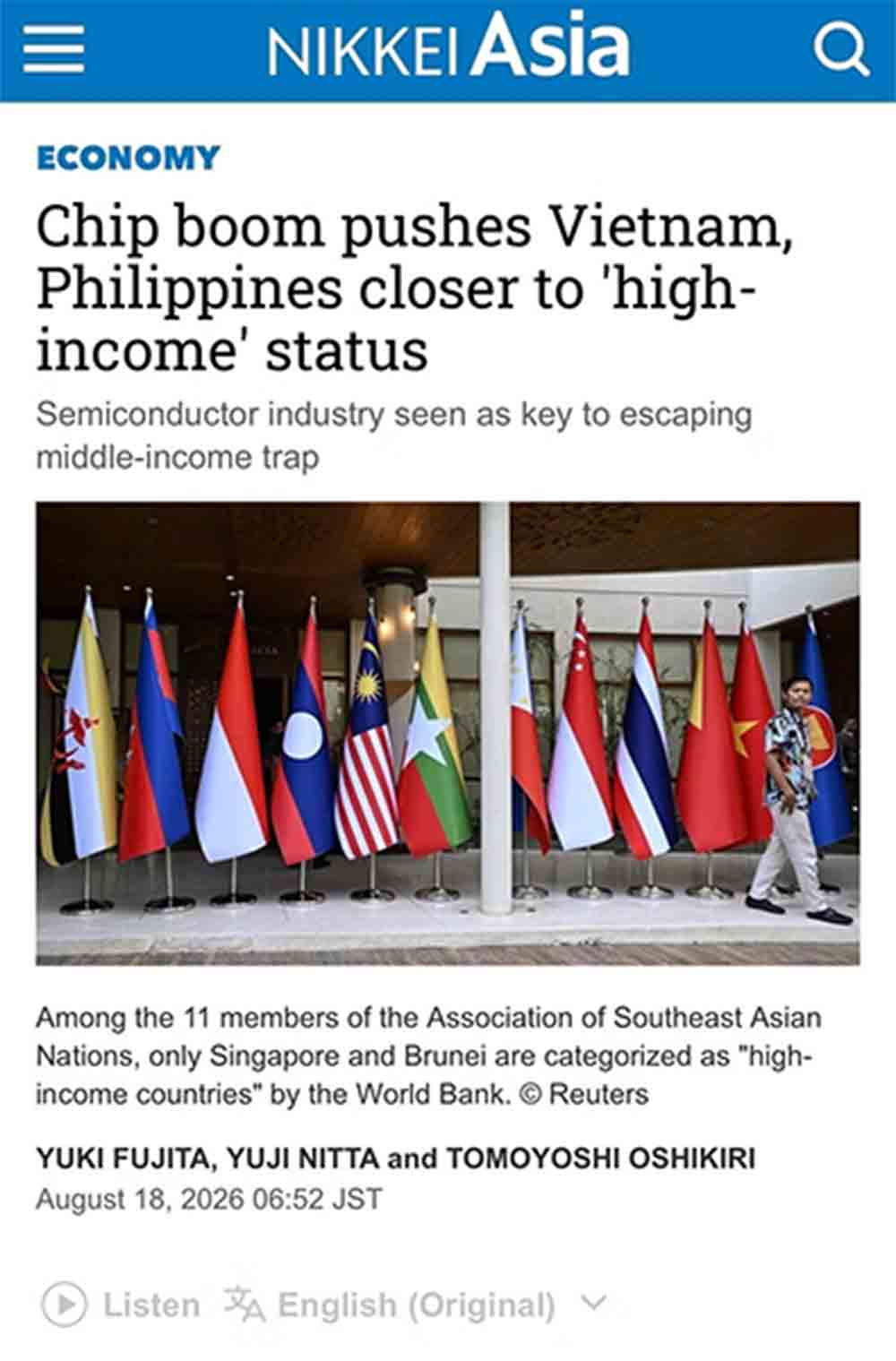
The rapid development of the semiconductor industry is reshaping Southeast Asia’s economic trajectory, creating opportunities for Vietnam and the Philippines to move closer to the ranks of high-income economies, according to Nikkei Asia.
 |
|
The article is published on asia.nikkei.com on August 18. |
Vietnam’s semiconductor industry offers the country an opportunity to shift from a growth model heavily reliant on low-cost labour and manufacturing toward more technology-intensive, higher value-added sectors, the paper said.
In the World Bank’s income classification updated in July, Vietnam was placed in the upper-middle-income group.
Nikkei Asia said that to further raise income levels, the country needs to gradually reduce its reliance on low-cost labour and develop high-tech industries capable of generating greater added value.
Vietnam has raised incomes through an export-driven growth model.
Its network of free trade agreements with countries and regions worldwide has helped attract foreign investment and establish manufacturing hubs for electronic components and electrical equipment.
In June, LG Innotek from the Republic of Korea announced plans to build a semiconductor substrate manufacturing plant in Vietnam with an estimated investment of around 1 billion USD.
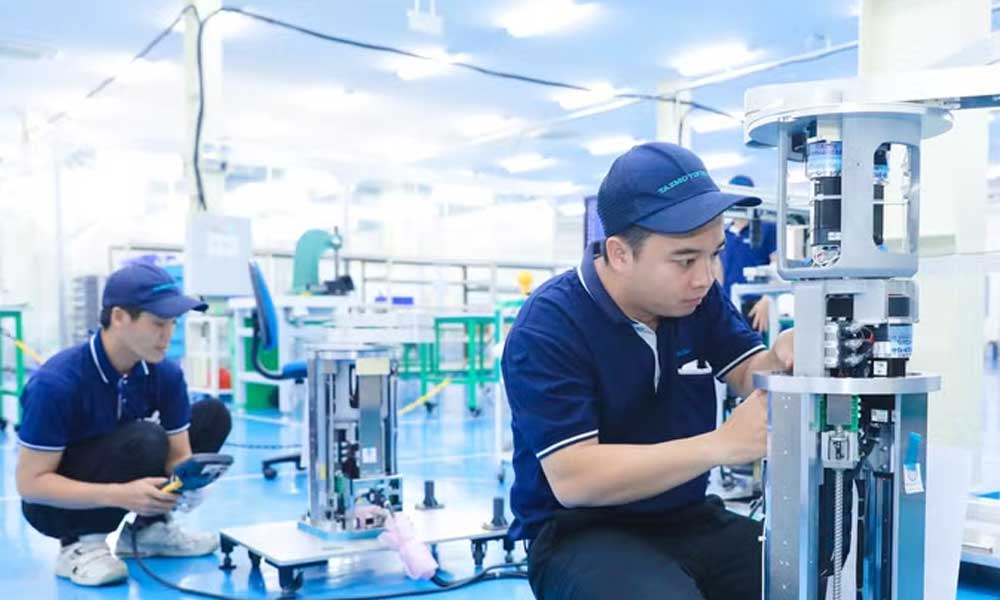
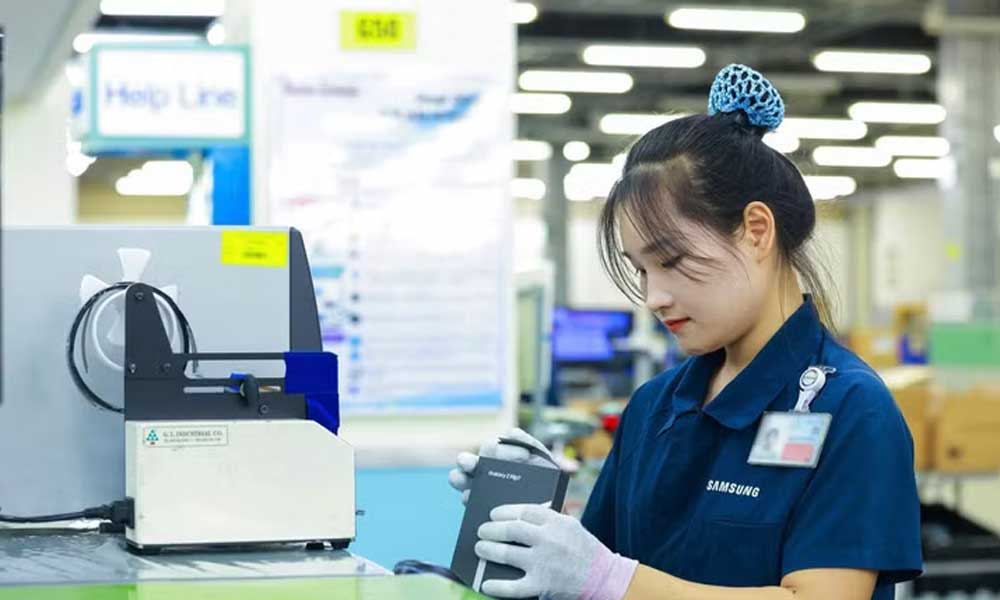
Vietnam is also seeking to expand its participation in the semiconductor value chain, moving beyond downstream activities such as assembly, packaging and testing into more technology-intensive areas, including chip design and the fabrication of integrated circuits on semiconductor wafers.
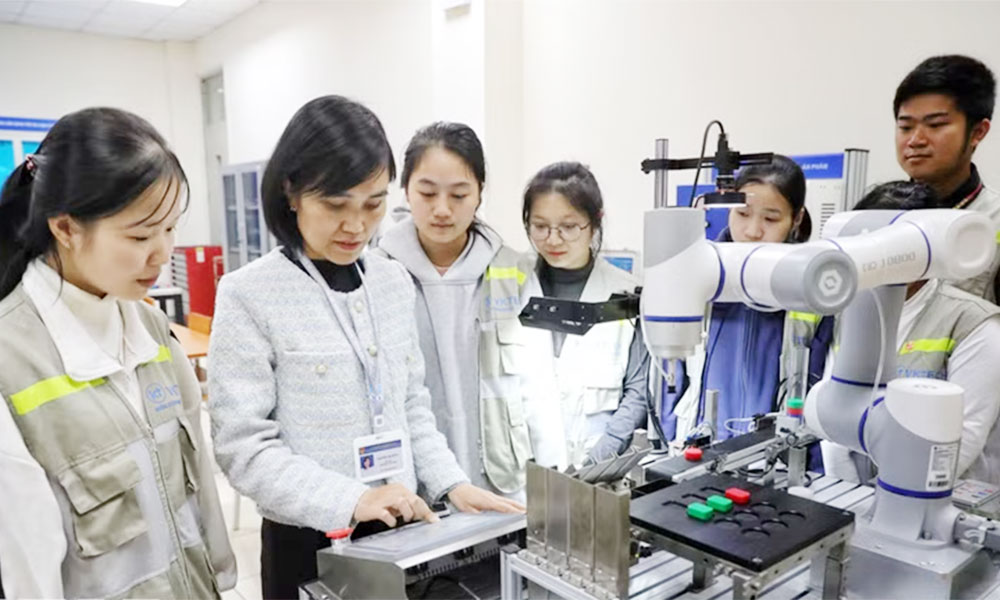
Under the country’s semiconductor industry development strategy, Vietnam aims to train more than 50,000 engineers and graduates for the sector by 2030.
Nikkei Asia said the development of the semiconductor and electronics industries could provide an additional impetus for Vietnam’s economic growth amid rising global demand for products supporting artificial intelligence (AI).
To capitalise on the opportunity, Vietnam needs to continue improving the quality of its workforce and strengthening research and development capacity, while enhancing its ability to participate in higher value-added stages of global supply chains.
Meanwhile, the Philippines is also seeking to expand its semiconductor industry, which remains concentrated mainly in assembly, packaging and testing.
Semiconductors and electronic products currently account for more than half of the country’s total merchandise exports. The Philippines is likewise seeking to upgrade its semiconductor industry as global demand for AI-related chips continues to grow.


















Reader's comments (0)