 Bắc Ninh


Every bamboo root tells a story of Vietnamese culture
BAC NINH - Nguyen Sy Luan, 31, Director of Vuon Chum Cooperative in Bao An village, Hoang Van commune, Bac Ninh city, has spent more than eight years collecting and shaping bonsai bamboo, turning memories of village bamboo groves into works that he says reflect Vietnamese culture and rural life.
What inspired you to take up bonsai bamboo?
 |
|
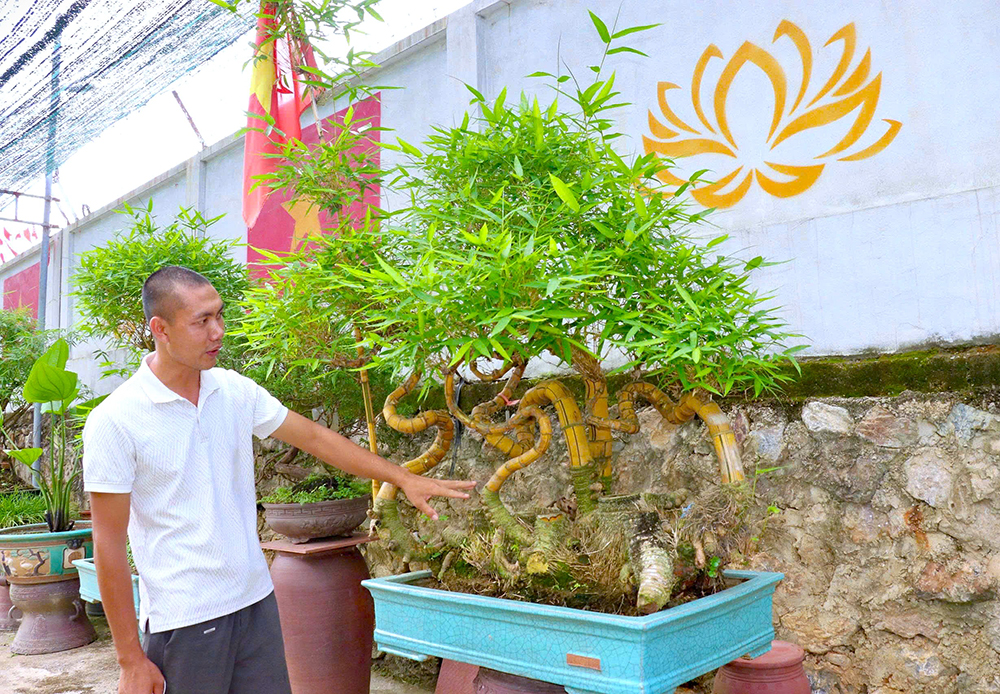
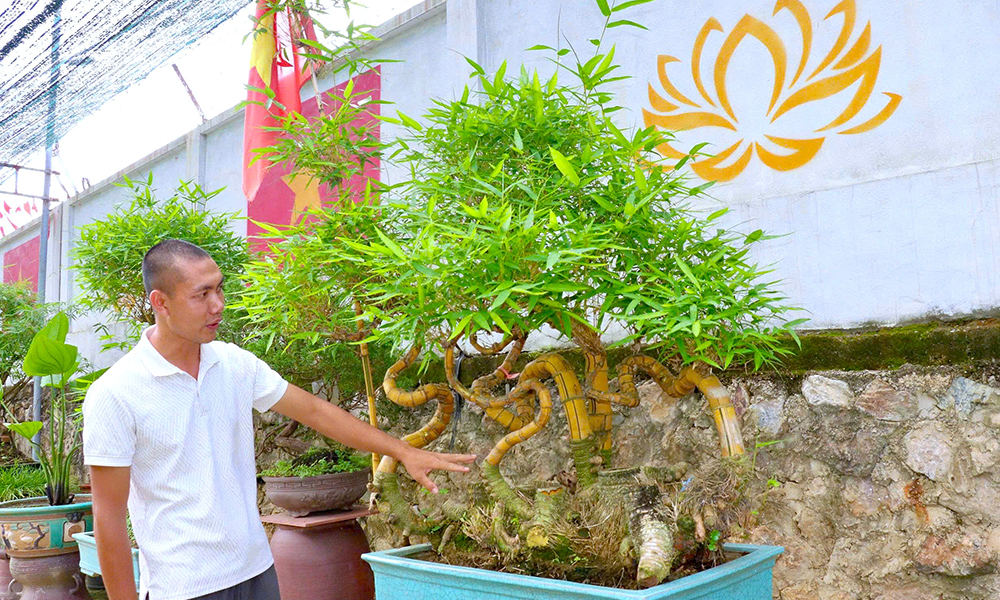
Nguyen Sy Luan stands beside his bonsai bamboo work "Five blessings at the door." |
My love for bamboo comes from childhood. My village once had a large bamboo grove where children played and villagers enjoyed the simple rhythm of rural life.
When an industrial park was built nearby, the grove was gradually cleared for the project.
I felt that part of my childhood memories was disappearing. That prompted me to explore bonsai bamboo as a way to preserve the image of bamboo in another form.
At first, I simply collected works that I liked. The more I learned, the more I appreciated bamboo's distinctive beauty.
 |
|
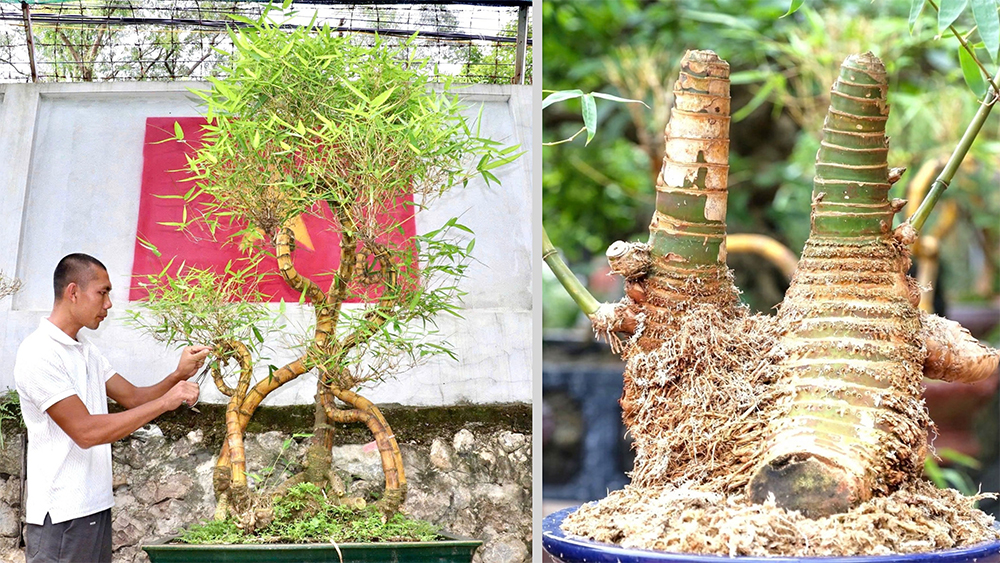
Nguyen Sy Luan trims and shapes a bonsai bamboo plant. |
It is familiar and rustic, but difficult to work with. You need patience, an understanding of the plant and respect for its natural growth.
Why is bamboo particularly difficult to shape?
Bamboo has slender, water-rich stems that are hard and straight. If you bend them incorrectly or apply too much force, they can easily break.
Unlike many woody plants, bamboo cannot be grafted or modified freely. I have to study the root structure, the direction of new shoots and the growth of each stem before deciding how to shape it.
When I need to adjust a stem, I make a small cut on its outer side to reduce tension and then use a wire to gradually pull it in the desired direction.
 |
|
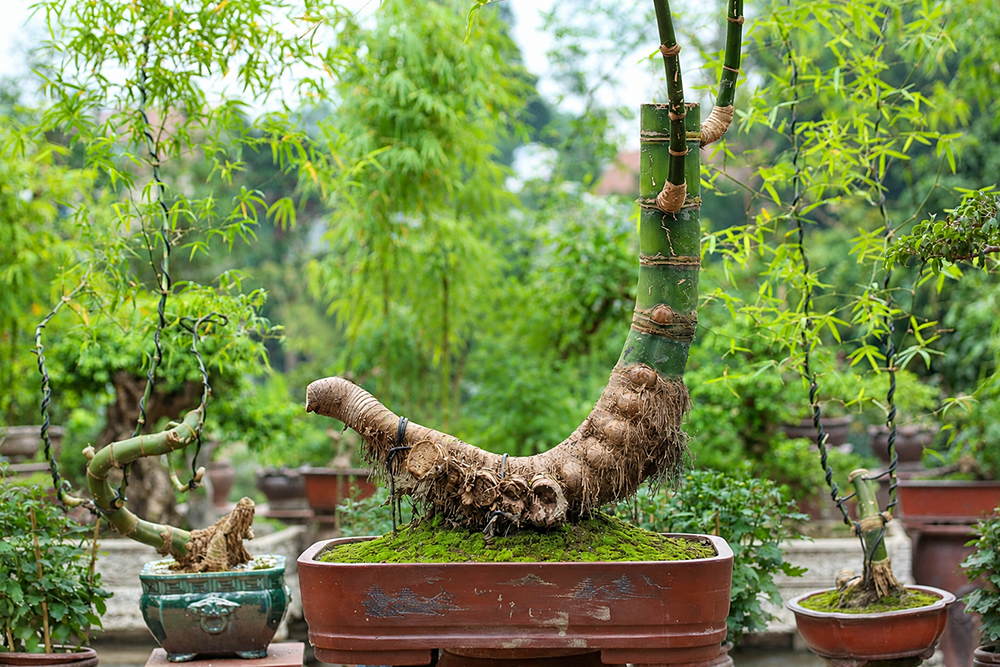
Nguyen Sy Luan explores bonsai bamboo as a way to preserve the image of bamboo. |
The work has to be done little by little. Each plant has its own form, so there is no single technique that can be applied to all of them.
The success rate is only about 25% to 30%, while frost, pests, diseases and weather can also affect the plants. That is why the craft requires patience and precision, as well as an acceptance of failure.
How large is Vuon Chum Cooperative?
After nearly eight years, we have about 1,500 to 2,000 bonsai bamboo works across a garden of about 2 hectares, with nearly 10 members involved in pottery and ornamental plant cultivation.
We mainly work with thorny bamboo and ivory bamboo. Thorny bamboo has strong roots and clearly layered growth, recalling the rustic bamboo hedges of Vietnamese villages.
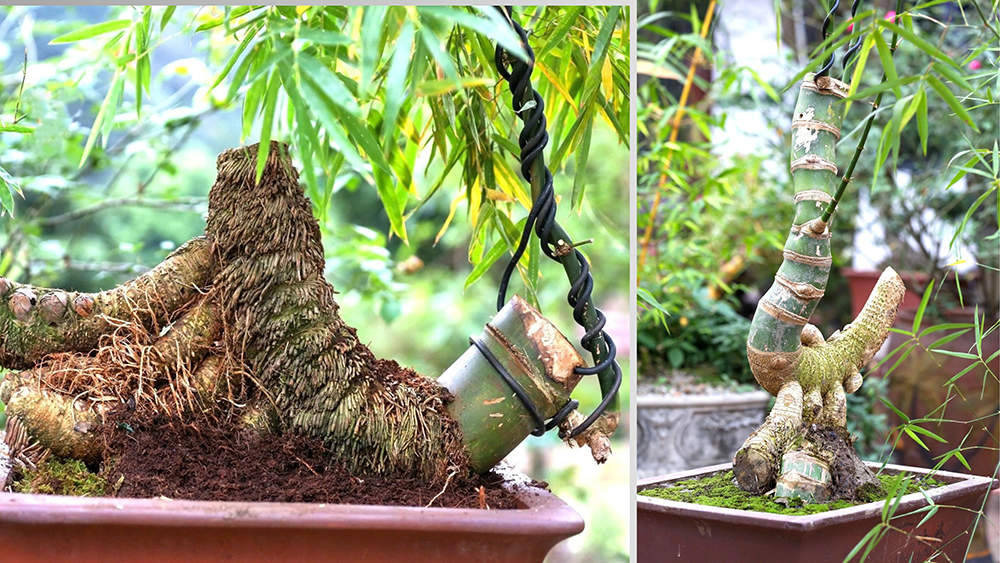 |
Ivory bamboo has a golden colour and slender form, evoking the legend of Saint Giong and symbolising courage and the determination to protect the homeland.
I am also developing a seven-storey memorial house to display works and preserve stories and materials about bamboo varieties, together with a garden covering about 5 sao (old measuring unit equals to 360 square meters) for propagation.
Which work means the most to you?
Every work has its own story, including "Buddha", "Five blessings at the door", "Father's love", "Happy family" and "Five dragons descending to earth".
I am particularly attached to "Family", in which bamboo roots represent a father, mother and child. The father is large and sturdy, the mother leans towards him, and a small bamboo shoot represents the child growing under the family's protection.
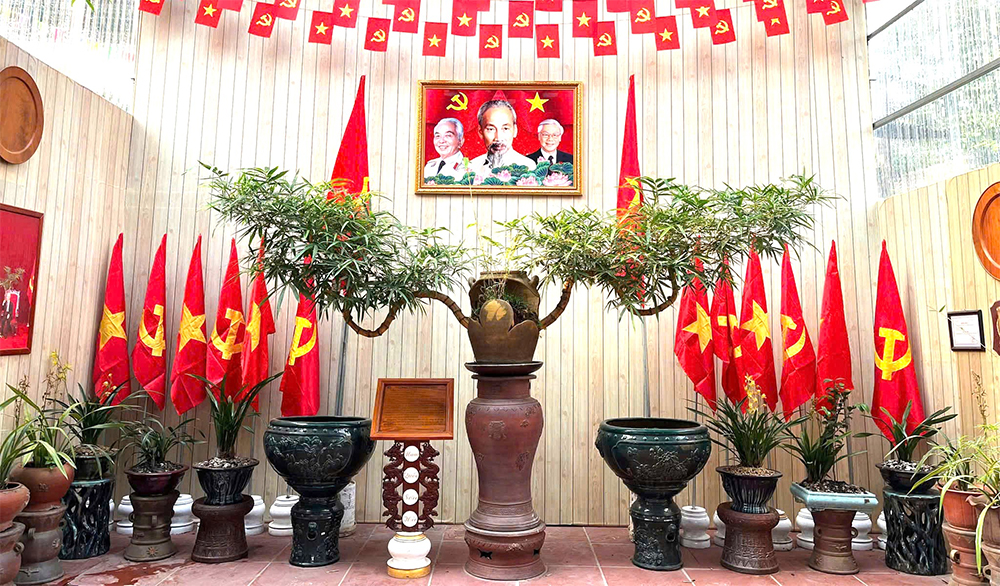 |
|
Nguyen Sy Luan's bonsai bamboo work "Two dragons facing the sun" is displayed at a tea reception for Chinese President Xi Jinping in 2023. Filed photo. |
"Two dragons facing the sun" was displayed at a tea reception for Chinese President Xi Jinping in 2023. It was a great honour and source of pride. The work uses two curved ivory bamboo stems to depict dragons facing a central circle representing the sun.
What do you hope to achieve with your planned bamboo conservation space?
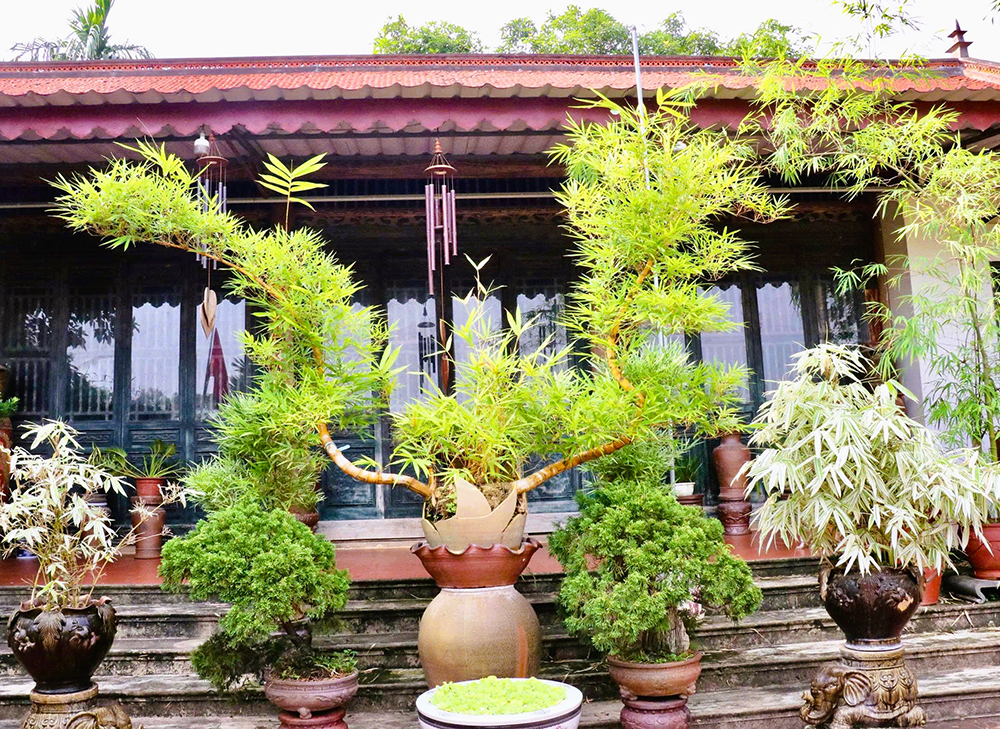 |
|
The works "two dragons facing the sun". |
I am working on plans for a 20,000-square-metre space to conserve, display and introduce rare Vietnamese bamboo varieties.
I hope it will become a cultural and ecological destination where visitors can learn about bamboo's role in Vietnamese life and experience a traditional rural setting.
The project would link cultural preservation with agricultural development and experiential tourism. Bamboo should not remain only in our memories; it should continue to have a place in modern life.
Thank you very much!






Reader's comments (0)