 Bắc Ninh


Multimodal connectivity to drive Vietnam’s transport infrastructure
Under the proposed approach, roads would serve mainly as connectors and for first- and last-mile transport; railways would handle large volumes over long distances; maritime transport would serve import and export cargo; inland waterways would carry large volumes at low cost; and air transport would focus on fast delivery and high-value goods.
Party General Secretary and President To Lam has stressed the need to develop a modern and comprehensive infrastructure system as Vietnam works towards becoming a country with modernity-oriented industry.
 |
|
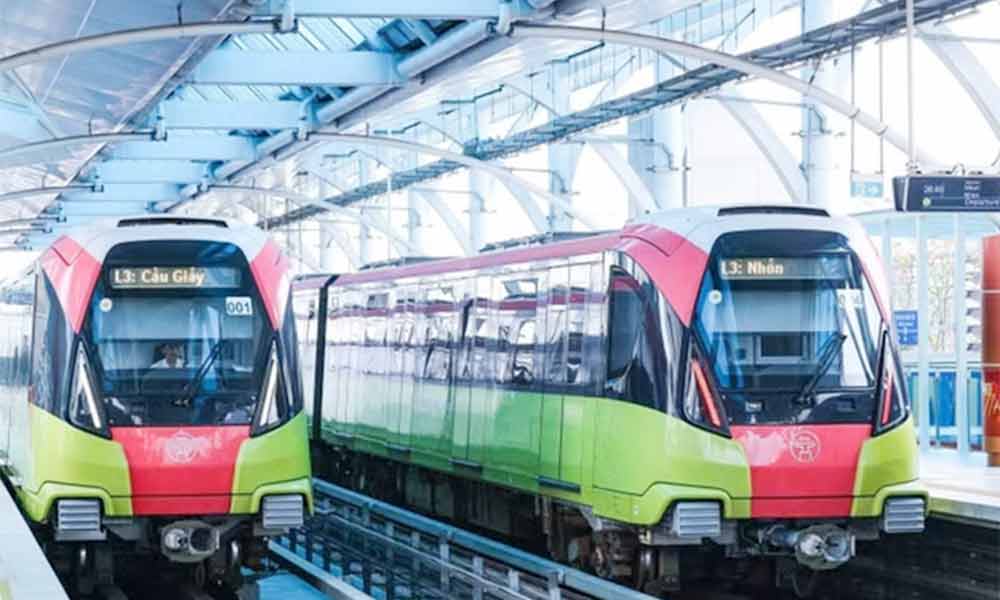
Trains on the elevated section of the Cau Giay - Nhon route in Hanoi provide convenient transportation for local residents. |
The emphasis comes as infrastructure is increasingly seen as a key factor determining national competitiveness, with transport projects built today expected to shape the country's development for decades to come.
At a recent working session on the implementation of Politburo and Party Central Committee directions on infrastructure development, General Secretary and President Lam highlighted the need to focus resources on strategic infrastructure and complete major transport and logistics corridors along the North–South and East–West axes.
The discussion took place as many countries are shifting from single-mode infrastructure investment to integrated and multifunctional infrastructure development that connects different modes of transport.
For Vietnam, strong economic growth is also creating an urgent need for a modern and comprehensive transport system capable of supporting and driving development.
According to the Ministry of Construction, multimodal transport currently accounts for less than 10% of total freight transport.
Road transport dominates, accounting for 75.1%, followed by inland waterways at 19.8%, maritime transport at 4.9%, rail at 0.18% and air transport at just 0.02%.
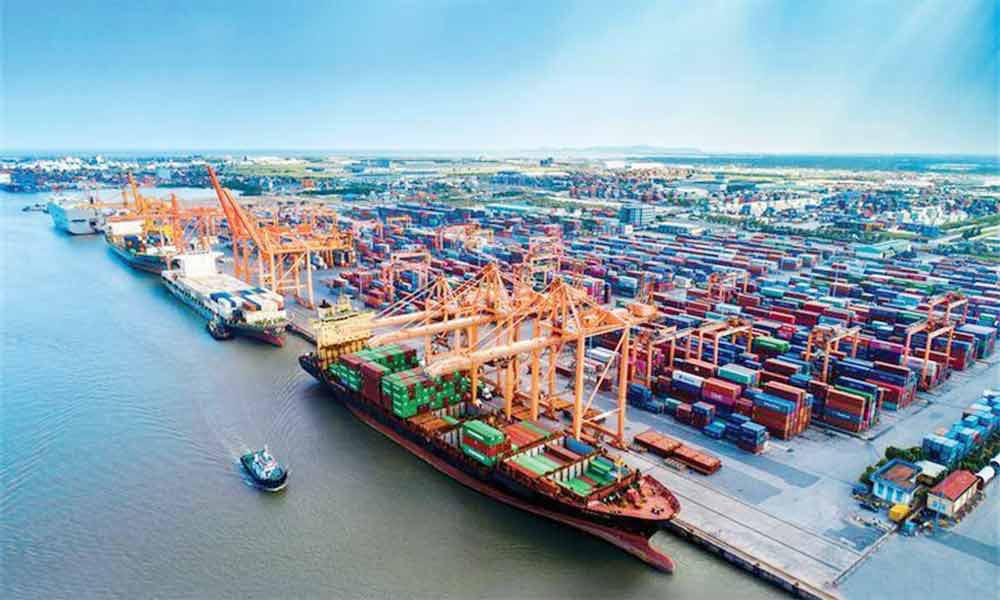
Roads continue to carry the bulk of freight while rail, inland waterway and maritime transport have yet to realise their full potential, partly due to a shortage of effective cargo collection points, transshipment facilities and inland container depots (ICDs).
Do Cong Thuy, Deputy Director of the Ministry of Construction’s Department of Transport and Traffic Safety, said Vietnam's multimodal transport network is organised around four major economic corridors: the North–South corridor, the East–West corridor, and the northern and southern logistics regions.
However, connections among different modes remain limited. The shift of freight from roads to inland waterways and rail is still slow, increasing pressure on the road network.
Links between railways, waterways and seaports are also not yet fully developed. Meanwhile, ICDs that connect different modes remain limited.
At the same time, freight demand is growing rapidly. In 2025, Vietnam's import–export turnover reached nearly 930 billion USD while freight transport exceeded 3 billion tonnes, up 14.1% year-on-year.
Road freight posted the strongest growth, rising 14.7% to more than 2.2 billion tonnes. Container throughput at seaports approximated 34.3 million TEUs, up 12%.
These figures underline the need to develop multimodal transport, which is not simply an infrastructure issue but also a matter of national competitiveness and economic security.
Better connectivity among modes of transport is considered essential if Vietnam is to become a regional and global logistics hub.
Minister of Construction Tran Hong Minh has called for the identification and development of priority multimodal transport corridors following the recent administrative merger of provinces and cities.
He said the transport system must be reorganised to improve connectivity and make full use of the strengths of each mode.
Under the proposed approach, roads would serve mainly as connectors and for first- and last-mile transport; railways would handle large volumes over long distances; maritime transport would serve import and export cargo; inland waterways would carry large volumes at low cost; and air transport would focus on fast delivery and high-value goods.
The Ministry of Construction is working to improve policies and institutional frameworks while drawing on international experience.
The focus will shift from developing individual transport modes to building integrated transport chains, from isolated infrastructure projects to modern infrastructure along well-connected multimodal corridors, and from fragmented management to data-driven transport governance based on digital platforms.
The ministry is also gathering input from ministries, localities, associations and businesses for a transport services development strategy through 2035, with a vision to 2050, as well as five specialised transport-sector plans.
The ultimate goal, as General Secretary and President Lam has stressed, is that by 2045, Vietnam will have a comprehensive, smart, green, safe and highly resilient infrastructure system, with seamless connectivity across the country and stronger links between the domestic economy and global markets.


Reader's comments (0)