 Bắc Ninh


Tet tourism season sees strong nationwide growth
The holiday from February 14–22 saw tourism activities flourish not only in major cities but also across many localities nationwide. Average room occupancy at accommodation facilities reached up to 60%, with several destinations posting notably high rates, including Phu Quoc at around 95%, Sa Pa at 90–95%, and Da Lat and Phan Thiet at 80–90%.
Vietnam’s tourism sector recorded a vibrant and safe performance during the nine-day Lunar New Year (Tet) holiday of 2026, serving an estimated 14 million visitors, up 12% year-on-year, according to the Vietnam National Authority of Tourism (VNAT).
 |
|
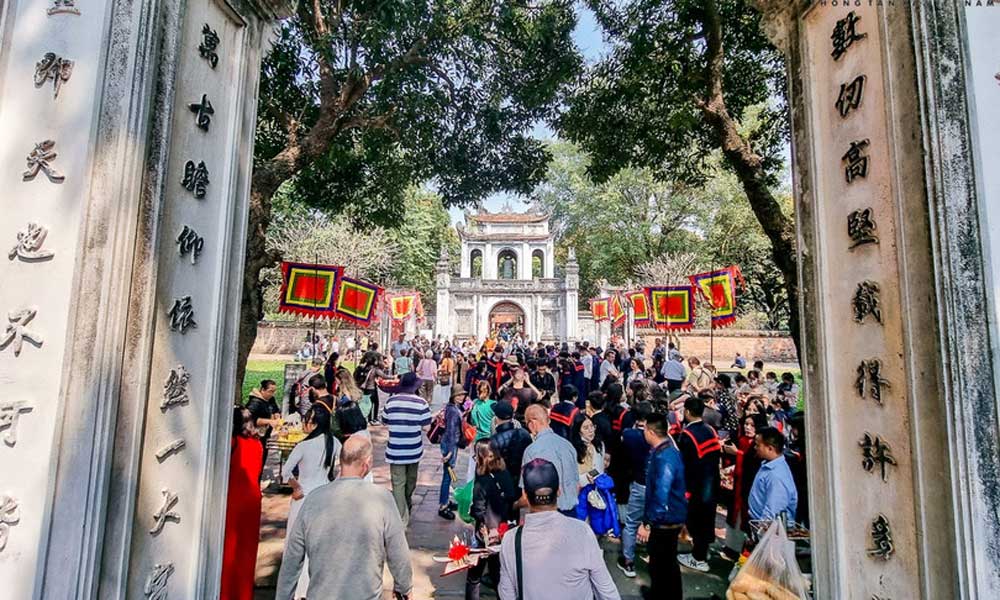
International visitors experience the traditional new year calligraphy activity. |
The holiday from February 14–22 saw tourism activities flourish not only in major cities but also across many localities nationwide. Average room occupancy at accommodation facilities reached up to 60%, with several destinations posting notably high rates, including Phu Quoc at around 95%, Sa Pa at 90–95%, and Da Lat and Phan Thiet at 80–90%.
International arrivals increased sharply in key destinations such as Da Nang, Hanoi and Ho Chi Minh City, with foreign visitor numbers in some places approaching domestic levels. This reflects the growing appeal and stronger global positioning of Vietnam’s tourism brand.
In the domestic market, bookings for local tours rose by 15–20% compared with the same period last year and accounted for a larger share than outbound travel.
Travel trends showed a shift toward personalised experiences, cultural exploration, and longer stays rather than short trips covering multiple destinations.
Major tourism centres reported strong results. Ho Chi Minh City welcomed an estimated 4.32 million visitors, up 35%, with tourism revenue reaching about 12.15 trillion VND (nearly 490 million USD), a rise of 42.9%. Popular products included river tours, double-decker city sightseeing, and traditional Tet cultural experiences.
Ninh Binh received more than 2.37 million visitors, surging 81.38%, with tourism revenue estimated at 2.451 trillion VND, up 52.3%.
Hanoi welcomed around 1.34 million visitors, up 36.3%, generating 4.87 trillion VND in tourism revenue, an increase of 40.2%. Occupancy rates at four- and five-star hotels exceeded 72%, supported by events such as the “Happy Tet 2026” programme, Old Quarter flower markets and traditional cultural activities.
Da Nang, one of the most attractive destinations in the central region, served about 1.1 million visitors, up 27%, with tourism revenue estimated at 3.96 trillion VND. Other provinces such as Khanh Hoa, An Giang, Lam Dong and Quang Ninh also attracted large numbers of tourists thanks to diverse cultural and festive programmes.
VNAT attributed the positive performance to favourable visa policies, effective promotion efforts, and continuous product innovation by localities and businesses.
The strong results were also supported by early and comprehensive preparations. Since late 2025, VNAT has issued directives to ensure safety, service quality, price transparency, food safety, and traffic and fire prevention during the peak season.
Local authorities established hotlines, arranged round-the-clock duty teams and strengthened inspections to promptly handle emerging issues.
Tourism enterprises actively launched promotional programmes and new products, including traditional Tet experience tours, heritage journeys, double-decker city tours and river cruises. Many high-end accommodation facilities organised New Year celebrations and hands-on cultural activities to enhance visitor experiences.
Meanwhile, airlines added hundreds of thousands of seats and increased flight frequencies on both domestic and international routes. Major airports such as Tan Son Nhat, Noi Bai and Da Nang handled record passenger volumes, while cruise tourism welcomed more than 10,000 international visitors during the holiday.
According to VNAT, the longer Tet break created favourable conditions for travel planning and helped kick-start a dynamic year for the tourism industry.
Growth was recorded across both domestic and international markets and between major hubs and emerging destinations. In many localities, tourism revenue rose faster than visitor numbers, indicating higher spending and improved service quality.
Changing travel behaviour is also evident, with more visitors booking services online, opting for longer stays, and seeking personalised experiences linked to local culture and heritage – trends that point to more sustainable market development.










Reader's comments (0)