 Bắc Ninh


Vietnam-China rail link prioritised to boost trade
The Ministry of Construction said it has tasked the Vietnam Railway Authority with working alongside relevant Chinese agencies to develop detailed plans for the Hai Phong–Ha Long–Mong Cai railway, which is slated for completion in 2026.
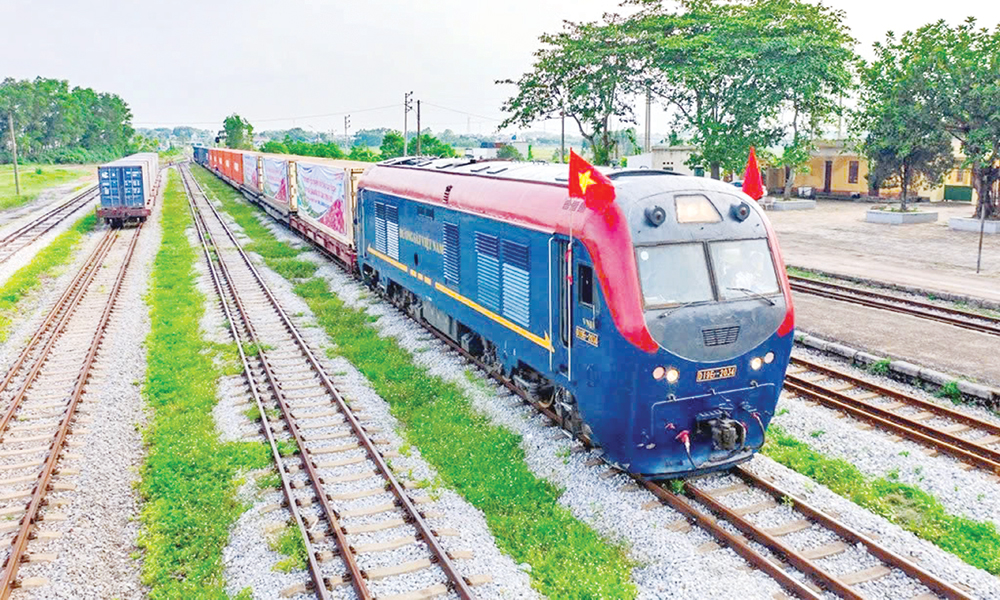
The Vietnamese Government is prioritising resources for the planned Hai Phong-Ha Long-Mong Cai railway, which is expected to connect with China’s Fangchenggang-Dongxing railway, helping strengthen strategic cross-border transport between the two countries.
 |
|
Checking tickets before passengers board the train at Hai Phong Station. |
The project was among the initiatives agreed upon by the high-ranking leaders of the two Parties and States during the General Secretary of the Communist Party of Vietnam Central Committee and President To Lam’s state visit to China in April.
Given the project’s strategic importance to inter-regional connectivity and international rail transport, voters in Quang Ninh province have proposed prioritising resources to implement it before 2030, accelerating investment preparations, and starting construction at an early date.
The Ministry of Construction said it has tasked the Vietnam Railway Authority with working alongside relevant Chinese agencies to develop detailed plans for the Hai Phong–Ha Long–Mong Cai railway, which is slated for completion in 2026.
The Railway Project Management Board was asked to prepare a pre-feasibility study for the project to establish investment policy, including implementation timelines and resource allocation.
Under the approved railway network, the Hai Phong-Ha Long-Mong Cai line will stretch 187km, running from Nam Dinh Vu station in Hai Phong city to the Mong Cai area in Quang Ninh province.
The line is planned to use 1,435mm standard gauge and be electrified, with investment research scheduled for 2021-2030.
The ministry said the Hai Phong-Ha Long-Mong Cai transport corridor currently features road and waterway transport. Freight is mainly transported via inland waterways and coastal shipping due to their lower costs.
The new Ha Long-Mong Cai expressway has four lanes and is capable of meeting passenger transport demand through 2040. It is currently handling around 9,000 passenger car units (PCUs), compared with a capacity of 45,000 PCUs, or roughly 20%.
Under the transport plan, the corridor will eventually have three modes of transport – maritime, road, and rail. To minimise costs, freight will be prioritised for sea and river transport, while road transport will serve passengers.
Rail investment will be undertaken when passenger and freight demand reaches an appropriate level.
Pending construction of the railway, the Ministry of Construction urged Quang Ninh province to make full use of the existing transport network, particularly inland waterways combined with coastal shipping and the road system, to support socio-economic development and improve living conditions in areas along the route.
The move is also expected to strengthen seamless trade and transport connectivity between Vietnam and China.







Reader's comments (0)