 Bắc Ninh


A stitch in time saves a unique village
 |
|
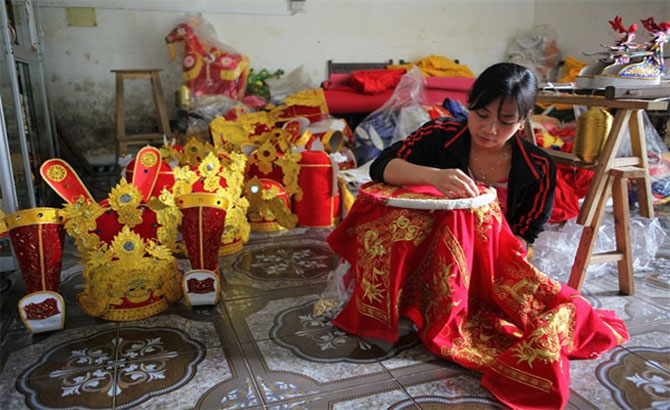
Finishing touches: A young woman in Dong |
Dong
It is the only craft village that used to supply dresses for kings, lords and courtiers to wear for rituals.
That was in the past, of course. It has always had another skill to bank on, that of embroidery, but it has still kept the unique tradition alive by producing items for
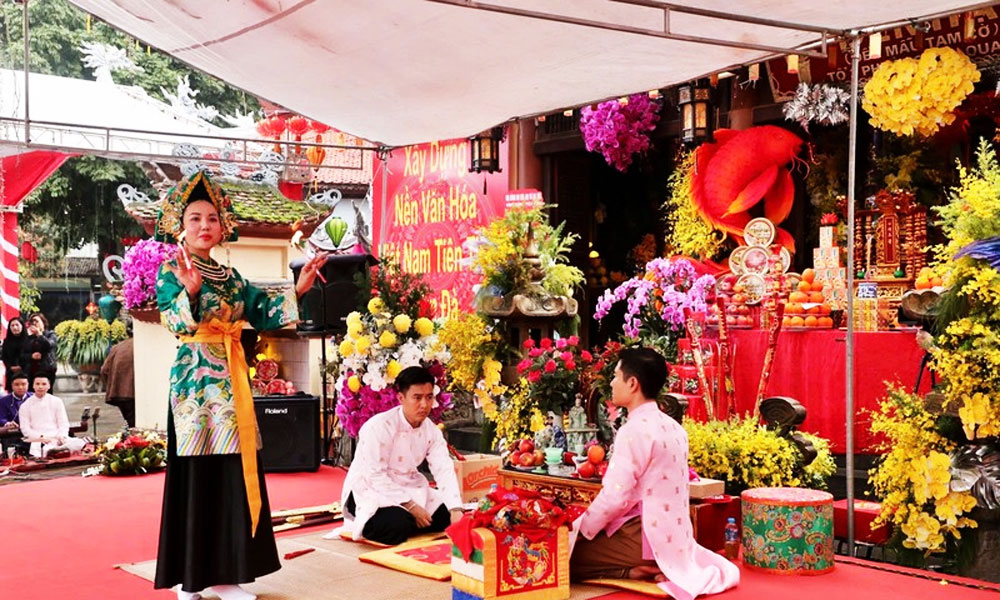
The rituals were
Located on the banks of the Nhue River in Ha Noi’s Thuong Tin District, Dong
Vu Van
“To meet increasing demand, we have to use an embroidery machine, but many customers specifically order handmade items because they are more genuine and attractive,” he says.
He insists that fashion plays an important role in the success of a
 |
|
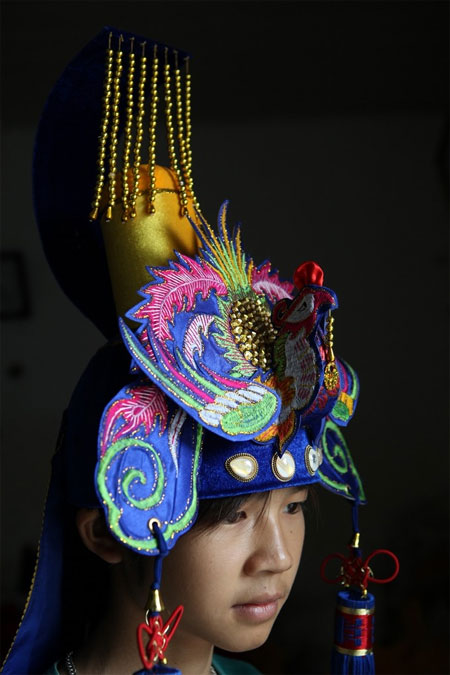
Ornate: A hat |
“Our village has many skilled workers; they can embroider very well-detailed models from the smallest pieces. For example, they can embroider a dragon to make it look real.”
Nguyen The Du, 62, an embroidery artisan, says his family typically uses natural methods to dye the thread. This involves boiling the bark of a tree (he wanted to keep the tree’s name a secret) and dipping the thread in this liquid for 10 minutes.
“Dong
A
The technique of combining thread colours in embroidery is also very important in creating a beautiful item, and this affirms the skills of a worker, she says.
Many embroidery families sign contracts to supply items to shops in Hang Quat Street in Ha Noi’s Old Quarter, while others sign orders directly with customers, says Lua.
The price of a costume embroidered carefully will be 10 times (about VND3-4 million each) that of a machine-made one, she added.
It needs 15-20 days to make a set of
 |
|
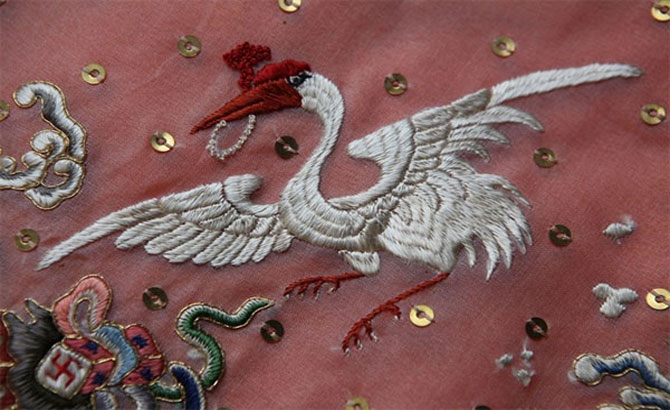
Soaring |
“My family produces quick handmade items for wholesale traders, and we can earn a profit of VND50-60 million a month,” Lua says, adding that so far this year, her goods have sold very well.
People from everywhere in the country and even abroad, particularly overseas Vietnamese, come to the village to buy its goods.
“I’ve received orders for the next two years,” Lua says, noting that the job has helped many households in the village build spacious houses and buy luxury cars.
Tran Thi Mai, a cultural official in Thuong Tin District, says the village now has more than 40 embroidery workshops, employing hundreds of workers including many young ones.
“Almost all my villagers are
 |
|
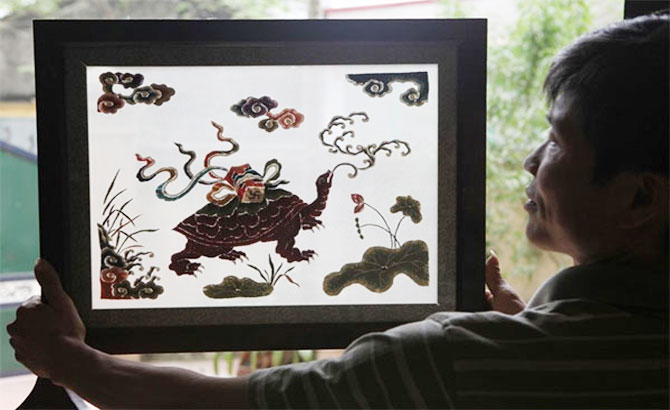
Framed: This carefully embroidered item was ordered by an Overseas Vietnamese in the US. |
Many young people in the village have joined the
Truong Thi Man,
“I can teach the embroidery technique to younger ones,” she says.
Nguyen Dac Bay, of the Dong
Humble beginnings
It
Village elders say the tools used were quite simple, just needles, embroidery frames of different shapes, and a few other accessories.
Dong
 |
|
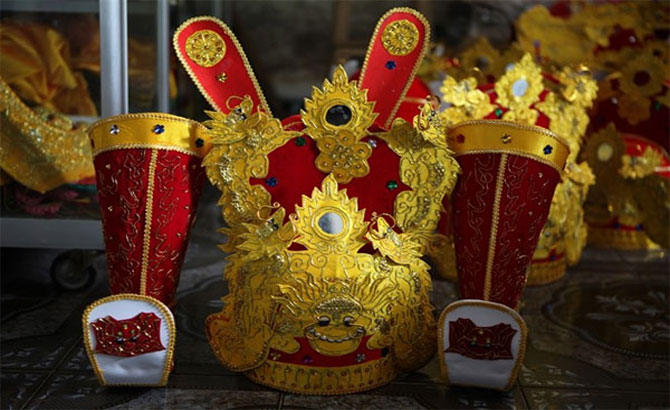
Crowning glory: Highly decorative crowns and shoes are used in the |
Now, they use metallic-coloured threads to create similar effects for the dresses they produce.
“Thanks to UNESCO’s recognition of
The village is focusing on making items to supply to traditional festivals and religious ceremonies at temples and pagodas,” Bay says.
He says more than 100 households in the village have set up their own workshop and 90 percent of all the families are engaged in embroidery or supplying other items for rituals and festivals.
The village’s trade was recognised as a national intangible heritage last November.
Bay says the recognition was a great encouragement for Dong
“We are planning to make our village a tourism destination.”
Source: VNS



.jpg)


Reader's comments (0)