 Bắc Ninh


Bac Ninh: Keeping the flame of Phu Lang pottery alive
BAC NINH - Along the quietly flowing Cau River, the kilns of Phu Lang have continued to glow red, just as they have for more than 700 years.
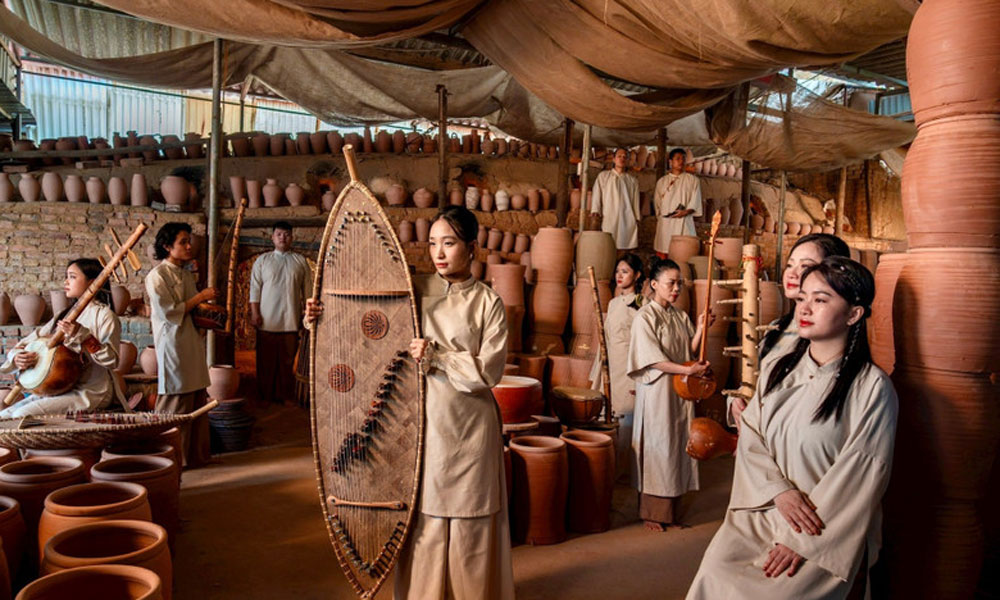
Phu Lang pottery village (comprising Phu Lang, Thu Cong, and Doan Ket hamlets) is one of the ancient craft villages of the Kinh Bac region, formed in the 13th century.
.jpg) |
|
Artisan shapes clay using the pottery wheel. |
Over more than seven centuries, despite countless ups and downs, the kilns here have never gone cold, sustaining hundreds of households and preserving a distinctive cultural space along the Cau River.
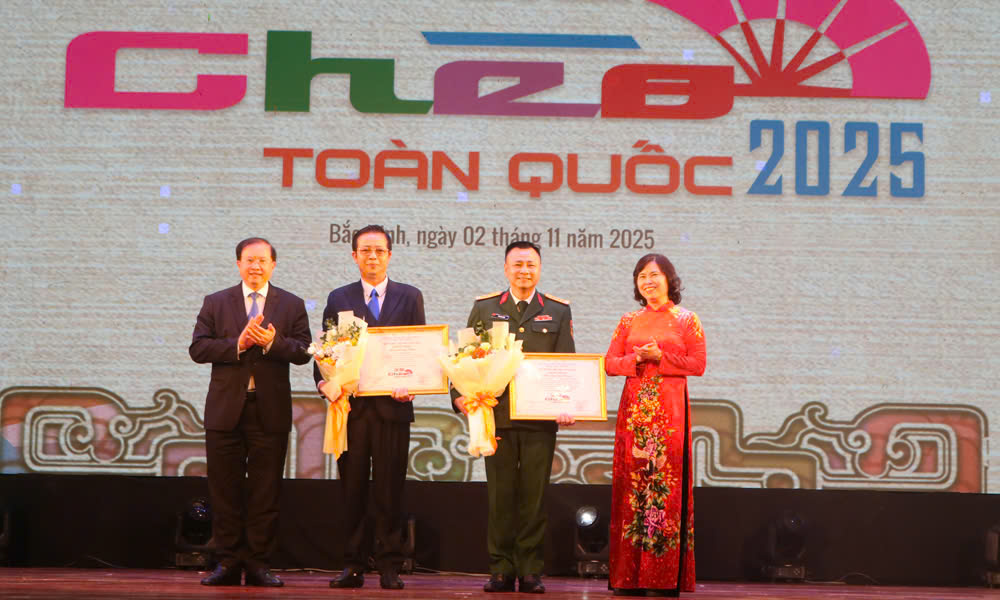
The joy was made even more complete when Tran Thi Luan (born in 1932), Nguyen Thi Toan (born in 1952), and Nguyen Thi Nhung (born in 1961), all from Thu Cong hamlet, were awarded the title “Vietnamese Craft Village Artisan.”
 |
|
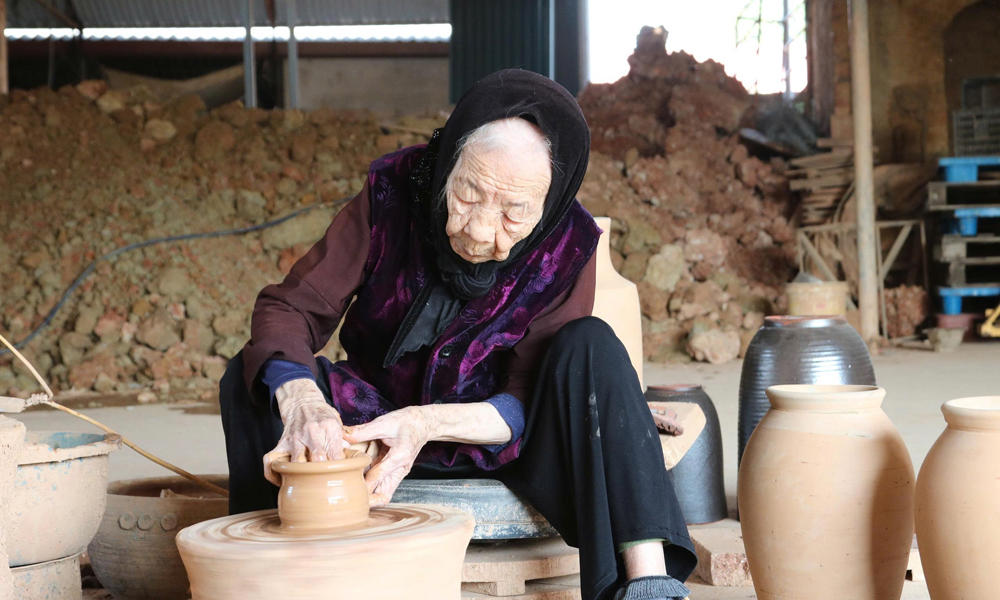
Artisan Tran Thi Luan. |
Three individuals, three lives, three different ways of preserving the craft, yet all share a common source: a profound love for the clay, the fire, and the traditional pottery of their homeland.
Now 94 years old, Luan has white hair and a petite figure, but her eyes remain bright and her voice clear and sharp.
Born and grown up in Phu Lang, she learned the craft from her parents at the age of 13. In those days, several families shared a single kiln. Clay was carried ashore from boats and shaped entirely by hand. Pottery was hard work, yet it sustained generations of villagers.
 |
|
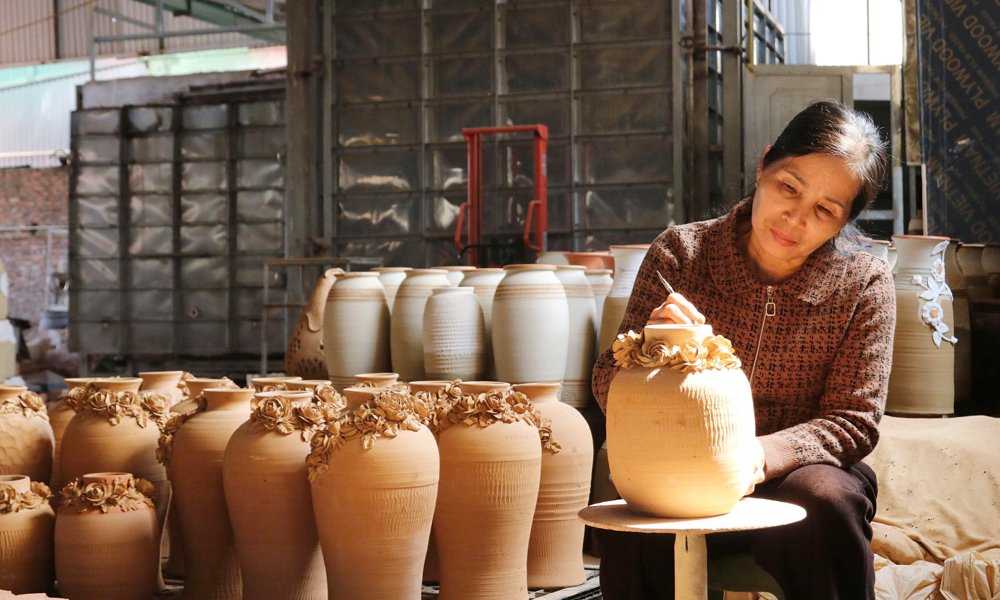
Artisan Nguyen Thi Nhung. |
She and her husband had five children - four followed the pottery trade, while one became a military officer. Today, her grandchildren and great-grandchildren continue the family tradition: some specialise in making jars and pots, others collect villagers’ products for sale.
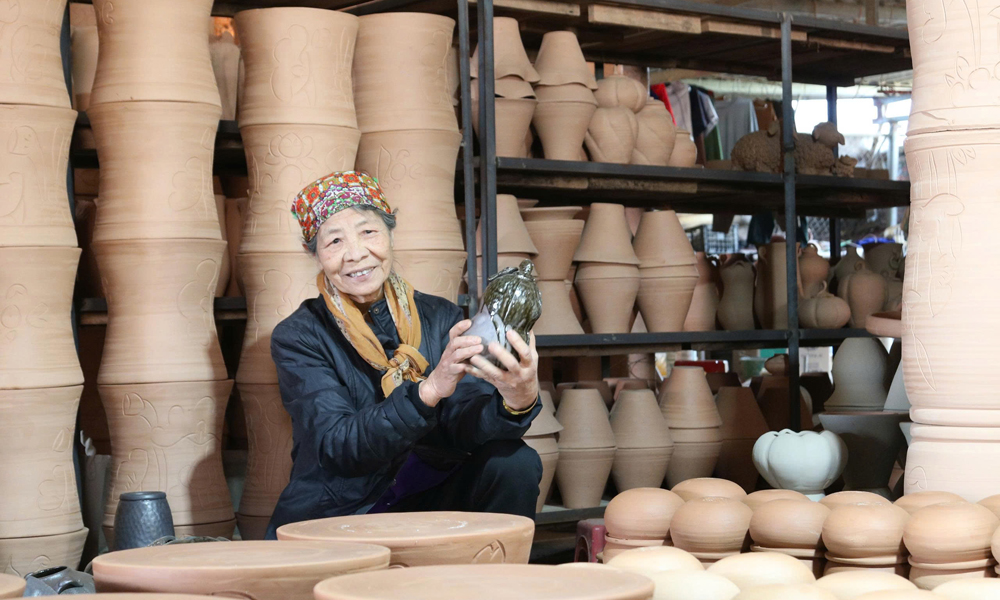
Also from Thu Cong hamlet, artisan Nguyen Thi Toan presents a different portrait of a Phu Lang potter - diligent, creative, and unyielding to fate. Born into a family of eight siblings, seven of whom pursued pottery, she became familiar with the smells of clay and fire from an early age.
In 2002, she and several village artisans went to Bat Trang (Hanoi) to work. Upon returning home, Toan did not keep her skills to herself but shared them with fellow villagers. Since then, loc binh vases - once unfamiliar in Phu Lang - have gradually become a new product line, enriching the village’s craft landscape.
If Luan is a “living memory” of the village and Toan represents creative enrichment through the craft, artisan Nguyen Thi Nhung serves as a bridge bringing Phu Lang pottery into a broader space. Born and raised in Thu Cong hamlet and married to a fellow villager, Nhung has remained deeply connected to the craft in her own distinctive way.
At the end of 2025, Phu Lang received an added source of pride when three natives of the pottery village were honoured by the Vietnam Association of Craft Villages with the title “Vietnamese Craft Village Artisan”- three quiet lives devoted to preserving the craft, passing on the flame, and enriching the value of Kinh Bac pottery with wholehearted dedication and deep love for their homeland.
In the early 2000s, when lecturers from the University of Industrial Fine Arts came to Phu Lang for creating works, Nhung’s home became a familiar stop.
Beginning with assisting in rough shaping, she gradually absorbed modern artistic thinking and learned how to combine tradition with contemporary creativity. This fusion has resulted in many new designs that preserve the soul of Phu Lang while meeting today’s aesthetic tastes.
 |
|
Artisan Nguyen Thi Toan. |
Beyond the joy of the artisans’ families, the honours are a shared source of pride for the entire Thu Cong hamlet. Pham Van Quyet, head of the hamlet, said that out of 157 households, around 100 specialize in pottery. With the addition of three newly honoured artisans, the total number of “Vietnamese Craft Village Artisans” in the hamlet has risen to five.
From the hands of nearly centenarian artisans to today’s younger generation, the wheel of pottery continues to turn steadily. Phu Lang is still keeping the flame alive - the flame of the craft and of Kinh Bac culture - burning resiliently through time.



Reader's comments (0)