 Bắc Ninh


Global race to produce green hydrogen
The world is accelerating its race to produce green hydrogen, rapidly moving beyond laboratory experimentation into fierce competition over industrial-scale production and commercial deployment.
Major economies no longer view green hydrogen merely as a climate solution. Instead, they regard it as a core strategic industry that will shape future geopolitical influence and energy security.
 |
|
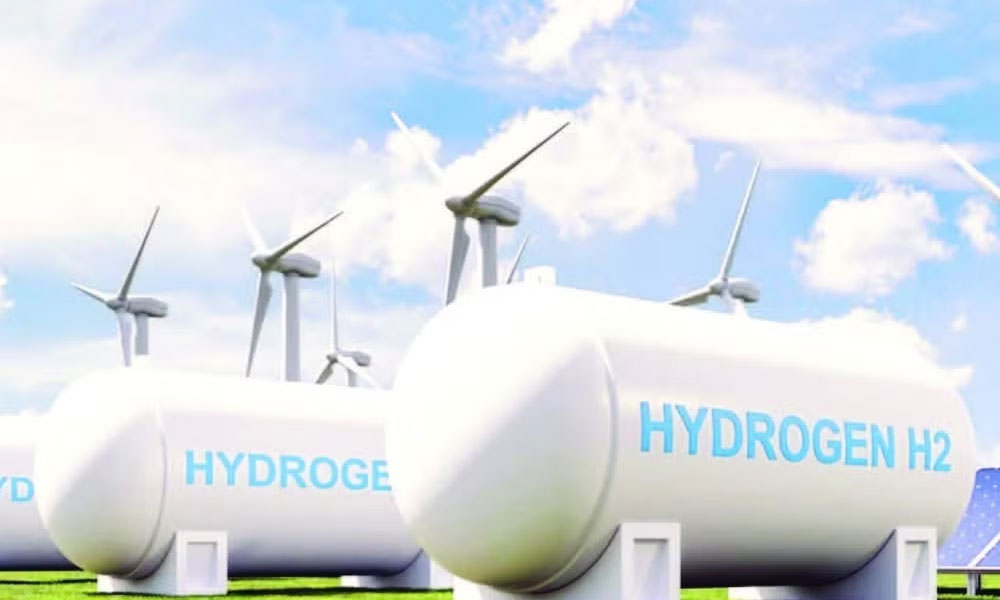
Illustrative image. |
Green hydrogen is produced by splitting water through electrolysis using electricity generated entirely from renewable sources such as solar, wind or hydropower.
Because the process produces no greenhouse gas (CO2) emissions, it is widely regarded as a “golden key” to decarbonising heavy industry.
The world needs green hydrogen because, despite the rapid expansion of solar and wind power, renewable electricity alone cannot fully replace fossil fuels in several hard-to-abate sectors.
These include the decarbonisation of steel, cement, chemicals and fertiliser production, all of which require extremely high temperatures or hydrogen as a feedstock.
It is also essential for heavy transport: while electric vehicle batteries perform well in passenger cars, they remain too heavy and require excessively long charging times for large cargo ships, aircraft and long-haul lorries.
Green hydrogen also offers a solution for long-duration energy storage. Surplus electricity generated by wind and solar farms during periods of high output can be used to produce hydrogen through electrolysis, which can then be stored in large-scale facilities and converted back into electricity at night or during the winter months.
The global race to produce green hydrogen is being shaped by three major blocs, each pursuing a distinctly different strategy. China currently holds the strongest position in the equipment supply chain, pursuing a strategy of large-scale manufacturing to drive down costs - much as it previously did with solar panels and electric vehicles.
The country leads the world in electrolyser manufacturing capacity, accounting for more than half of global production. Manufacturing costs are estimated to be three to four times lower than those in the US or Europe.
China continues to commission some of the world's largest green hydrogen facilities, including Sinopec's Kuqa project in Xinjiang, which uses vast solar power resources to produce hydrogen for domestic oil refineries.
Meanwhile, the US is leveraging powerful financial incentives through landmark legislation, using direct subsidies and tax credits under the Inflation Reduction Act to attract global investment.
The Act provides production tax credits of up to 3 USD per kilogram of green hydrogen. This generous support has effectively made the United States the world's lowest-cost location for green hydrogen production, triggering a significant shift of investment away from Europe.
The US Government has also committed billions of dollars to establish federally backed regional hydrogen hubs, integrating production, distribution and consumption infrastructure.
Europe, by contrast, is positioning itself primarily as a demand-driven market governed by stringent regulations. While the European Union (EU) is the world's strongest driver of green hydrogen demand, it faces challenges in expanding domestic production because of high electricity prices.
The EU has introduced mandatory quotas requiring heavy industries to incorporate specified proportions of green hydrogen by 2030. Recognising that limited land availability and less favourable renewable resources will prevent it from producing sufficient volumes domestically, the bloc is rapidly developing "hydrogen corridors" to import supplies from North Africa, the Middle East and South America via subsea pipeline networks.
Because the cost of green hydrogen depends almost entirely on renewable electricity prices, a new global energy map is beginning to emerge.
Countries blessed with vast land areas and abundant sunshine and wind resources are positioning themselves as the export hubs of the future.
The Middle East, including Saudi Arabia, the United Arab Emirates and Oman, is capitalising on its expansive deserts and some of the world's lowest-cost solar power to build multi-billion-dollar mega-projects such as NEOM, aiming to transform itself from an oil exporter into a leading exporter of green hydrogen and green ammonia.
Australia is seeking to become the principal supplier of green hydrogen to Japan and the Republic of Korea, two economies that rely heavily on imported clean energy.
Meanwhile, South American countries such as Chile and Brazil, together with African nations including Namibia and Egypt, are attracting tens of billions of dollars in foreign direct investment from Europe to develop specialised ports for exporting liquefied hydrogen and green ammonia.
India is also pursuing an ambitious national strategy, backed by an estimated 2.1 billion USD support package. The country aims to produce five million tonnes of green hydrogen annually by 2030—equivalent to around five times the current size of the global market.
Although China and India have different strategic objectives, both are making substantial long-term bets on green hydrogen as a cornerstone of energy security and sustainable economic growth. In doing so, the world's two most populous economies are steadily reshaping the global clean energy landscape.
A common feature of both countries' approaches is the strong role of the state in directing market development, underwriting investment and stimulating demand.





Reader's comments (0)