 Bắc Ninh


PM outlines key tasks, solutions for monetary, fiscal policy management in 2026
Prime Minister Pham Minh Chinh on February 8 signed Official Dispatch No. 12/CD-TTg outlining key tasks and solutions for the management of monetary and fiscal policies in 2026.
Prime Minister Pham Minh Chinh on February 8 signed Official Dispatch No. 12/CD-TTg outlining key tasks and solutions for the management of monetary and fiscal policies in 2026.
 |
|
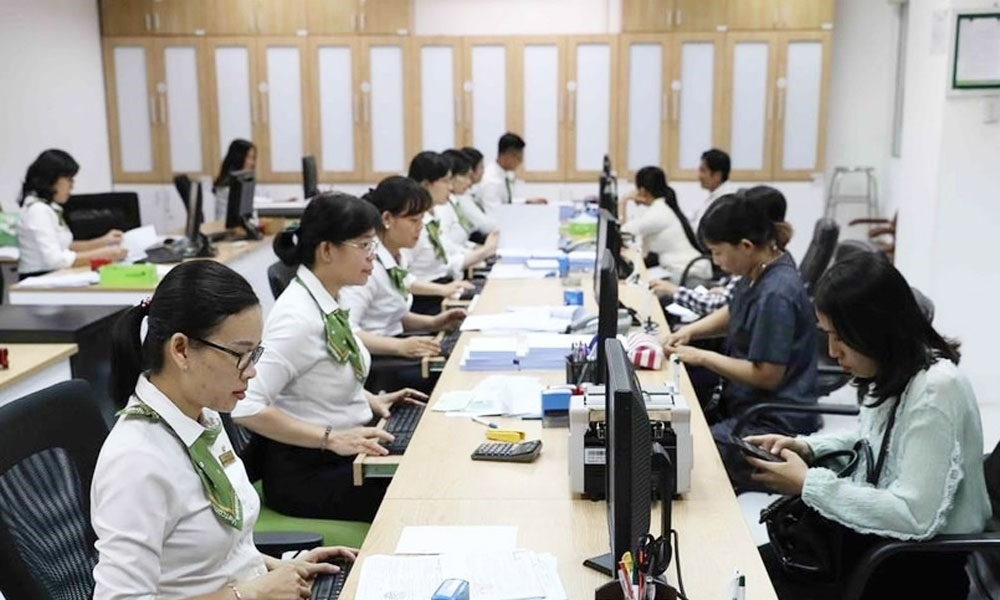
The central bank is assigned to manage monetary policy in a proactive, flexible, timely and effective manner. |
The official dispatch was sent to ministers, heads of ministry-level and government agencies; chairpersons of provincial/municipal People’s Committees; and chairpersons and general directors of state-owned corporations and groups.
Earlier, on January 30, the PM chaired a meeting on solutions for managing monetary policy, fiscal policy and several other policies in 2026.
Following the meeting, the Government leader directed the Ministry of Finance, the State Bank of Vietnam (SBV), and relevant ministries and agencies to strictly, fully, resolutely and effectively implement the tasks assigned in Notice No. 53/TB-VPCP dated January 30, 2026, on the conclusions of the PM, who is the head of the Government’s Steering Committee for macroeconomic management, at the meeting, along with other related directives.
The Ministry of Finance was tasked with leading and coordinating with relevant ministries, agencies and localities to pursue a reasonably expansionary fiscal policy with clear priorities, effectively tapping fiscal policy space to closely and flexibly coordinate with monetary policy and other macroeconomic policies.
The objective is to continue prioritising growth while maintaining macroeconomic stability, controlling inflation, and ensuring major balances, including public debt and the state budget deficit, within regulated limits.
The ministry was also requested to effectively mobilise domestic and foreign investment resources; make prudent use of public debt and deficit headroom to issue government bonds for key projects; intensify efforts to attract large-scale, high-tech FDI projects; and strongly develop capital markets, including putting the international financial centre in Ho Chi Minh City and Da Nang city into official operation in February so as to help mobilise medium- and long-term capital and ease pressure on short-term bank funding.
More efforts are needed to promptly and effectively implement the Resolution on piloting a digital asset exchange, as well as the scheme on the establishment and development of the carbon market in Vietnam, as approved by the Government and the PM.
The PM also urged conducting a comprehensive review and assessment of the current operations of small- and medium-sized enterprises (SMEs), promptly identifying difficulties and bottlenecks related to institutions, policies and administrative procedures, in order to propose practical, feasible and effective support measures. Particular attention should be given to studying mechanisms and policies to facilitate SMEs’ access to finance and credit.
It is necessary to expedite the research and completion of the National Investment One-Stop Portal, and report to the PM by February 25.
The SBV was assigned to manage monetary policy in a proactive, flexible, timely and effective manner, closely monitoring inflation, exchange rates, interest rates and liquidity to manage policy tools smoothly, with clear roadmaps, in line with macroeconomic developments and policy objectives.
Credit growth should be managed appropriately, transparently announced, and adjusted in line with economic conditions, while ensuring credit flows into production, priority sectors and growth drivers, and controlling risks in vulnerable areas.
Other ministries and localities were instructed to boost trade promotion, diversify markets, ensure energy and food security, accelerate public investment disbursement from the beginning of 2026, stabilise prices of essential goods, and strictly handle violations of price regulations.
State-owned corporations and groups were urged to effectively implement production and business plans, play a leading role in driving growth, enhance competitiveness, and strive for output or revenue growth of at least 10% in 2026, contributing to the national economic growth target.
Deputy Prime Ministers will oversee the implementation within their assigned fields, while the Government Office will monitor progress and report issues beyond its authority to competent agencies.

















Reader's comments (0)