 Bắc Ninh


Vietnam, Guinea seek to boost investment cooperation
The MOU signed between the Vietnamese Ministry of Finance and the Guinean Minister of Planning, International Cooperation and Development aims to formalise cooperation, strengthen institutional capacity and share experience in planning, development and other areas agreed upon by the two sides in writing, in line with their respective functions and responsibilities.
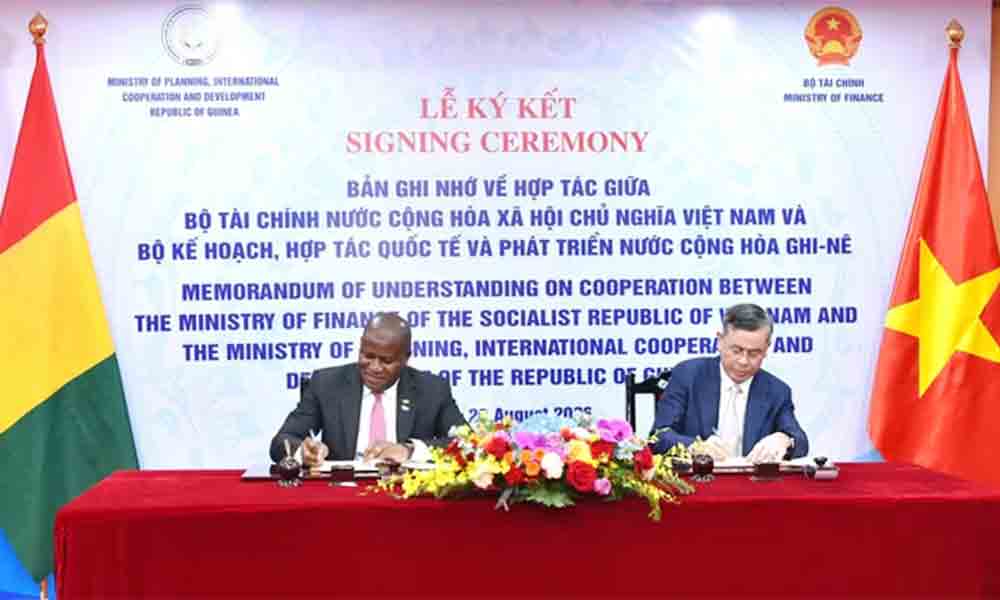
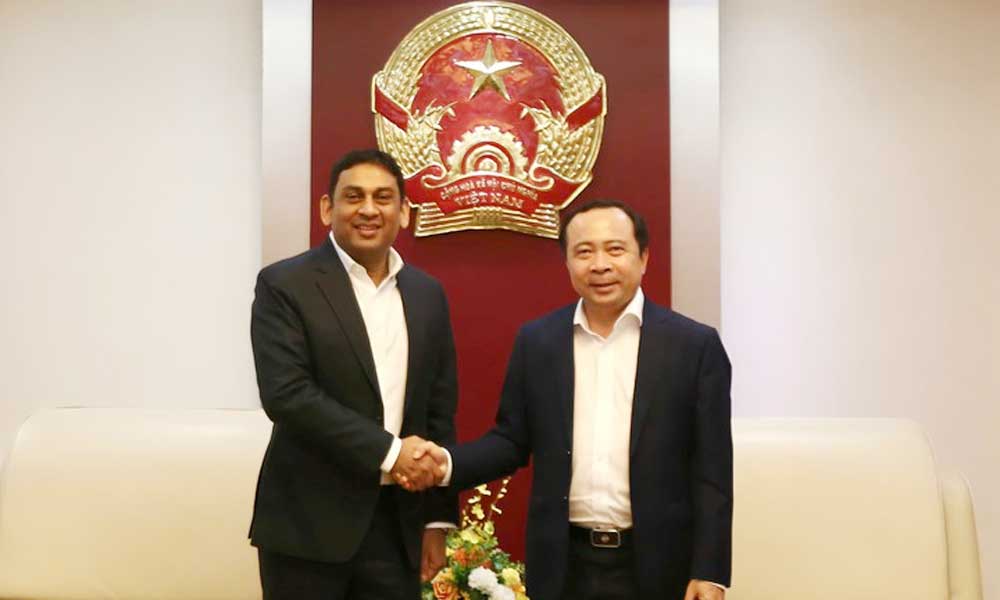
Minister of Finance Ngo Van Tuan and Guinean Minister of Planning, International Cooperation and Development Ismaël NaBé signed a Memorandum of Understanding (MOU) on cooperation between the two ministries in Hanoi on August 20.
 |
|
Minister of Finance Ngo Van Tuan (R) and Guinean Minister of Planning, International Cooperation and Development Ismaël NaBé signed a Memorandum of Understanding (MOU) on cooperation between the two ministries in Hanoi on August 20. |
The signing took place during the working visit to Vietnam by a high-level delegation from Guinea, marking a new step in concretising the two countries’ traditional friendship and promoting cooperation between the two ministries.
Vietnam and Guinea established diplomatic relations on October 9, 1958, with Guinea becoming the first African country to establish diplomatic ties with Vietnam.
Bilateral trade reached 233.16 million USD in 2025. The two sides agreed that substantial room remains for expanding economic, trade and investment cooperation, with the MOU providing a framework for closer exchanges, experience sharing and practical collaboration.
Comprising seven articles, the MOU aims to formalise cooperation, strengthen institutional capacity and share experience in planning, development and other areas agreed upon by the two sides in writing, in line with their respective functions and responsibilities.
The document is not an international treaty, creates no rights or obligations under international law, and will remain valid for three years from the date of signing.
Speaking at the signing ceremony, Tuan said the visit by Ismaël NaBé and the signing of the MOU marked a new milestone in the two ministries' cooperation.
While bilateral trade remains modest compared with the two countries’ potential, he noted that their economies have many complementary strengths, particularly in investment and trade.
Vietnam is ready to serve as a gateway for Guinea to access the ASEAN market of nearly 700 million people, and expects Guinea to become a gateway for Vietnamese businesses to enter the African market, he said.
Based on areas where Vietnam has strengths, the minister said the Vietnamese side will propose the Prime Minister send a business delegation to Guinea to explore investment opportunities, initially focusing on mineral extraction and processing, including bauxite and iron ore, as well as telecommunications, infrastructure and agriculture.
In agriculture, Vietnam is willing to share experience and send experts to support Guinea in areas of its strength, including rice, coffee, pepper and cashew production, and agricultural processing, he said, expressing his hope that Guinea will create favourable conditions for Vietnamese enterprises to invest and do business in the country.
Ismaël NaBé, in reply, said that the two countries are traditional friends and the visit aims to relaunch bilateral cooperation and bring it to a new level.
He spoke highly of Vietnam’s development achievements and the outcomes of recent exchanges between agencies of the two countries.
He highlighted significant cooperation potential in minerals, oil refining and petrochemicals, agriculture, industry, infrastructure, telecommunications, finance and banking, insurance, and health care.
The Guinean side particularly appreciated the South Africa-Vietnam-Guinea tripartite agricultural cooperation model, under which the application of Vietnamese rice varieties and farming techniques has helped increase rice yields in some areas from less than one tonne to over six tonnes per hectare.
Guinea also hopes to expand cooperation in technology, fertiliser production and agricultural research.
The guest also introduced the “Simandou 2040” Vision, which seeks to diversify Guinea’s economy around five pillars: agriculture, processing industry and trade; education and culture; infrastructure, transport and technology; finance, banking and insurance; and health care.
Guinea welcomes Vietnamese investors and hopes the commitments under the MOU will soon be translated into concrete programmes and projects, he added.
The two ministers agreed to coordinate in identifying priority areas and developing practical activities in line with each country’s functions, resources and laws.
They expressed their hope that effective implementation of the MOU will deepen Vietnam-Guinea relations, strengthen cooperation between the two ministries and expand collaboration in areas of mutual interest, contributing to South-South cooperation for inclusive and sustainable development.

Reader's comments (0)