 Bắc Ninh


Vietnam recovers nearly 1,500 soldiers' remains in four months, more than 100 under Ho Chi Minh City park
Vietnam has recovered the remains of nearly 1,500 soldiers since March in a campaign aimed to recover about 7,000 sets of remains from the war.
Searchers have located seven mass graves since the beginning of a 500-day campaign starting March 15 this year that aims to recover about 7,000 sets of remains, take samples from some 230,000 unidentified graves and run DNA analysis on about 18,000 of them.
 |
|
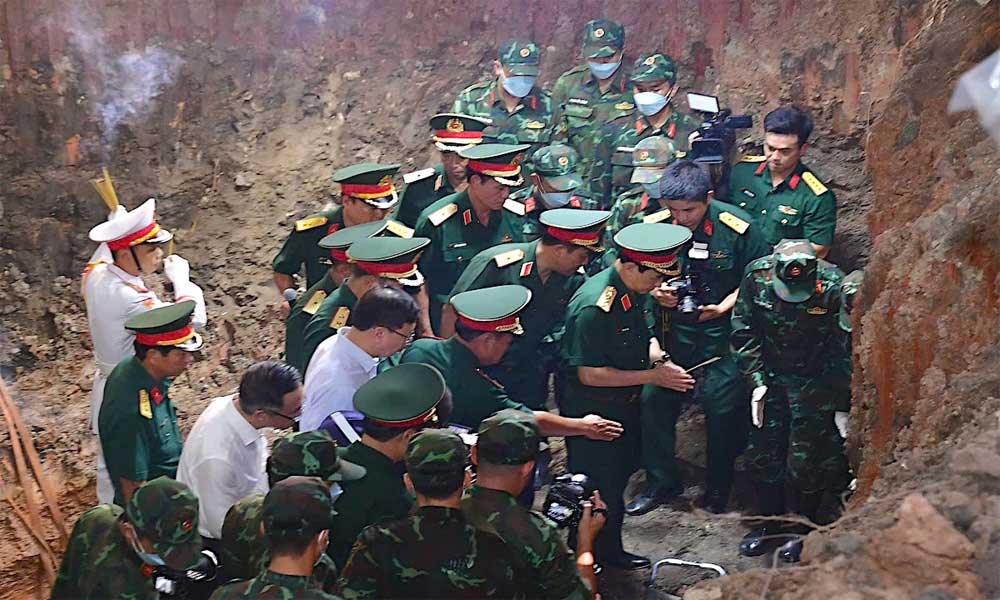
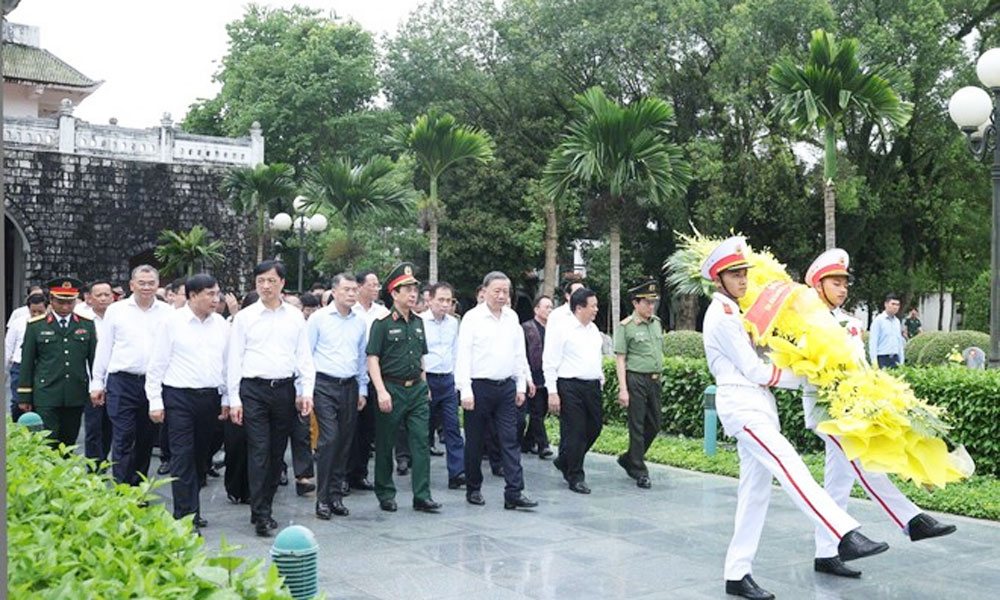
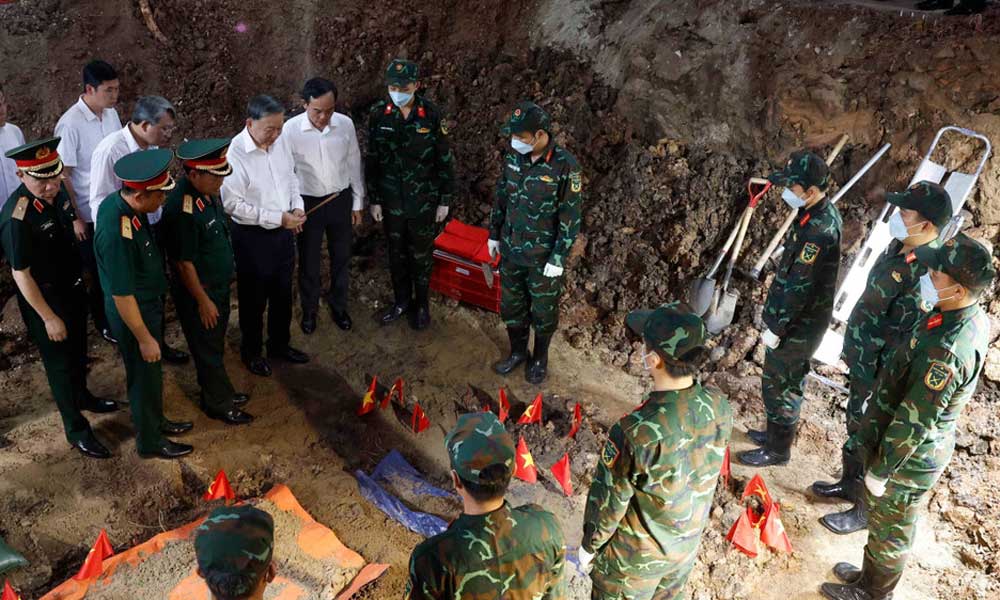
Deputy Prime Minister and Defense Minister Phan Van Giang offers incense at the mass burial trench in Le Thi Rieng Park, Ho Chi Minh City, where the remains of 100 soldiers have been found, on the morning of July 25, 2026. |
Deputy Prime Minister and Defense Minister Phan Van Giang said July 25 at a ceremony launching excavation work in Dong Nai City bordering Ho Chi Minh City that more than 30 search teams have been created or reinforced under the campaign.
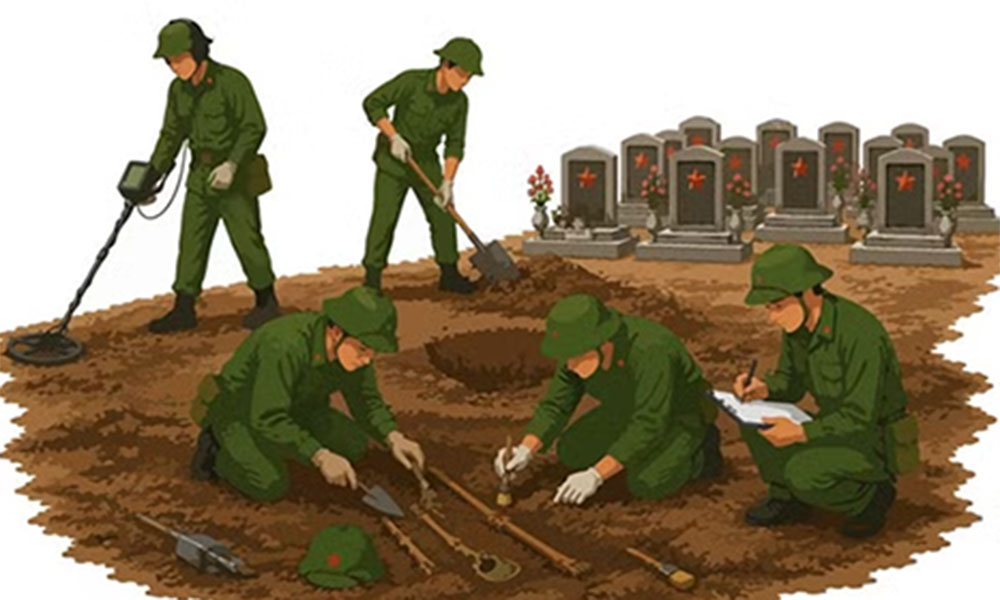
Working groups have been sent to localities to collect and verify accounts from surviving witnesses, while excavation crews use ground-penetrating radar, digital mapping and case-management software to narrow their search.
Nationwide, more than 73,000 samples have been taken from soldiers' graves, of which more than 50,000 are intact enough for analysis.
About 8,500 hectares of land have been cleared of mines and unexploded ordnance, including more than 3,500 hectares in the core zone of Vi Xuyen in Tuyen Quang Province that borders China, over 80% of the target for that area.
The obstacles are compounding with time, Giang said. Terrain and landmarks have shifted since the war, burial records and grave maps are incomplete, unexploded ordnance still contaminates many sites, and the witnesses who can point searchers to a location are dying off.
Remains buried for five decades in tropical soil have degraded to the point that sample quality is falling, while the country's DNA testing capacity has not kept pace with demand.
At Minh Duc, forces from Military Region 7 have found 22 sets of remains and numerous personal effects in 15 days of expanded digging. Among the objects was a pen engraved with the name "Tien Quy" and an image of two doves.
The site lies on the northwestern slope of Hill 74 in Dong Dau hamlet, a corridor that saw sustained fighting between main-force liberation units and U.S. and South Vietnamese troops from 1967 to 1975.
In November 1969 it was the focus of a joint U.S. and South Vietnamese search-and-cordon operation, and liberation forces repeatedly ambushed armored columns along the same ground. Military Region 7 is currently working at 13 sites, four of them in Dong Nai.
HCMC park's mass grave
The campaign's most unexpected find has come from the center of Ho Chi Minh City. Le Thi Rieng Park, a public green space in the city's Hoa Hung Ward, was built over Do Thanh Cemetery, also known as the Chi Hoa-Saigon burial ground.
Cross-checking archival records against witness accounts and radar surveys, searchers identified several patches of ground with irregular readings.
Two mass burial trenches have been opened there since July 4. In the first, beside the park's memorial house, crews widened the excavation to more than 100 sq.m at a depth of 2-3 m and recovered 100 sets of remains.
The second, about 50 m away and under excavation since July 24, has yielded four more. Dozens of objects have been collected alongside them, including rubber sandals, AK rifles, ammunition, combs and rings.
One set of remains was found with documents still legible. They carried the name Huynh Van Quen. Initial verification indicates he served with Long An Battalion 1 and fought at Chu Y Bridge, in what were later HCMC's Districts 5 and 8, during the 1968 Tet Offensive.


Reader's comments (0)