 Bắc Ninh


Bac Ninh creates new space for sustainable digital value chains
BAC NINH - By proactively improving its legal framework, developing infrastructure and digital markets, and preparing a highly skilled workforce, Bac Ninh is laying the foundations for a comprehensive digital economy ecosystem and stronger growth.
Policy decisions drive development
Recognising that institutional reform is key to unlocking growth, Bac Ninh has introduced a series of policies and programmes to accelerate digital economic development.
 |
|
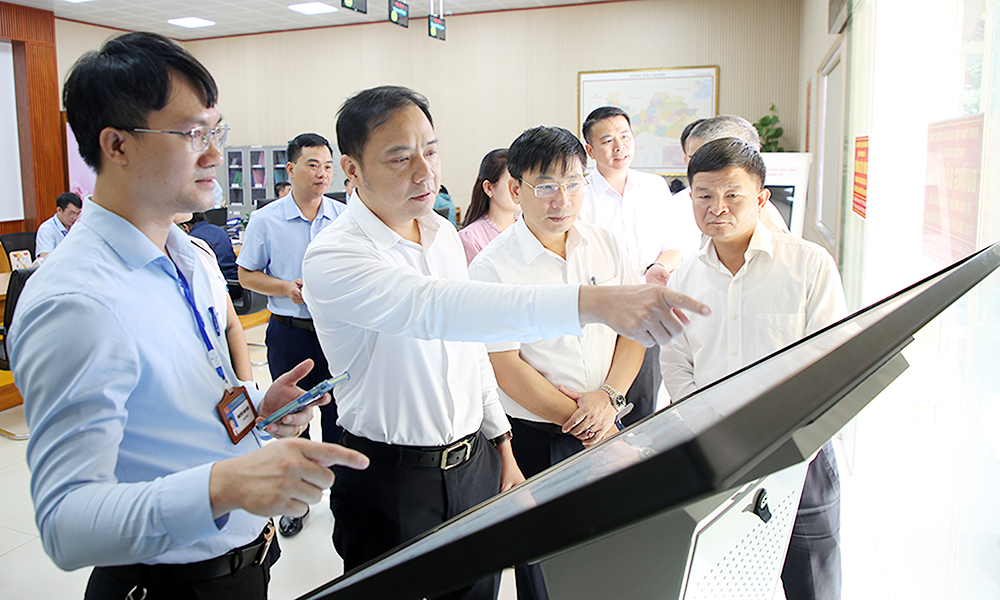
Bac Ninh Municipal Party Committee Standing Committee member and Vice Chairman of the municipal People’s Committee Dao Thanh Truong inspects the implementation of the People’s Assistant model in Phuong Lieu Ward. |
Under Plan No. 144/KH-UBND, issued on November 25, 2025, the city aims to have 60% of small and medium-sized enterprises using digital technologies by 2030.
It also plans to transform traditional factories into smart manufacturing facilities, apply digital technologies to optimise end-to-end logistics and develop comprehensive digital agricultural value chains.
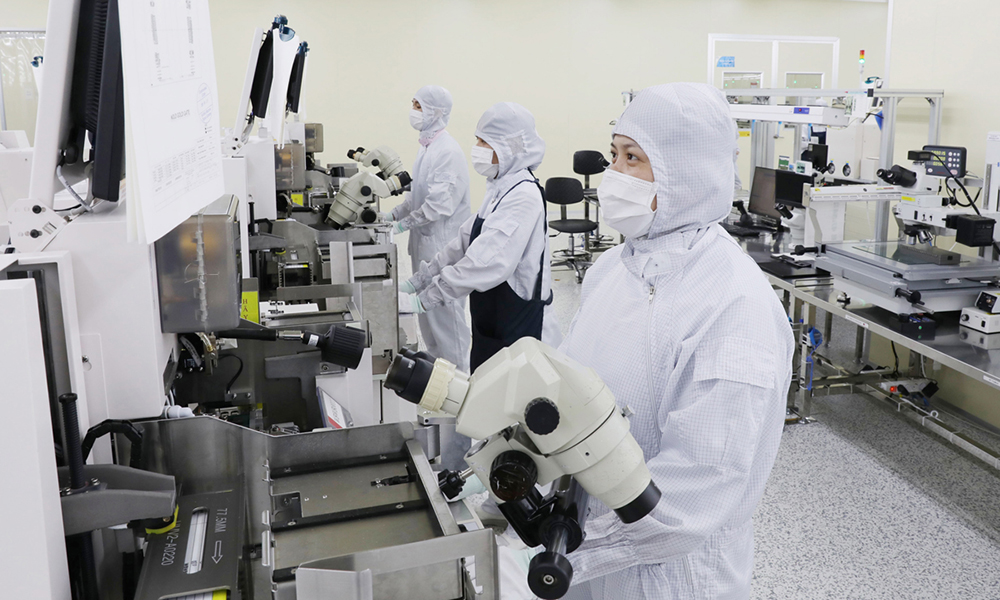
The city has also strengthened its steering committee for semiconductor industry development, headed by the Chairman of the municipal People's Committee, to ensure coordinated management and address obstacles facing high-tech projects.
Issues involving dedicated power supplies, environmental procedures and production premises are being handled more quickly, helping semiconductor testing facilities shorten equipment installation periods and begin operations sooner.
Beyond addressing immediate difficulties, Bac Ninh is pursuing a longer-term strategy under Plan No. 310/KH-UBND on digital economy and digital society development for 2026-2030.
The plan identifies digital data and artificial intelligence (AI) as key drivers of competitiveness, administrative reform and inclusive digital development.
The city aims to become a high-tech industrial centre and smart urban area, while positioning itself among Vietnam's leading localities in digital transformation.
Identifying semiconductors as a core technology, Bac Ninh issued Plan No. 172/KH-UBND in late 2025 to develop the semiconductor industry through 2030, with a vision to 2045.
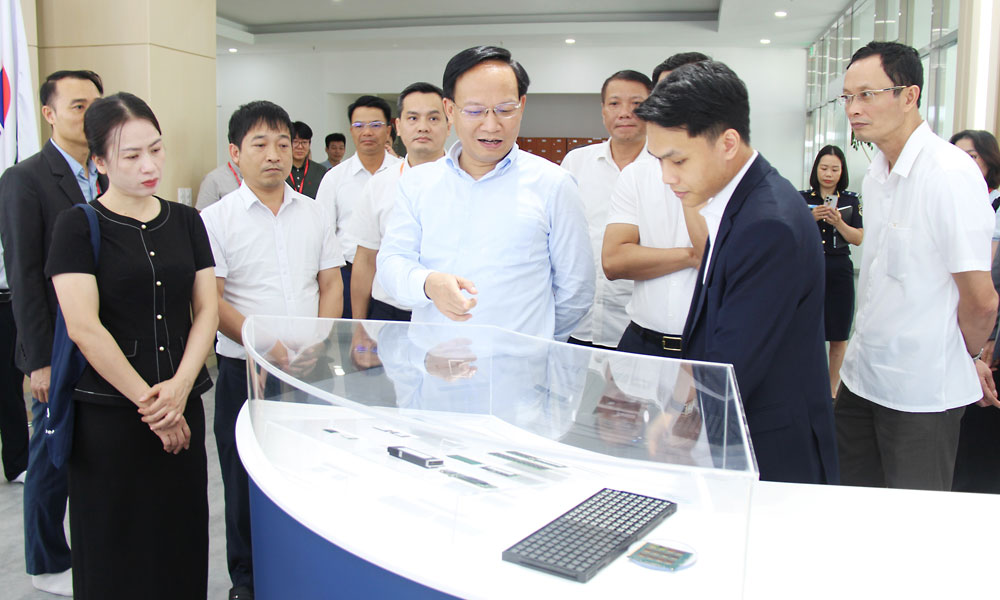
The goal is to establish the city as a centre for chip packaging and testing, while gradually expanding into chip design and the production of new materials.
Bac Ninh is also improving its business and investment environment to attract high-tech companies. Several industrial parks are being developed into digital technology and data centres, including facilities supporting AI.
Mike Maceda, Director of Partnerships and Open Innovation at Plug and Play, said the group wanted to work with the city to connect businesses, universities, research institutions and investment funds within an open innovation ecosystem.
Potential areas for cooperation include semiconductors, advanced manufacturing, robotics and energy, he said.
Alongside high-tech industrial development, the city is promoting digital retail under Plan No. 293/KH-UBND, which implements the retail market development strategy through 2030, with a vision to 2050.
The plan targets a service sector contribution of about 19.2% of gross regional domestic product (GRDP), online shopping by more than 70% of adults and electronic invoices for all electronic transactions.
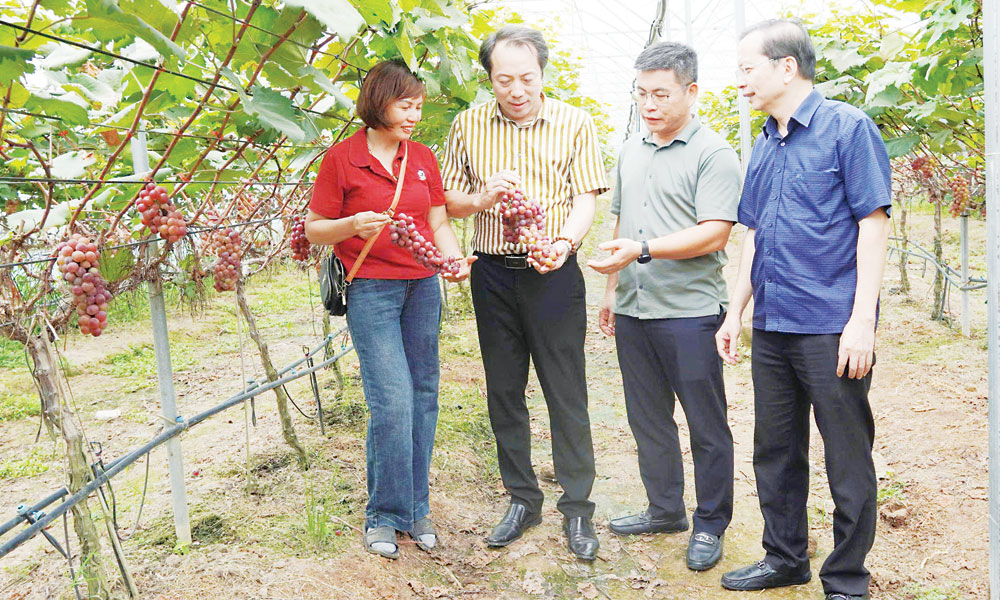
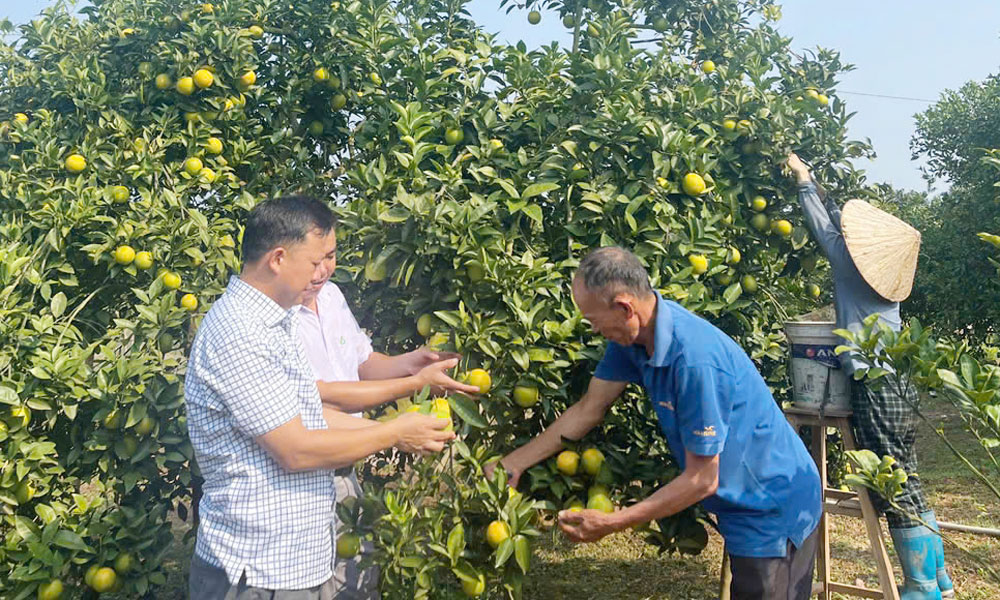
Cooperatives and small businesses are being encouraged to sell agricultural produce and products under the One Commune One Product (OCOP) programme on major e-commerce platforms. The development of last-mile warehouses is also expected to reduce delivery costs.
Administrative reform is another priority. Since August 2025, the city has applied special mechanisms to 96 administrative procedures for key projects through its "24-hour Green Lane" and "60% Green Lane" schemes.
 |
|
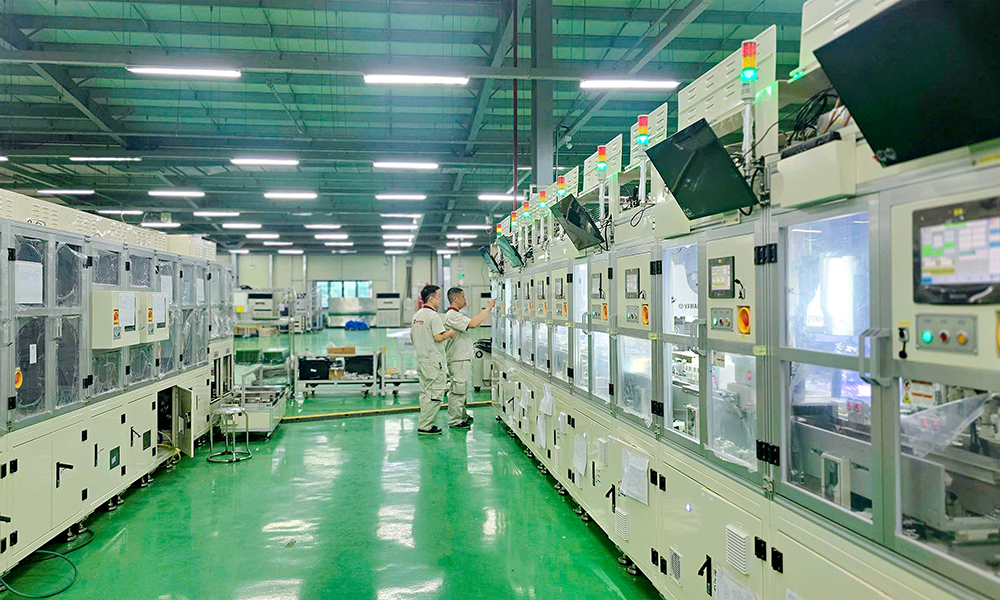
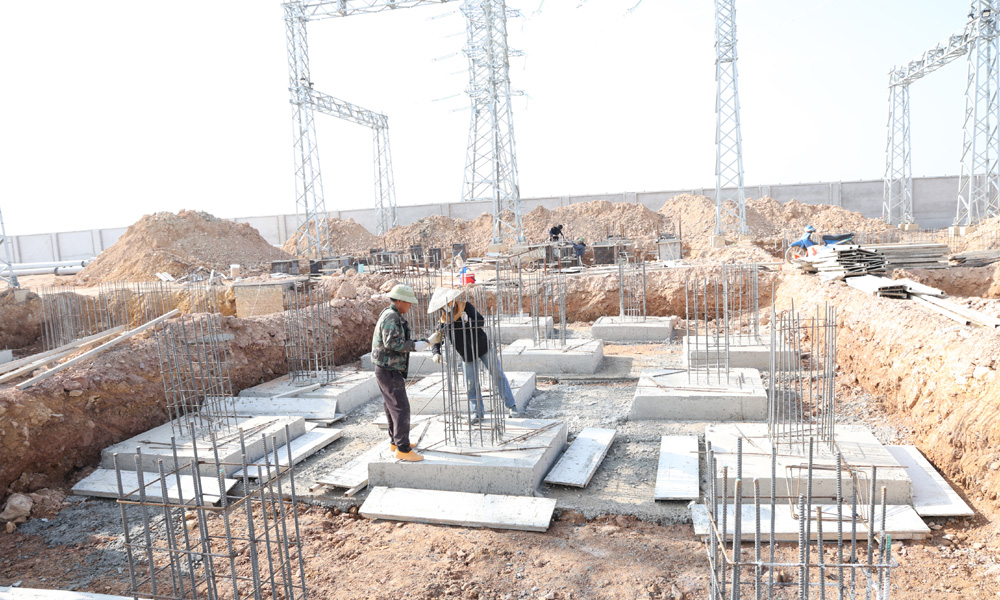
Autotech Vietnam Joint Stock Company, located in VSIP Industrial Park, is one of the leading providers of advanced automation solutions. |
The measures are designed to shorten processing times, resolve bottlenecks, accelerate public investment disbursement and create more favourable conditions for businesses and investors.
Nguyen Viet Hung, Director of the municipal Department of Construction, said 34 procedures under the department's management were covered by the "60% Green Lane" mechanism. The department guides investors in identifying project priorities to ensure eligible projects receive faster and more effective processing.
Developing a highly skilled workforce
While an efficient institutional framework provides the foundation, human resources are crucial to sustainable development.
To prepare a skilled technical workforce, the municipal People's Council issued Resolution No. 113/2025/NQ-HDND on December 10, 2025, providing support for vocational training and human resource development in semiconductors, AI and digital technologies during 2025-2030.
The local budget provides direct tuition assistance to students studying microchips, semiconductors and AI, supports retraining for workers shifting to new technical fields, and offers appropriate incentives for qualified experts and lecturers.
In 2025, Bac Ninh College of Industry worked with Hana Micron Vina Co., Ltd. to provide specialised semiconductor technology training for 300 students. Engineers from the company regularly delivered lessons, giving students direct exposure to real production conditions.
Samsung Vietnam, based in Yen Phong Industrial Park, is another example of business participation in local workforce development.
Kim Yong Sup, Samsung Vietnam's Deputy General Director in charge of External Relations and Corporate Social Responsibility, said the three-way cooperation model involving the government, schools and businesses was crucial to developing highly skilled workers.
 |
|
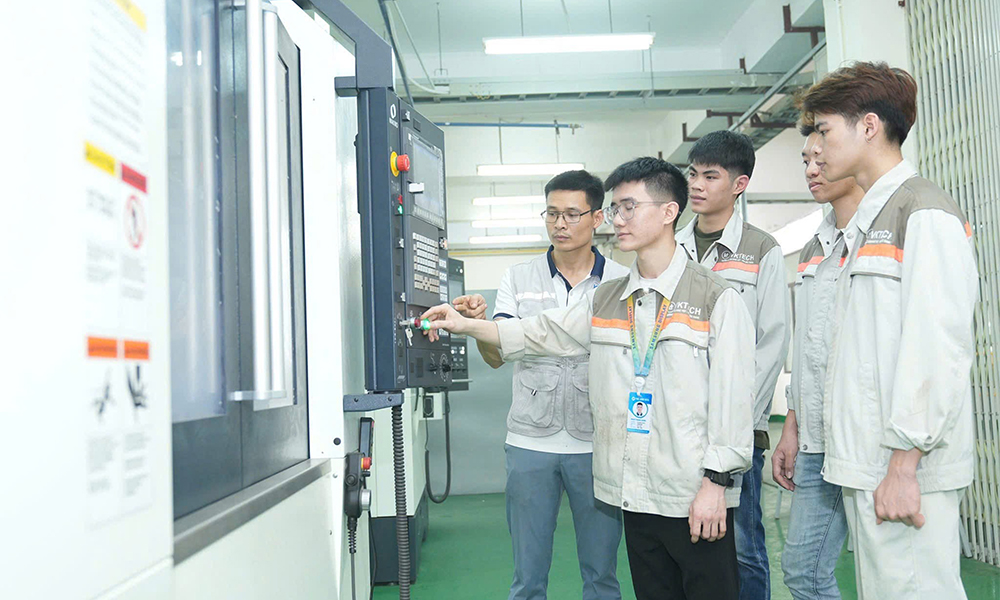
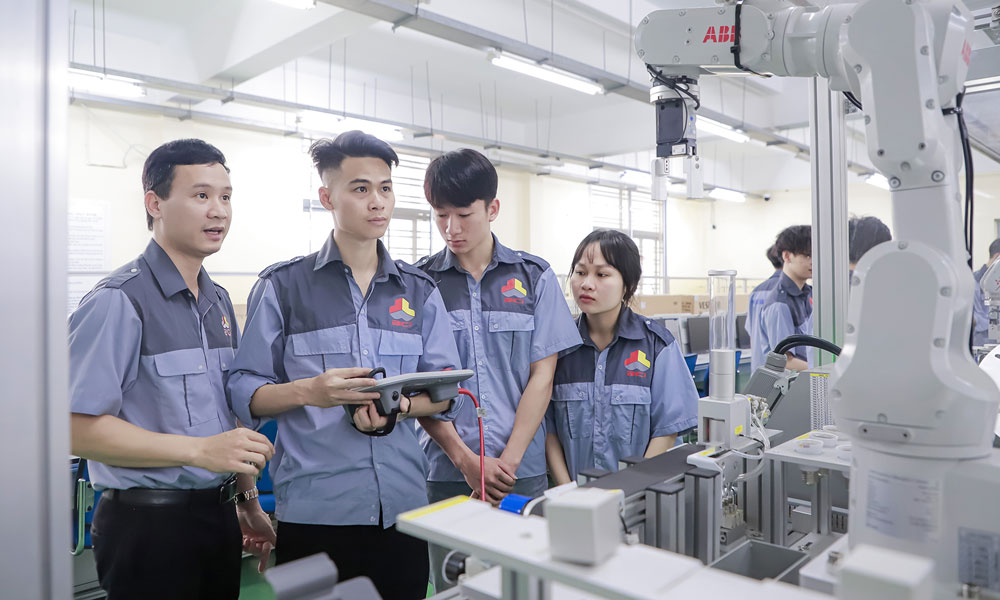
Students of the Bac Giang Vietnam-Korea College of Technology receive hands-on vocational training using modern equipment. |
The company will continue expanding training and consultancy programmes to help Vietnamese manufacturers meet the requirements for joining the supply chains of Samsung and other foreign-invested corporations, he said.
In addition to vocational training, Bac Ninh is allocating clean land to attract major universities and research institutions.
Several institutions, including Hanoi University of Science and Technology, Hanoi University of Natural Resources and Environment, Hanoi Medical University and the Vietnam Aviation Academy, have established training facilities in the city.
These institutions are expected to help develop a local pool of skilled workers for key sectors, particularly strategic technologies, while supporting the formation of university-oriented urban areas and strengthening Bac Ninh's role as a national centre for education, research and development.
Building on the Politburo's strategic resolutions on science and technology, digital transformation, private-sector development, international integration and legal reform, Bac Ninh is introducing tailored policies to attract core technologies, remove bottlenecks in capital and land access, and support business innovation.
These efforts are expected to increase the digital economy's contribution to the city's overall economy and open up new avenues for sustainable growth.














Reader's comments (0)