 Bắc Ninh


Banh da ke in Do market, familiar flavour of Kinh Bac region
BAC NINH- Amid the vibrant rhythms of Bac Ninh’s streets, banh da ke (millet rice cracker) still exists as a humble street snack with its familiar flavors, evoking childhood memories for generations of people. In Do market, Kinh Bac ward, Bac Ninh city, the “ba gia” (old lady) sticky rice stall has become a popular address for those loving this simple dish.
Locals call Pham Thi Toan’s stall with an endearing name “ba gia” sticky rice stall. This simple name has been familiar for many generations of food lovers. Among several delicious snacks offered at the stall, banh da ke is one of the most favourite dishes.
 |
|
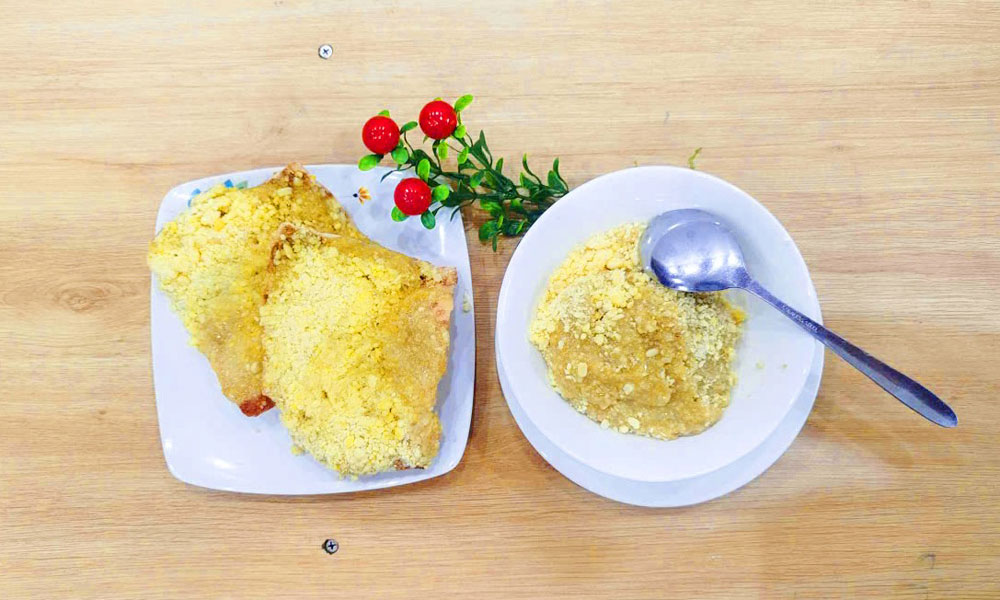
The dish of Banh da ke in Do market has been existed for nearly 3 decades. |
According to Toan’s daughter Pham Thi Mien, the stall has been in business for nearly 30 years. Due to her age, Toan has passed the trade on to her daughter to continue running the stall.
Banh da ke is not a unique dish of Bac Ninh but it is popular in many localities in northern delta region.
However, for those who have been closed to Do market, the crispy banh da ke, topped with a smooth layer of yellow millet paste, mung beans or grated coconut and a little sugar, has become a cherished part of their memories.
Ingredients to make banh da ke are quite simple including millet seed, green bean, grated coconut, white sugar and toasted rice cracker.
For a smooth millet layer, maker must pay careful attention to ingredient preparing to cooking process. Green bean must be soaked, rinsed thoroughly to remove the husks and then steamed with a little salt.
Millet seed also needs to be rinsed carefully and soaked in diluted limewater for about 2 hours before cooking with proper amount of water.
When it is boiled, reduce the heat and stir frequently to ensure the millet is cooked until it becomes soft without sticking to the bottom of the pot.
When the millet seed becomes smooth and creamy, it can be used to make the dish. Cooked millet is spread over the surface of a crispy rice cracker, then add some mung bean or grated coconut and white sugar.
The nutty flavor of millet, the rich aroma of mung beans, the creaminess of coconut, a touch of sweetness from the sugar and the crispness of the rice cracker are mixed to create a harmonious and unforgettable taste.
Apart from banh da ke, the stall serves many types of traditional sweet desserts. It is open in the afternoons; thus, it is often crowded after school and work hours. Students, workers or the elderly can find here a tasty dish at an affordable price.
“This stall sells many dishes but I like banh da ke most because it is fragrant, soft and can be served with sweet soup. All dishes are cheap, only 20,000 or 30,000 VND per each”, said Nguyen Thi Huong, a regular customer of the stall.
Among many food choices, banh da ke in Do market still lures a large number of customers. Beyond a type of dessert, this small cake reminds us of simple eating habits of the Kinh Bac people, where familiar flavours have been preserved through the generations.


Reader's comments (0)