 Bắc Ninh


Going on a pilgrimage to the sacred land
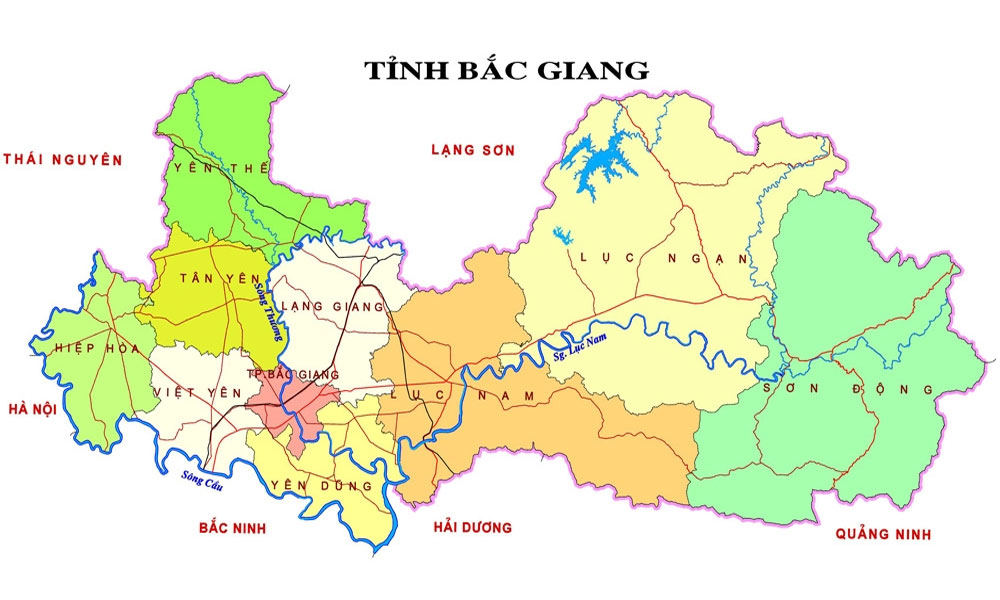
The road to the western side of Yen Tu Mountain Range, which runs from Yen Dung, through Luc Nam and Luc Ngan, to Son Dong in Bac Giang province, is the road of those four roads.
 |
|
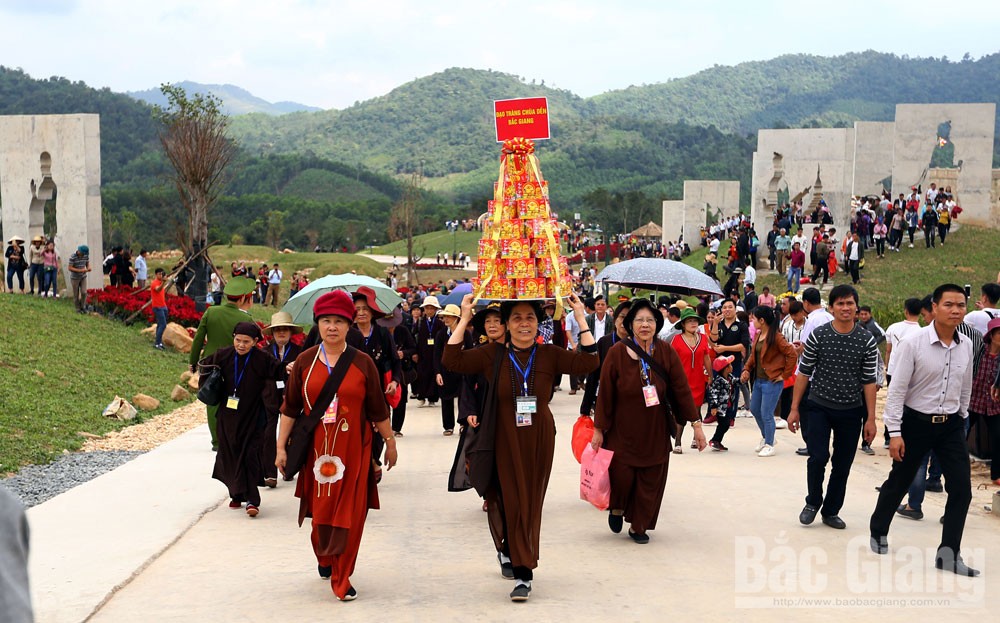
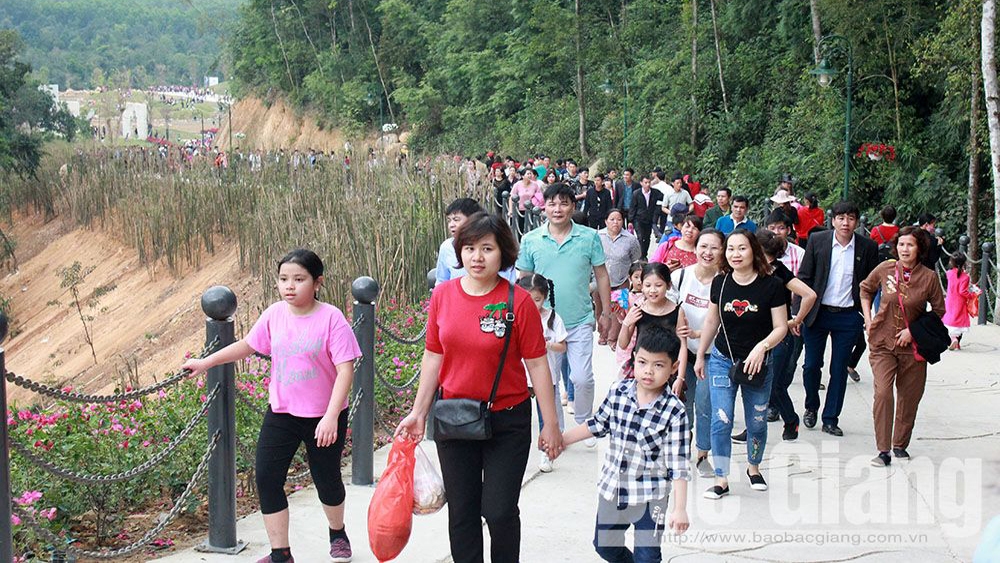
Going on a pilgrimage to Tay Yen Tu. |
From the path or the asphalted road, our ancestors cleared the land to build villages and set up ties with the Chinese empires, imprinted the footprints of the troops guarding the border, and fought invaders from the North. From the beginning of the 13th century, this road has been called the spiritual road and it is a tourist road today.
The west of Yen Tu is a beautiful land with majestic mountains, green trees and exotic streams that cannot be easily seen in other places.
But the land is not sacred and charming to urge people to come if there was not a king who gave up all power, glory, and earthly temptations to climb to the top of a high mountain - an extremely quiet place to study Zen and set up a pure Vietnamese Zen - Truc Lam Yen Tu Zen Buddhist sect.
That king was Tran Nhan Tong. The new and bright thing of Truc Lam Yen Tu Zen is to free the human soul of sorrow, writhes, and worries.
If King Tran Nhan Tong, from Thang Long capital, passed through the Red River to Hai Duong and Quang Ninh and then to Yen Tu, his two disciples Phap Loa and Huyen Quang went there from the west (in Bac Giang province) - ie through Yen Dung, Luc Nam, Luc Ngan and Son Dong.
Duc La Pagoda, also known as Vinh Nghiem Pagoda, in Tri Yen commune (Yen Dung district) is the place where Phap Loa and Huyen Quang made their stop and later deliver sermons, becoming the center of the Zen sect and considered the first Buddhist University of Vietnam and the center of Buddhism in the Tran dynasty.
Vinh Nghiem Pagoda has been existing for more than 700 years. At that time, it was the leading pagoda in the country as it regularly hosted the kings and mandarins of the Ly and Tran dynasties. King-Monk Tran Nhan Tong and Zen masters Phap Loa and Huyen Quang - the founders of the Truc Lam Yen Tu Zen sect, are worshiped here.
Presently, the pagoda still keeps a collection of rare and precious woodblocks carved with Buddhist Sutras which has been recognized by UNESCO as a “Memory of the World” heritage in Asia-Pacific.
Following the footsteps of the ancients, from Road 293 starting in Bac Giang city with pagodas scattered along the way, we envision the Buddhism preaching activities of the Zen masters and devotees in the past.
It seems that the mountains and landscapes also bear their own forms and nuances, which exalted the sacredness and mystery in the humming pagoda bells and tocsin-knocking sounds in the space.
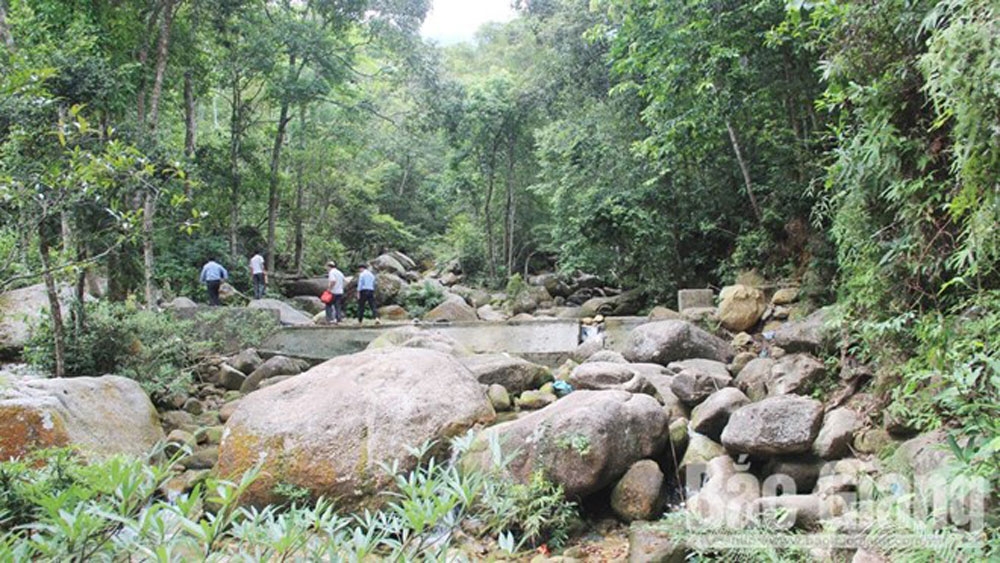
That is Reu Chasm in Cam Ly and Mo Spring in Nghia Phuong (Luc Nam) with cascades creating many baths in a dense forest, immersed in low- and high-pitched sounds
 |
|
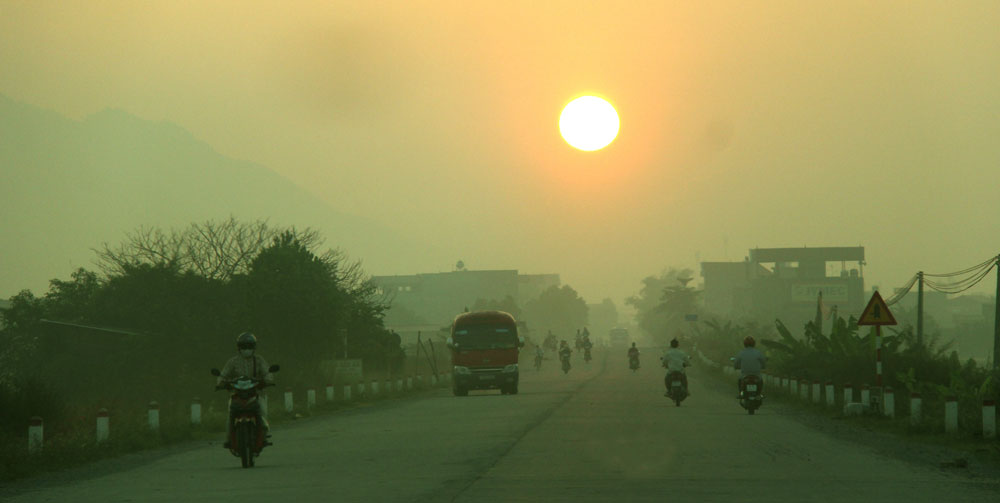
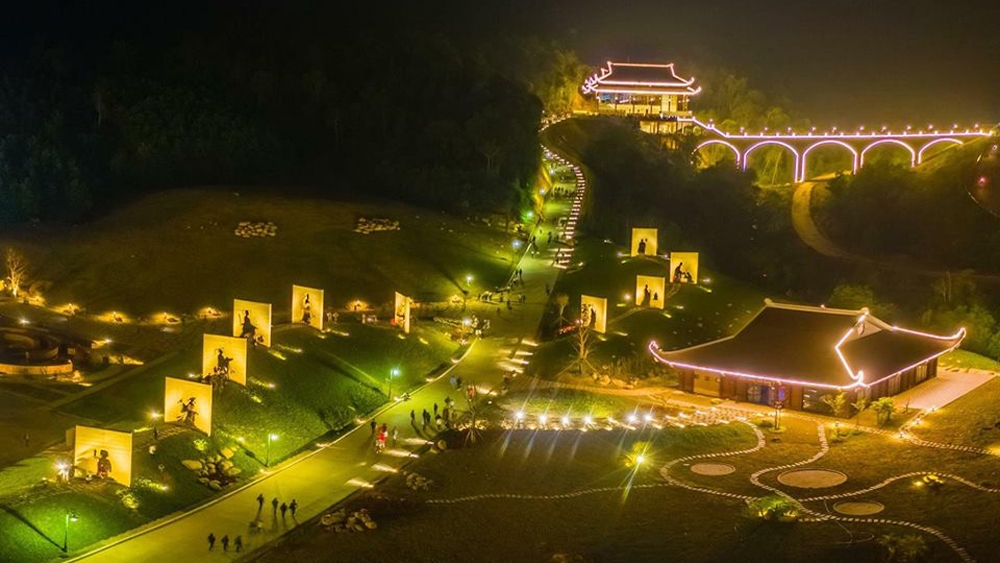
Road 293 connects Bac Giang city with Tay Yen Tu spiritual and ecological tourism complex. |
Nuoc Vang Spring in Luc Son commune boasts golden water like honey all year round but the water becomes pure white when scooped up. Son Dong district has Ba Tia and Khe Ro waterfalls located in a primeval forest which is home to many rare and precious floral species in the northeastern region.
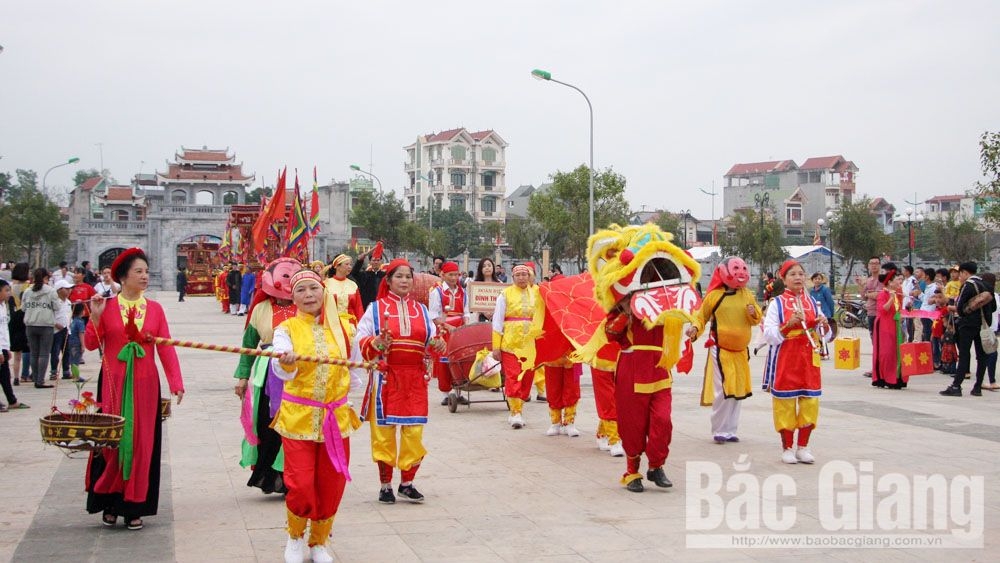
Along the way of pilgrimage to Tay Yen Tu, we will see numerous mountains near and far, undulating fields and renovated villages. There are many communal houses and pagodas hiding in the forest, surrounded by bamboo rows. We will have an opportunity to get along with people of different ethnic groups in festivals and special cultural activities.
Road 293 is not only the "spiritual" road, but also the tourist road. That road takes us back to history - at least the Ly and Tran dynasties more than seven centuries ago - the golden age of Buddhism, both religiously and culturally.
That is also the way making us involved in heritage preservation, building and protection for the broader goal of rich people, strong country, and a democratic, fair and civilised society.

Do Nhat Minh




Reader's comments (0)