 Bắc Ninh


Localities propose reforms to improve three-tier government model
A Hanoi official called for further decentralisation to commune-level authorities in line with resource allocation, continued streamlining of organisational structures to eliminate unnecessary intermediary layers, further refining the Party organisations’ model to align with the state administrative system, greater autonomy for non-business public service units, and wider participation of businesses and social organisations in delivering suitable public services.
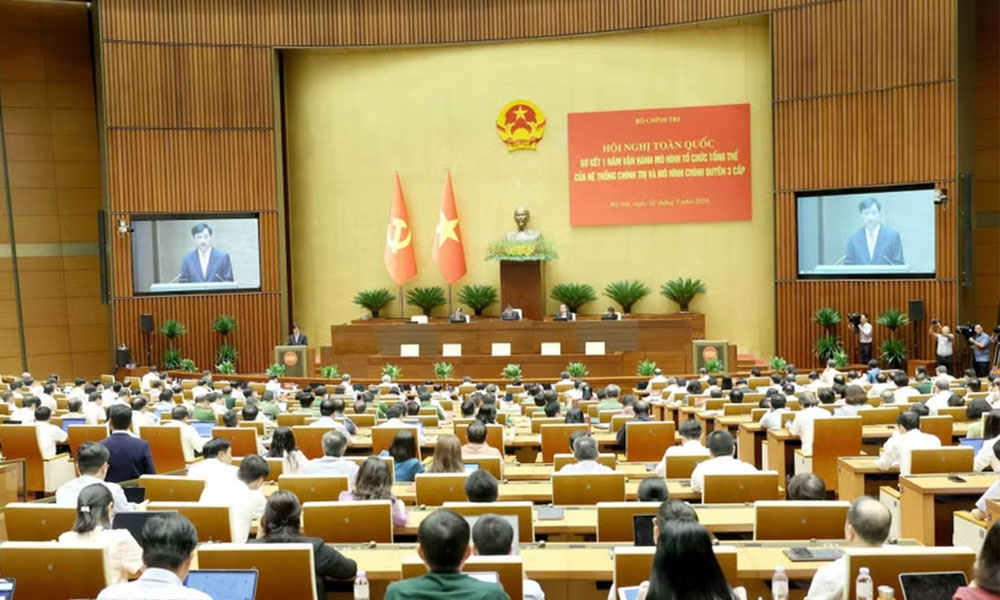
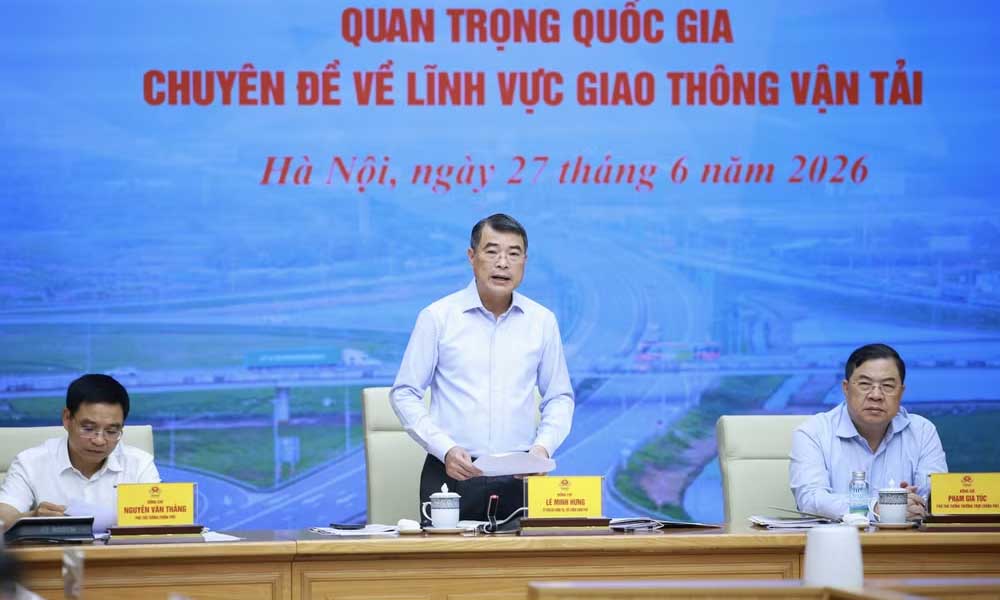
Leaders of Hanoi, Ho Chi Minh City and Dong Nai shared experiences after one year of operating Vietnam's restructured political system and three-tier administration model at a national review conference on July 1, highlighting encouraging results while proposing further reforms to improve governance, decentralisation, digital transformation and the quality of public services.
 |
|
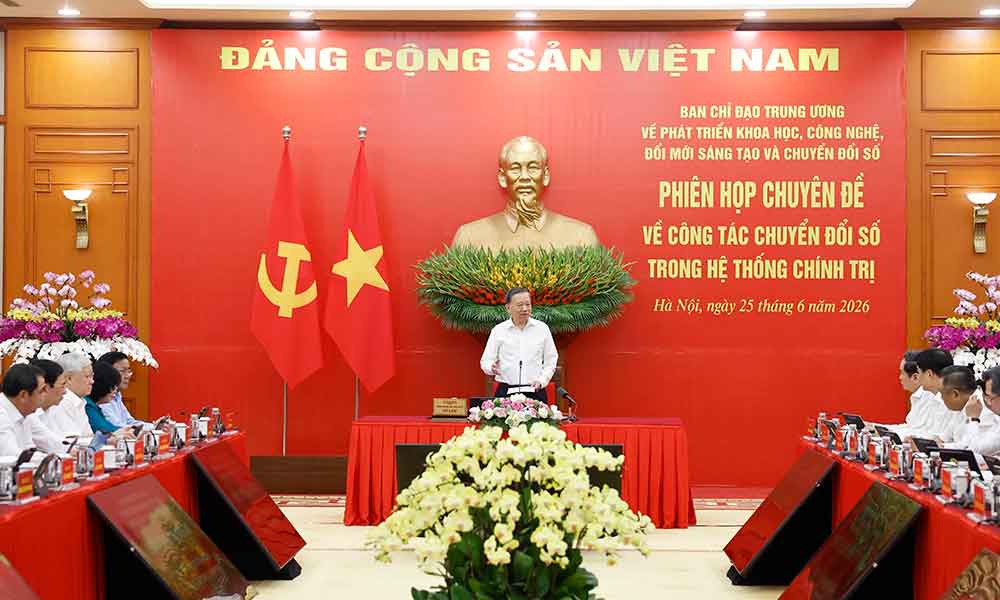
An overview of the the July 1 national conference reviewing the one-year operation of the three-tier administration model. |
Hanoi seeks greater decentralisation, stronger grassroots governance
In his speech, Secretary of the Hanoi Party Committee Tran Duc Thang said the capital has comprehensively reorganised its administrative structure over the past year to suit its status as a special city with a large population, a large number of Party organisations and heavy administrative workloads.
The city has simultaneously adjusted administrative boundaries, streamlined the political system, stepped up power decentralisation and authority delegation, retrained civil servants based on job positions, and accelerated digital transformation to build a modern governance system.
According to Thang, the first year of implementation has demonstrated that the new organisational model is a right approach, delivering tangible improvements in governance and socio-economic development.
Greater decentralisation has enabled Hanoi to make more proactive decisions on major issues, including implementing the Capital Law, drafting its master plan with a 100-year vision, resolving prolonged site clearance bottlenecks and launching large-scale investment projects.
Administrative reforms have also improved the business environment and facilitated promote socio-economic development.
In 2025, Hanoi recorded its highest gross regional domestic product (GRDP) growth in many years. Meanwhile, state budget revenue reached an estimated 410 trillion VND (nearly 15.6 billion USD) in the first half of 2026, equivalent to 63.2% of the annual target, and public investment disbursement stood at 44.04%.
Public service provision has also improved markedly. The overdue settlement rate for administrative dossiers fell from 44.63% in 2025 to just 4.2% in the first six months of 2026.
The city ranked fifth among Vietnam's 34 provinces and cities in governance and administrative reform, and eighth in citizen satisfaction. Real-time surveys showed a satisfaction rate of 98.95%.
Drawing on Hanoi's experience, Thang proposed reviewing commune-level administrative units based on their specific characteristics, including urban, suburban and rural conditions, population size and development potential, in order to establish more appropriate organisational structures.
He also suggested developing strategically important administrative units serving as regional growth hubs, with selected communes and wards acting as core centres to drive development and generate broader spillover effects.
He called for further decentralisation to commune-level authorities in line with resource allocation, continued streamlining of organisational structures to eliminate unnecessary intermediary layers, further refining the Party organisations’ model to align with the state administrative system, greater autonomy for non-business public service units, and wider participation of businesses and social organisations in delivering suitable public services.
Thang also stressed the need to strengthen the capacity of grassroots personnel, attract more talent, encourage innovation and accountability among civil servants, and tighten discipline to prevent delays and bureaucratic behaviour.
At the national level, he urged ministries and sectors to accelerate the development of shared data platforms and complete integrated databases covering land, planning, health care, education and culture, alongside a unified management system in line with the Government's common architecture and common data standards.
He said Hanoi has already adopted a plan to promptly address issues within its authority, aiming to resolve most bottlenecks by the end of 2026.
Dong Nai prioritises grassroots-level performance quality
Secretary of the Party Committee of Dong Nai city Vu Hong Van said the southern locality has evaluated the efficiency of the new model based on three criteria – whether public services are delivered more quickly, whether businesses spend less time and money on administrative procedures, and whether recurrent state spending has been reduced to free up more resources for development investment.
He said the streamlining of the administrative apparatus and the restructuring of administrative units have confirmed the value of the reform.
Ultimately, the success of the model should be measured by the quality of governance, the delivery of public services, convenience for businesses, the efficiency of the state budget use and whether the administration gets closer to the people.
As the reform enters its next stage, Dong Nai plans to shift its focus from apparatus restructuring to operational quality improvement, placing commune-level authorities at the centre of support and using service outcomes for citizens and businesses as the primary yardstick.
Dong Nai will continue reviewing commune-level administrative units to ensure they match local governance needs and development conditions while maintaining socio-political stability and building public consensus.
He underlined the necessity to focus on building high-quality manpower, saying civil servants must possess integrity, professional competence, innovative mindset, strong governance skills and a commitment to public service.
Personnel must be positioned as the core driving force, serving as both agents of change and the direct link between the Party, the administration and the people, Van said, noting that building a capable contingent of cadres must therefore be the top priority in the coming period.
At the same time, Dong Nai will further accelerate digital transformation, with data serving as the foundation of modern governance, and more online public services enabling citizens to complete administrative procedures regardless of geographical constraints, he added.
Ho Chi Minh City calls for data-driven governance
Speaking at the conference, Deputy Secretary of the Ho Chi Minh City Party Committee Van Thi Bach Tuyet said the southern metropolis recognised from the outset that adopting the new local administration model will require fundamental changes in governance to ensure smooth operations.
After one year, the city's political system has operated stably and smoothly, with local authorities becoming more responsive to citizens.
The new model has increased grassroots autonomy, shortened decision-making processes, improved public services and enabled faster handling of issues arising at the commune levels.
The city has gained greater development space, capitalised on infrastructure advantages and enhanced investment attraction.
Economic growth, budget revenue and foreign direct investment all posted positive results while social welfare, political security and public order remained stable, laying the groundwork for the achievement of double-digit growth in the coming time.
Based on its experience, Ho Chi Minh City proposed that central authorities establish a unified data architecture across the political system to ensure standardised, interconnected and shareable databases that support data-driven governance and decision-making.
The city also recommended further improving the National Public Service Portal and administrative procedure systems, accelerating the completion of shared digital platforms and national databases, issuing unified data connection standards, expanding data-sharing mechanisms, and promoting artificial intelligence applications in public administration.
In addition, it urged the National Assembly and the Government to continue refining the legal framework to ensure consistency and eliminate overlapping regulations.
Ho Chi Minh City also proposed allowing localities to establish one or two specialised administrative agencies to undertake highly specialised state management functions in support of socio-economic development.




Reader's comments (0)