 Bắc Ninh


Nearly 35,500 new businesses set up in first two months
The enterprises registered combined capital of about 313.7 trillion VND and more than 167,500 employees. Compared with the same period last year, the number of new businesses surged by 70.7%, while registered capital rose by 36.1% and registered labour increased by 19.1%.
Nearly 35,500 enterprises were established across Vietnam in the first two months of 2026, indicating a robust rebound in business formation despite continuing market headwinds.
 |
|
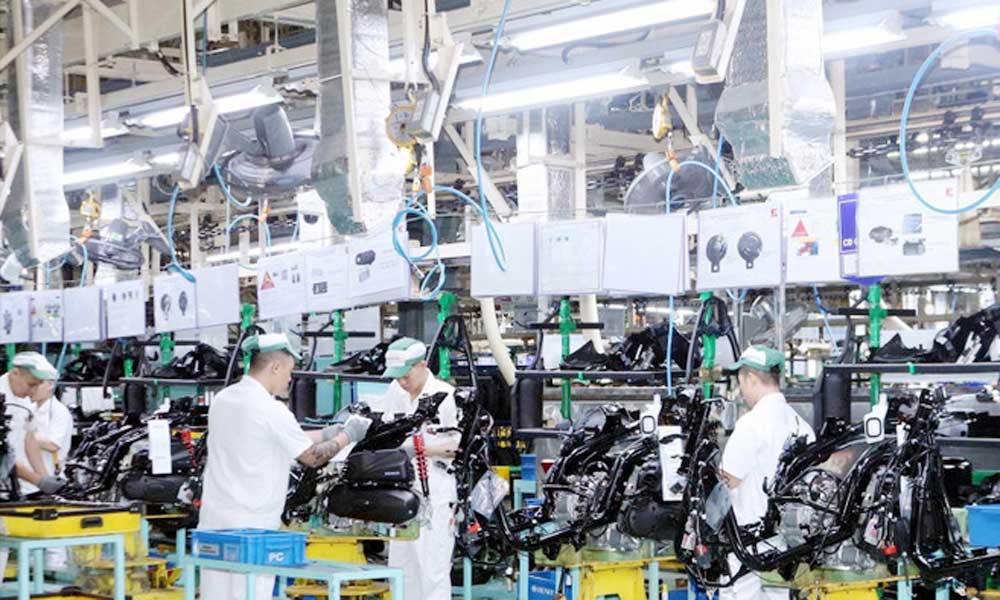
Nearly 35,500 enterprises are newly registered nationwide, with total registered capital reaching nearly 313.7 trillion VND and more than 167,500 registered workers. |
The enterprises registered combined capital of about 313.7 trillion VND and more than 167,500 employees. Compared with the same period last year, the number of new businesses surged by 70.7%, while registered capital rose by 36.1% and registered labour increased by 19.1%.
Data from the National Statistics Office (NSO) under the Ministry of Finance (MoF) show that around 11,300 enterprises were established in February alone, with total registered capital reaching nearly 132.8 trillion VND (about 5.05 billion USD) and nearly 59,400 registered workers.
Month-on-month figures, however, showed a slowdown. Compared with January, the number of newly established enterprises in February dropped by 53.2%, while registered capital and labour declined by 26.6% and 45.1%, respectively.
Despite the monthly fall, February still recorded a year-on-year increase of 11.6% in new enterprises and a slight 0.4% rise in registered workers, although registered capital edged down 2.6%.
The average registered capital per newly established enterprise in February stood at around 11.7 billion VND, up 56.9% from January but down 12.8% compared with the same period last year.
The statistics agency also reported that nearly 6,200 enterprises resumed operations in February, down 74.9% from the previous month and 12.6% year-on-year.
Meanwhile, 4,257 enterprises temporarily suspended operations during the month, falling 92.2% compared with January but rising 19.8% year-on-year.
Another 3,492 firms halted operations pending dissolution procedures, down 52.2% month-on-month but up 17.5% year-on-year.
At the same time, 3,290 enterprises completed dissolution procedures, a decrease of 28.6% from January but a sharp increase of 89.4% compared with the same period in 2025.
Despite the strong growth in the number of newly established enterprises, the average capital scale of these businesses has shown a declining trend.
In the first two months of the year, the average registered capital per new enterprise stood at about 8.8 billion VND, down 20.3% from a year earlier.
When including additional capital registered by existing firms, the total capital injected into the economy during the January–February period reached nearly 851.9 trillion VND, marking a 20.1% increase year-on-year. Of this, more than 538.2 trillion VND came from additional capital registered by operating enterprises, up 12.4%.
During the same period, about 29,000 enterprises resumed operations, slightly down by 0.2% year-on-year. Taken together, the number of newly established and reactivated enterprises reached nearly 64,500 in the first two months, up 29.4% from the same period last year. On average, about 32,200 businesses entered or re-entered the market each month.
However, the number of enterprises withdrawing from the market remained high. In the first two months of 2026, around 77,000 businesses exited the market, representing a 14.9% increase compared with the same period in 2025.
By sector, wholesale and retail trade and the repair of automobiles and motorcycles saw the highest number of new enterprises, with more than 16,000 firms established, up 124% year-on-year.
The manufacturing and processing industry followed with over 4,800 new businesses, while construction recorded 2,930. Transport and warehousing registered 2,094 new firms, accommodation and food services 1,591, and real estate business 959.
To further support enterprise development, the Ministry of Finance has urged efforts to remove bottlenecks related to institutions, access to land and natural resources, interest rate support and workforce training.
The ministry is also pushing for a roadmap to streamline administrative procedures, shorten processing times and reduce compliance costs for businesses.
In addition, new policy packages are being developed to assist small- and medium-sized enterprises and household businesses, particularly in taxation and tax procedures.
Authorities aim to encourage household businesses to transition into formal enterprises while helping smaller firms scale up into larger, globally competitive companies, supported by incentives related to infrastructure, including electricity supply, land rental and administrative fees.









Reader's comments (0)