 Bắc Ninh


Restoration breathes new life into Southeast Asia's tallest Cham tower
After more than 800 years, the towers have suffered damage from weather, time and plant growth. In late 2025, the provincial Department of Culture, Sports and Tourism launched a restoration project worth more than 90 billion VND (3.4 million USD). Scheduled to last 10 months, the project now sees 40% of its workload completed.
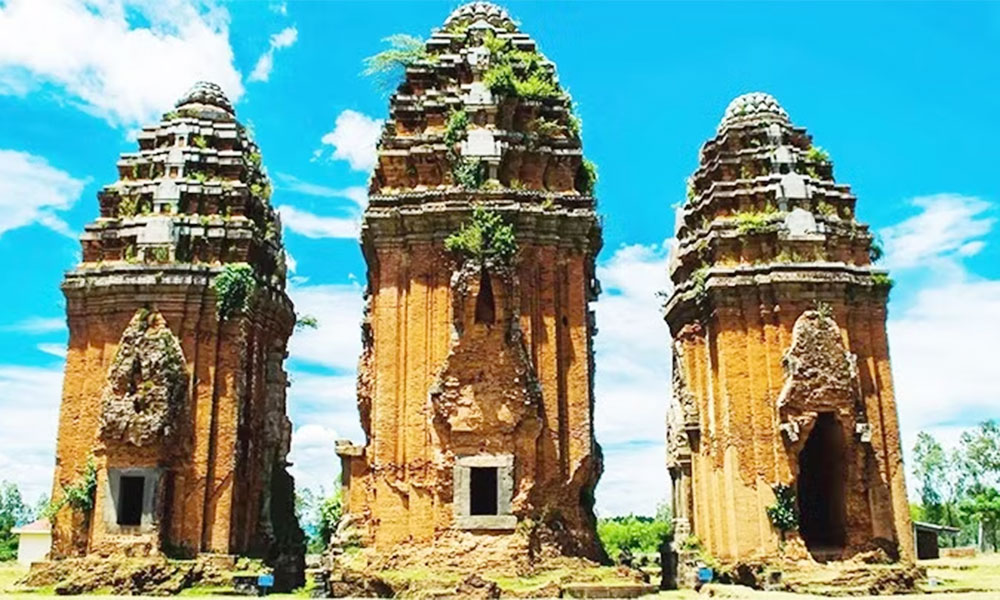
Restoration work is underway on the Duong Long tower complex, which is Southeast Asia's tallest brick Cham tower, with the project expected to help preserve one of Vietnam's most important cultural heritage sites.
 |
|
The Duong Long tower complex is a special national relic built by the Cham people in the late 12th and early 13th centuries. |
Also known as An Chanh, Binh An or Nga tower, the complex is a special national relic built by the Cham people in the late 12th and early 13th centuries.
Located in Binh An commune, Gia Lai province, it consists of three towers, with the central tower standing about 39 metres high.
After more than 800 years, the towers have suffered damage from weather, time and plant growth.
In late 2025, the provincial Department of Culture, Sports and Tourism launched a restoration project worth more than 90 billion VND (3.4 million USD).
Scheduled to last 10 months, the project now sees 40% of its workload completed.
Before work began, the entire site was carefully surveyed and documented to ensure all restoration follows heritage conservation principles.
About 340,000 bricks have been specially produced to match the composition, colour and texture of the original Cham bricks. Each brick is marked with the production year of 2026, to distinguish new materials from the original structure.
Broken ancient bricks have also been crushed and mixed with lime to make mortar that is compatible with the existing masonry.
The project also uses resin from the Dipterocarpus alatus tree as a bonding material, together with a traditional polishing and bonding technique believed to be close to the construction methods used by the Cham people.
Stone carvings are being restored only where sufficient historical evidence exists, while missing sections without reliable references are replaced with plain stone blocks to avoid creating inaccurate decorative details.





















Reader's comments (0)