 Bắc Ninh


Three centuries on, old Hanoi house stands proud
Related news  |
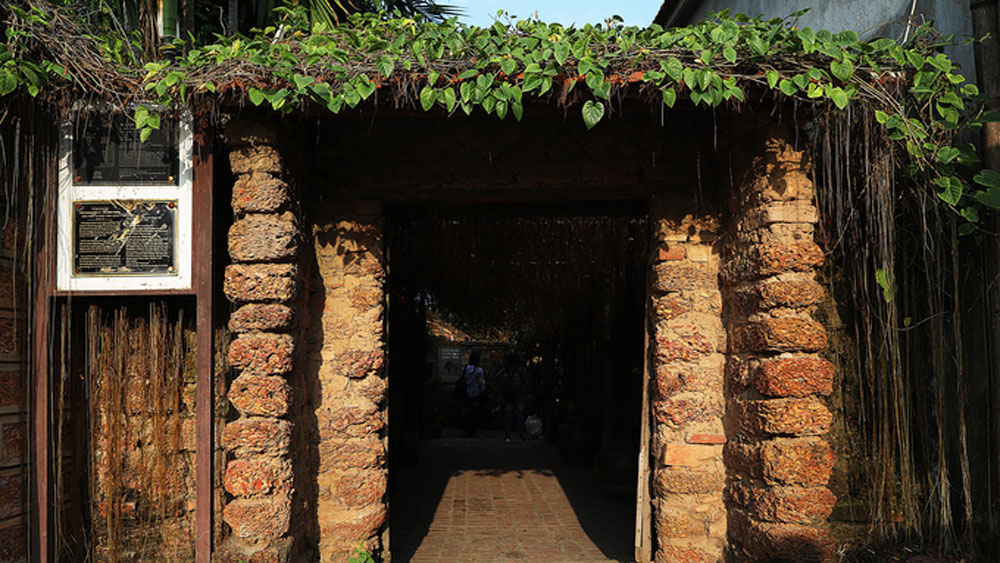
Duong Lam ancient village, in the capital city's rural town of Son Tay, is one of the oldest cultural sites in Vietnam. It has 956 ancient houses including those built in 1649, 1703 or 1850.
 |
|
Duong Lam ancient village, in the capital city's rural town of Son Tay, is one of the oldest cultural sites in Vietnam. |
Situated 44 kilometers to the northwest of Hanoi, the village is a popular destination for both locals and foreign visitors seeking to explore a traditional Vietnamese village.
The houses here are all made of stone, oak wood, bamboo, and terracotta tiles and have a five- or seven-chamber structure. The house of Nguyen Van Hung is recognized as the best-preserved house in the village despite being 369 years old.
The five-chamber house is 14.5 meters long and seven meters wide. Its three central chambers are devoted to the worship of ancestors, while the rest are for
 |
|
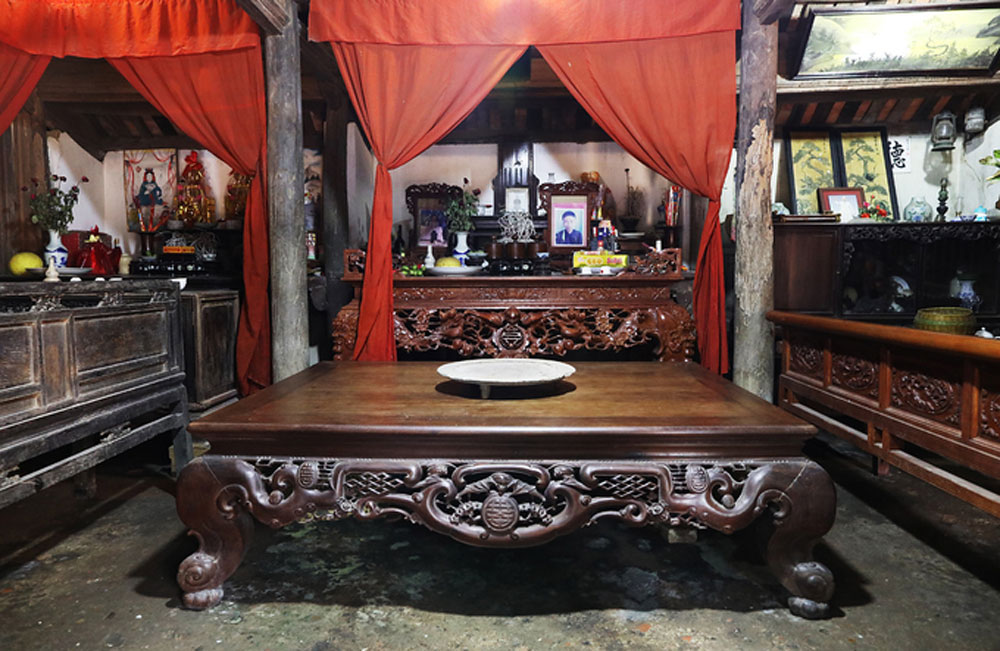
Typical furniture found in an old Vietnamese house dating back to centuries ago. In the center is the shrine to worship ancestors. |
“From a prayer document preserved in the house, the Institute of Han-Nom Studies, which translated it, found that the construction was done back in 1649,” Nguyen Van Hung, the owner of the house, said.
Han-Nom was the former script used for Vietnamese. Typical furniture found in an old Vietnamese house dating back to centuries ago. In the center is the shrine to worship ancestors.
 |
|
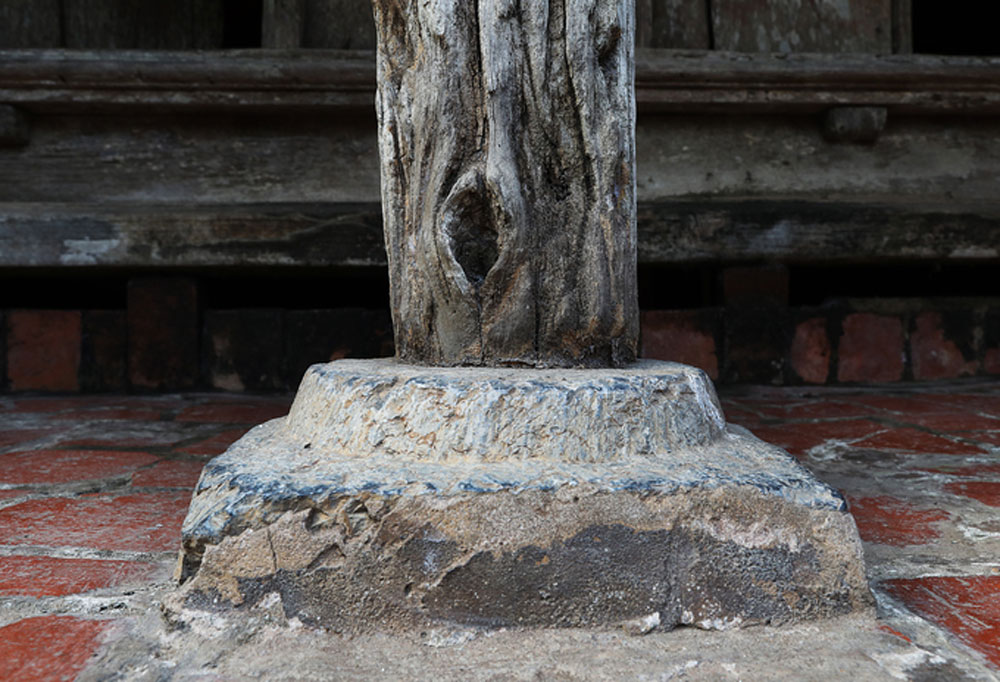
Inside and outside the house are trusses supporting its entire structure crafted by hand from stone. |
The trusses and doors were made mainly from jackfruit and oak wood. The entrance doors, which have existed for centuries, are locked with a latch.
Hung said: "According to scientists, the wood in the house has existed for hundreds of years. Termites could not damage it. The stains here are from the early days of the house. However, the lower parts of the house are damp due to the weather here.”
 |
|
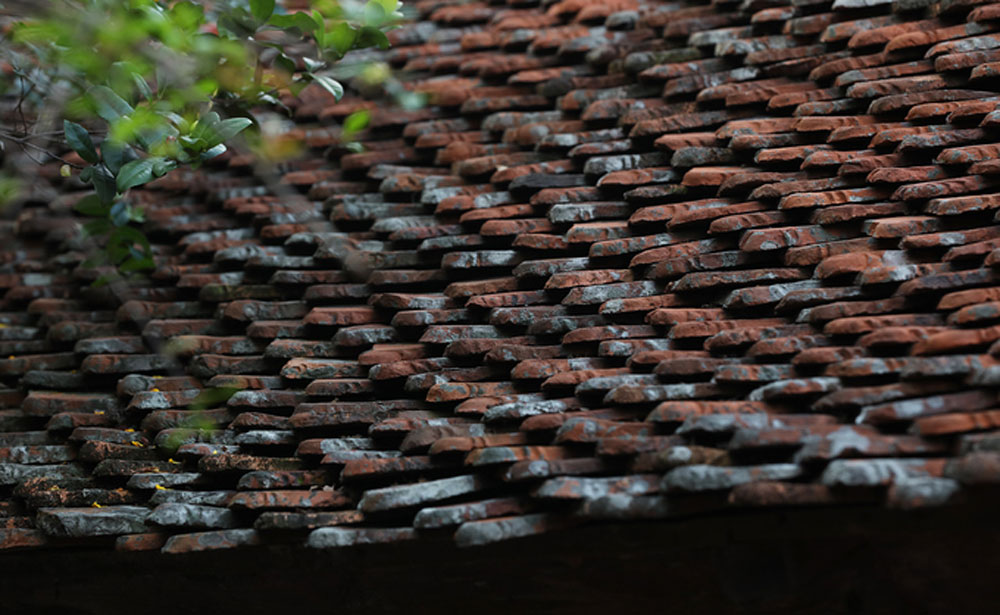
The roof tiles are arranged into several layers, creating ventilation and protection for the walls and columns. Normally the owner has to rotate the |
Inside and outside the house are trusses supporting its entire structure crafted by hand from stone. In 2008, after Duong Lam was recognized as a national relic, the house was restored for the first time by the Japan International Cooperation Agency (JICA).
The structure of the house was intact while parts that had degraded were restored. Adhesive materials are added to strengthen the structure of the house.


Source: VnExpress










Reader's comments (0)