 Bắc Ninh


Vietnam earns 56.5 million USD from forest carbon credit sales to World Bank
Speaking at a conference in Hanoi on July 2 to introduce Decree No. 180 on forest carbon sequestration and storage services, Luong said the latest transaction brought the country's total revenue from the transfer to 56.5 million USD, covering 11.3 million tonnes of CO2 emission reductions at a price of 5 USD per tonne.
Vietnam has earned an additional 5 million USD from the transfer of 1 million tonnes of forest-based carbon emission reductions to the World Bank, according to Deputy Director of the Department of Forestry and Forest Protection under the Ministry of Agriculture and Environment Pham Hong Luong.
 |
|
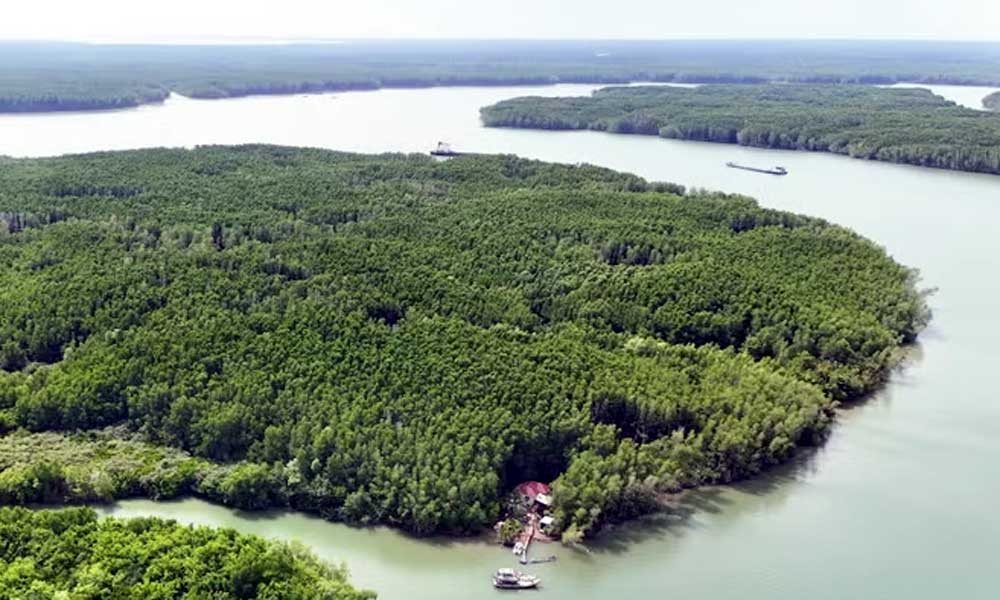
A view of the Can Gio mangrove forest, a crucial "carbon sink" ecosystem that contributes to generating carbon credits for operating Vietnam's carbon market. |
Speaking at a conference in Hanoi on July 2 to introduce Decree No. 180 on forest carbon sequestration and storage services, Luong said the latest transaction brought the country's total revenue from the transfer to 56.5 million USD, covering 11.3 million tonnes of CO2 emission reductions at a price of 5 USD per tonne.
The official said the proceeds have been distributed to nearly 80,000 beneficiaries, half of whom are ethnic minority people, in the central provinces of Thanh Hoa, Nghe An, Ha Tinh and Quang Tri, and Hue city.
Under the pilot emissions reduction purchase agreement signed in 2022, 95% of the verified emission reductions are retained by Vietnam to help fulfil its Nationally Determined Contributions (NDCs) under the Paris Agreement.
He noted that Decree No. 180 provides a comprehensive legal framework governing suppliers and users of forest carbon sequestration services, as well as procedures for developing and registering forest carbon projects.
A guiding circular and national standards for forest carbon credits are expected to be issued on July 15, coinciding with the decree's entry into force.
Luong stressed that carbon credit transactions and the transfer of emission reductions must be aligned with Vietnam's commitments under its NDCs, which are currently being updated for submission to competent authorities.
Carbon credits are tradable certificates that represent the right to emit or offset one tonne of carbon dioxide or other greenhouse gases.
Certified forest carbon credits can be traded through voluntary agreements or sold on carbon exchanges to offset greenhouse gas emission quotas of enterprises in sectors such as thermal power, cement and steel production.
Earlier this week, Vietnam officially launched the pilot operation of its domestic carbon exchange, where the first carbon credit transaction was successfully completed.
Luong described the new policy on forest carbon credit trading as the "second revolution" in Vietnam's forest environmental services after the payment for forest environmental services policy introduced in 2008.
He said the new regulatory framework is expected to create fresh opportunities for forest owners and local authorities to mobilise additional resources for forest protection and development, while improving livelihoods for communities that depend on forests.










Reader's comments (0)