 Bắc Ninh


Viettel prepares workforce for Vietnam’s first semiconductor chip factory
Viettel has launched a specialized training initiative to prepare the human resources necessary for its government-mandated mission of setting up Vietnam's first chip factory.
The Viettel Group announced a partnership with the VNU University of Science (Vietnam National University, Hanoi) for the training course for semiconductor manufacturing engineers. This cohort is expected to operate the production lines at the foundry.
 |
|
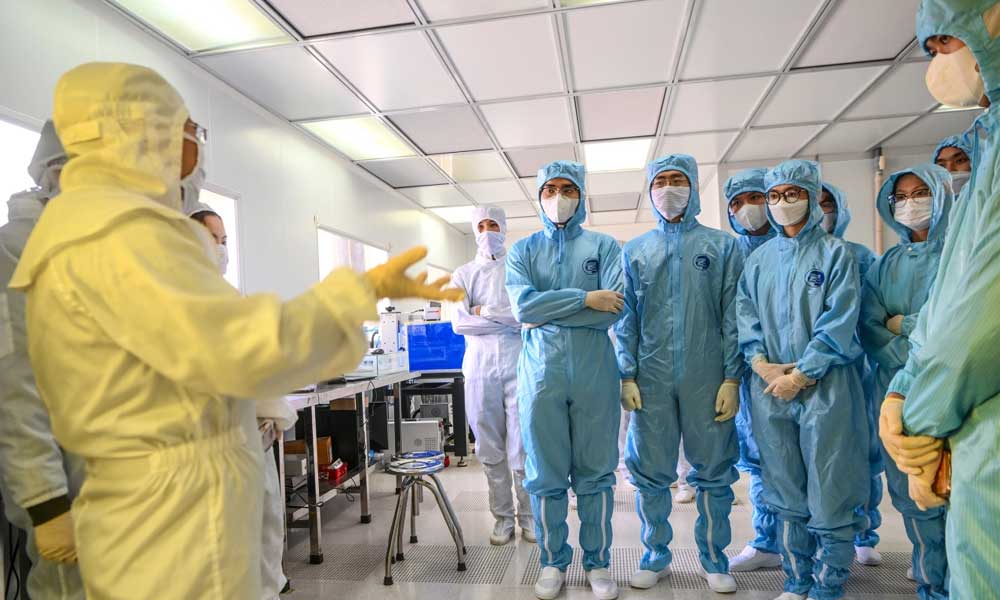
The Cleanroom, Nano and Energy Center at the VNU University of Science in Hanoi, where semiconductor training and research are conducted. |
The inaugural course will train 20 engineers from the fabrication division of Viettel Semiconductor. Over nearly 300 hours of coursework, trainees will learn manufacturing technology and the skills to operate cleanroom machinery. They will engage in hands-on production that complies with strict industrial standards.
Viettel deputy general director Nguyen Vu Ha said building the first semiconductor factory is "not merely a technology project but a national aspiration in the journey to master core technology."
The establishment of this foundry, he said, would help Vietnam "narrow the gap between the laboratory and reality" while enabling scientists, startups and tech firms to turn ideas into products and research into tangible contributions to the nation.
"The factory also opens up a semiconductor ecosystem where generations of Vietnamese engineers are trained and developed, eventually mentoring the next generation."
To realize this goal, Viettel chose to collaborate with the University of Science, an institution with recognized strengths in basic science and cleanroom systems and experts in physics, materials and microelectronics.
The two sides jointly developed the training curriculum, ensuring the program meets technical requirements while remaining closely aligned with production realities.
A spokesperson for the University of Science said this coordination between business and academia would bridge the gap between training and labor market demands.
Students and engineers would not only learn theory but also tackle real-world industry challenges, thereby improving their ability to participate directly in major technology projects, they added.
According to Dr. Ha Duong Long, one of the first 20 trainees, the course is an opportunity to enhance knowledge and accumulate practical experience.
Vietnam has more than 7,000 integrated circuit design engineers with expertise in packaging, testing, materials, and semiconductor equipment.
"Roughly calculated, Vietnam has a talent pool of 15,000 engineers, not including about 10,000 technicians," Vo Xuan Hoai, deputy director of the National Innovation Center, said.
Over the past year Vietnam added nearly 1,000 semiconductor design engineers, mostly by upskilling engineers from related fields.
In terms of formal education, as of 2024 there were nearly 30 universities offering IC majors or specializations, with a total enrollment of nearly 10,000 students.
Demand for semiconductor expertise is rising rapidly. In just two years the number of IC design enterprises has grown from 40 to nearly 60 companies.
In the packaging, testing and manufacturing segments, the number of enterprises has doubled from seven to 15 and is marked by the entry of major players like Coherent, Amkor and Hana Micron besides several companies from South Korea, France and Taiwan.
The industry’s growth is largely driven by a favorable policy environment and growing global recognition of Vietnamese engineering talent.
Under the program "Developing Human Resources for the Semiconductor Industry to 2030, with a Vision to 2050," Vietnam targets training at least 50,000 semiconductor engineers, including 15,000 for IC design and 35,000 for the production and packaging stages.















Reader's comments (0)