 Bắc Ninh


Bac Ninh improves workplace meals to protect workers' rights
BAC NINH - After 10 years of implementing Resolution No. 7c/NQ-BCH and five years of Conclusion No. 03/KL-BCH issued by the Vietnam General Confederation of Labour on workers' meal quality, many businesses in Bac Ninh have paid greater attention to meal allowances, food safety and workers' feedback, highlighting the growing role of trade unions.
Higher allowances, better nutrition
Improvements in workplace meals in Bac Ninh are reflected in spending levels, nutritional value and meal arrangements.
 |
|
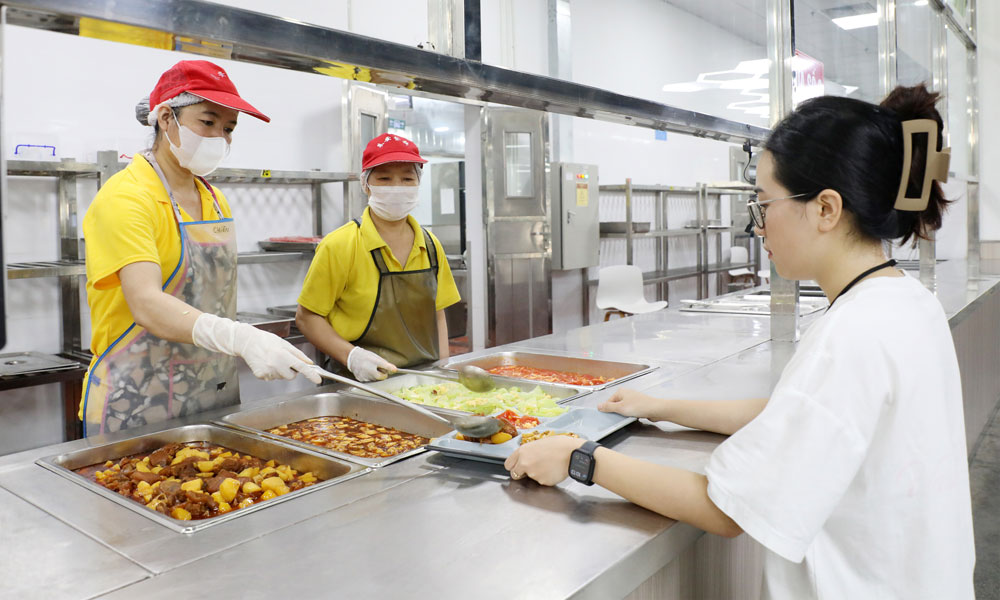
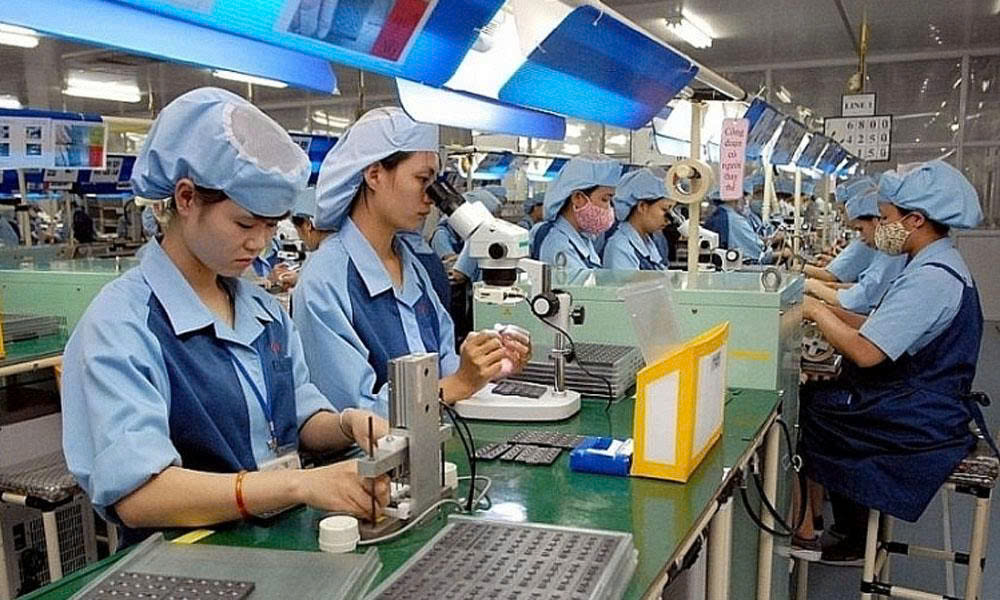
Workers at Lens Technology Vietnam Co. Ltd. eat meals provided by the company. |
According to a review by the Bac Ninh Labour Federation, the proportion of businesses providing meal allowances of at least 15,000 VND per serving rose from 45% to 75% between 2016 and 2020.
From 2021 to 2026, many large companies maintained allowances of 20,000-25,000 VND per meal. At some foreign-invested enterprises, the actual cost, including management and kitchen labour, reached 30,000-35,000 VND per serving.
Currently, all state-sector businesses with trade unions and more than 92% of non-state businesses provide meal allowances at or above the levels stipulated in Conclusion No. 03 by the Vietnam General Confederation of Labour.
Bac Ninh has also made progress in shifting from simply providing enough food to ensuring clean, nutritious meals that meet workers' energy needs. Most businesses employing at least 500 workers develop weekly menus with calculated calorie content.
Alongside pre-portioned meals, buffet-style dining and menus offering several choices have become increasingly common in the Tien Son, Que Vo, Yen Phong, Quang Chau and Van Trung industrial parks.
Annual reports from grassroots trade unions show that worker satisfaction with workplace meals rose from 65% in 2016 to 88% in 2025.
Trade unions at various levels in Bac Ninh have stepped up efforts to collect workers' feedback, review menus, monitor food origins and assess meal quality on a daily basis.
Businesses take initiative as unions support workers
At Samsung SDI Vietnam Co. Ltd. in Yen Phong I Industrial Park, workplace meals form part of the company's employee welfare system. The company covers one meal worth 33,000 VND per worker per day.
Workers who eat their other two daily meals at the company receive a 50% discount on the normal meal price. Pregnant employees have all three daily meals covered and receive an additional nutritional voucher worth 100,000 VND per person per month.
Nguyen Thi Loan, Chairwoman of the company's trade union, said the grassroots union, which represents more than 1,700 members and workers, collected employee feedback, conducted regular and surprise inspections, reviewed daily menus and checked the origins of incoming food supplies.
"Workers' feedback is compiled and brought into discussions with the company, with proposals for adjustments incorporated into collective labour agreements. This enables the union to monitor whether commitments are being fulfilled, rather than simply recording workers' wishes," she said.
At Lens Technology Vietnam Co. Ltd. in Quang Chau Industrial Park, which employs nearly 9,000 workers, the company encourages employees to assess menus as part of efforts to improve meal quality.
It organises an enhanced meal each month with higher nutritional standards and a wider variety of dishes. Workers are also invited to sample new dishes and provide feedback before they are added to the menu.
Nguyen Thi Minh Ngoc, vice-chairwoman of the Bac Ninh Labour Federation, said the federation would continue implementing Resolution No. 7c and Conclusion No. 03 while addressing the remaining shortcomings.
It will guide grassroots unions in incorporating workplace meals into collective labour agreements, with specific provisions on spending levels, adjustment principles, portion sizes and monitoring mechanisms.
Training will also be strengthened to help union officials compare food prices, assess nutritional portions and identify food safety risks. Trade unions will coordinate with specialised agencies to inspect collective kitchens, particularly industrial catering providers.
At the grassroots level, workers' feedback should be collected regularly, with clear summaries and responses. Businesses should allocate resources proactively, clarify their responsibilities for meal provision and develop improvement plans suited to their production conditions.
















Reader's comments (0)