 Bắc Ninh


‘Clearly’ the best: a commune makes the most transparent, tasty noodles
The end of the year is the main noodles making a season for residents of the commune in Cam Thuy District, the central province of Thanh Hoa. The commune is the biggest producer of cellophane, or glass needles (mien) in the province, supplying hundreds of tons every year.
 |
|
The end of the year is the main noodles making a season for residents of the commune in Cam Thuy District, the central province of Thanh Hoa. |
The main ingredient needed to produce the glass noodles is canna powder. The canna plants grow mainly in red basalt soil found in the
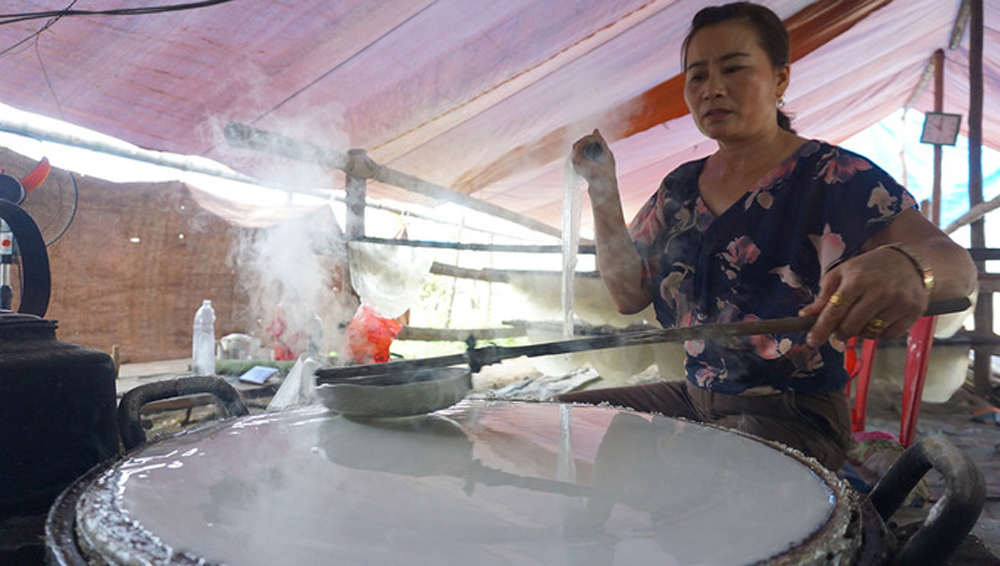
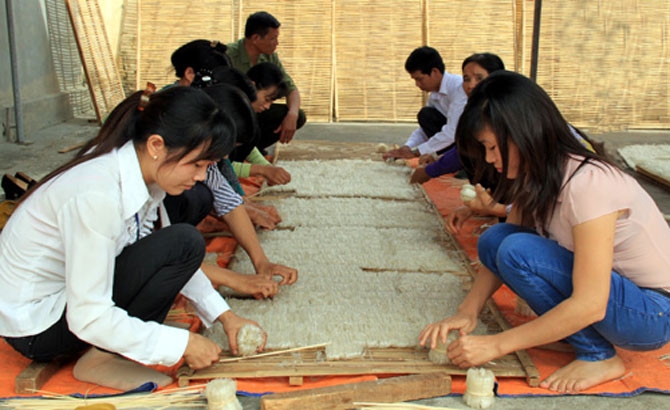
The flour is then made into canna paper by steaming it over a cloth drawn taut over a very large vessel.
Le Thi Ty, 47, a resident of Xam Village in Cam Binh Commune, makes the canna paper, the most important part step in the process of making the glass noodles. The density of the flour and its steaming has to be done just right.
 |
|
The flour is then made into canna paper by steaming it over a cloth drawn taut over a very large vessel. |
Ty said her family has been making these noodles for a long time. In the past, she only used to make them in the last three months of the year, but now she works all year round because raw materials are better preserved and more plentiful.
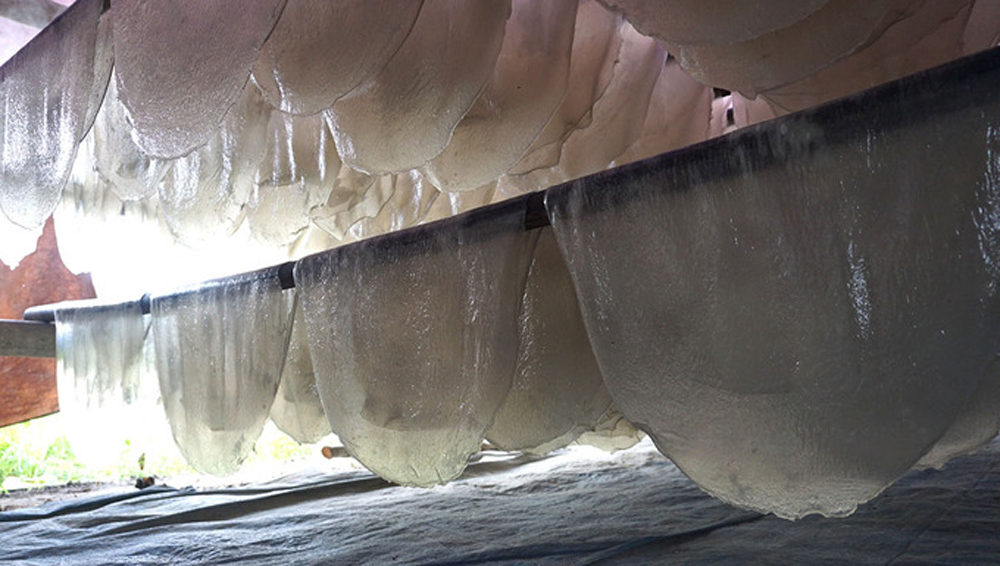
After the flour is steamed into thin sheets, they are dried on a pole in a nearby shack and collected for the next step.
During the peak season, Ty and her husband work from early morning and only stop late at night. The job requires workers to be meticulous, hard-working and tough because they have to sit near the furnace amidst kitchen smoke all the time.
 |
|
In the past, she only used to make them in the last three months of the year, but now she works all year round because raw materials are better preserved and more plentiful. |
When the canna paper is almost dry, it is cut into strips, earlier by hand, by machines now.
Cam Binh Commune has more than 200 households making the glass noodles, providing jobs for around 1,000 people. The noodle cutting machines make the work easier, allow for higher production as well as higher incomes. Workers have to be very focused and careful when the machine is in operation, or risk having their hands crushed.
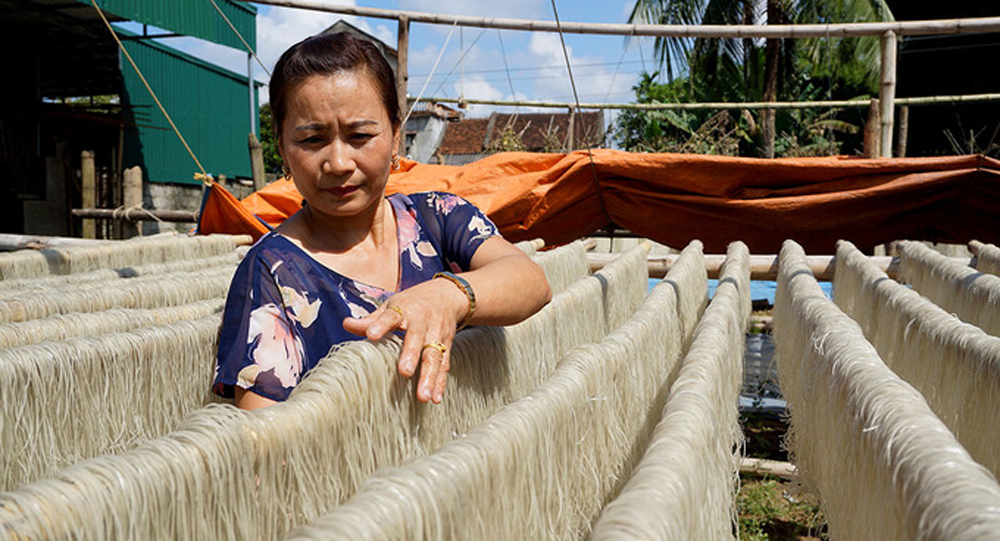
The strips are dried once more till all the moisture’s gone before they are packed and sold. On average, Ty's family uses 300kg of canna flour every day, producing around 150kg of the glass noodles.
 |
|
On average, Ty's family uses 300kg of canna flour every day, producing around 150kg of the glass noodles. |
At VND30,000-45,000 ($1.29 – $1.93) per kilo, Ty's family has a steady income of around VND300 million ($12,890) a year from making and selling the glass noodles.
Experienced workers in Cam Binh say there are no special tips to making good quality glass noodles. The canna powder or flour must be clean and sun-dried so that the noodles are free of moisture and mold, and do not ferment.
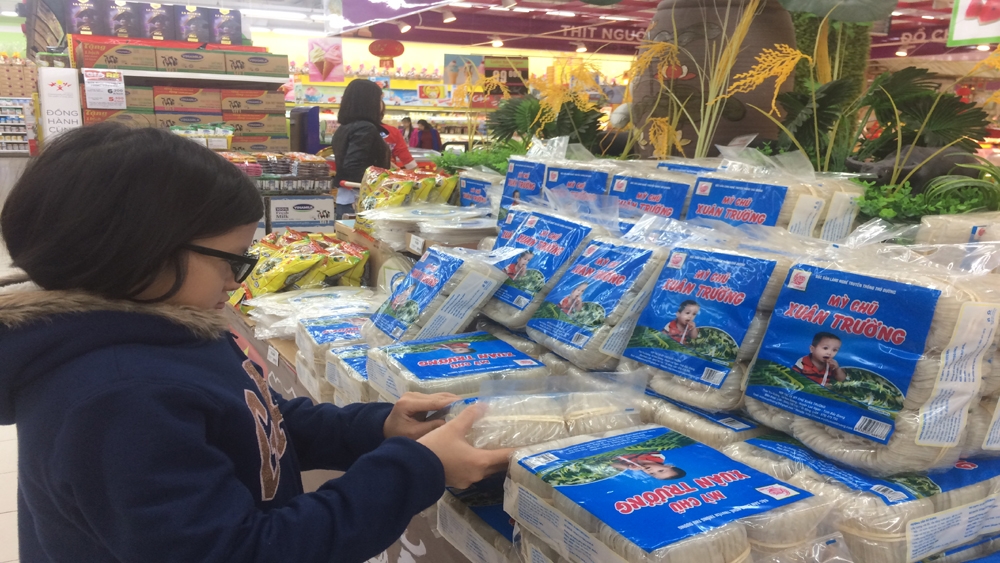
The glass noodles from Cam Binh are sold in Hanoi, Hai Phong, Nam Dinh
Source: VnExpress





Reader's comments (0)