 Bắc Ninh


Dong Ho folk paintings reimagined beyond traditional Do paper
BAC NINH - The rustic imagery, natural colours and distinctive folk spirit of Dong Ho paintings have long inspired artisans, painters and contemporary artists to explore new forms of expression. Moving beyond the traditional Do paper or poonah paper, the centuries-old folk art is undergoing creative reinterpretations that breathe new life into the heritage in modern times.
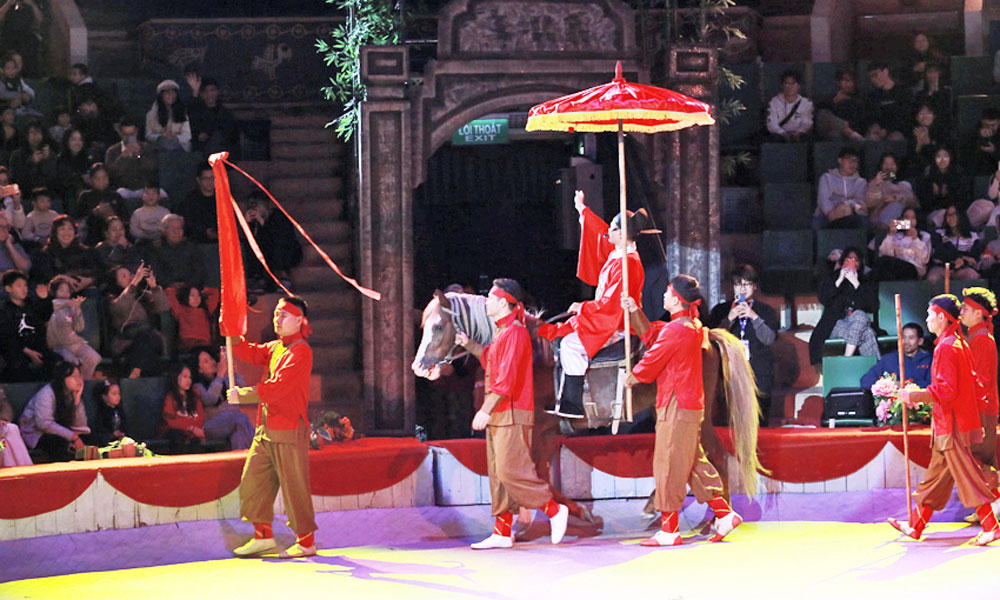
One of the most notable recent efforts to contemporise Dong Ho paintings is the art programme “Dong Ho Circus Painting”, jointly organised by the Vietnam Circus Federation and the Dong Ho Folk Painting Conservation Centre.
 |
|
Artists recreate Dong Ho folk paintings on a circus stage. |
The event is part of the project “Staying Awake with Heritage”, developed by second- and third-year students from the Diplomatic Academy of Vietnam, who applied event management knowledge to create a model for renewing heritage through the creative thinking of younger generations.
Nguyen Tat Dat, head of the organising committee of the “Staying Awake with Heritage” project, said the programme was an attempt to bring heritage out of static exhibition spaces, allowing familiar cultural values to be retold in a more vivid, accessible and engaging language for a broader audience.
 |
|
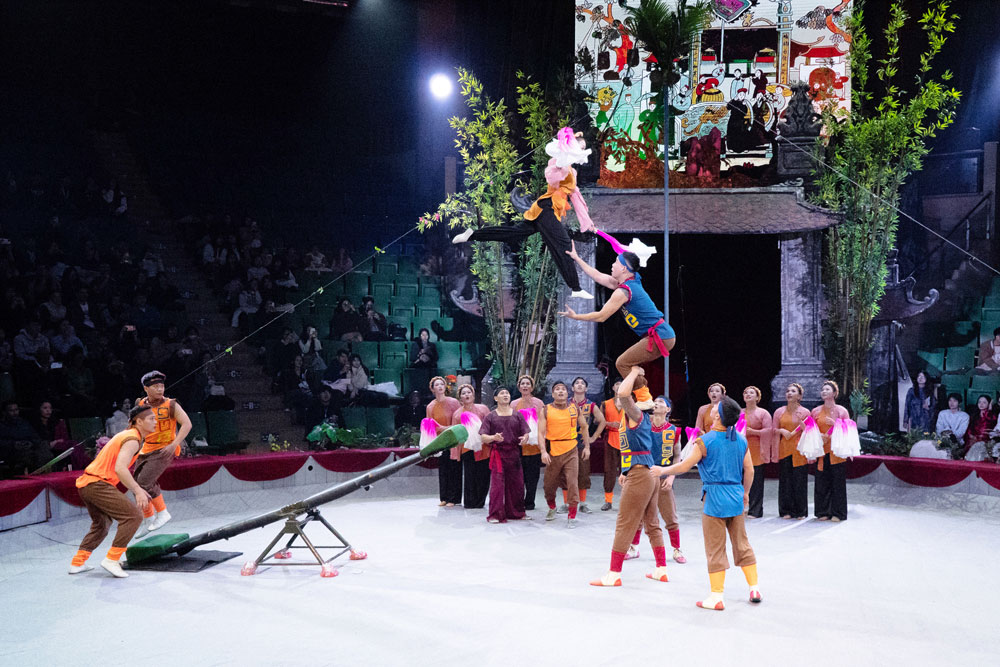
Artists recreate Dong Ho folk paintings by the visual language of movement on a circus stage. |
“If circus is the art of movement, flexibility and physical expression, Dong Ho paintings represent the crystallisation of folk visual thinking, reflecting aspirations for harmony, prosperity and humanity,” Dat said. “The encounter between these two seemingly contrasting art forms has created a unique and compelling experience.”
A highlight of the programme was the performances “Memories of Ho Village” and “The Story of Little Ti’s Family”, featuring highly visual acts.
Iconic Dong Ho paintings were reinterpreted through circus language, with acrobatics, balancing and juggling techniques carefully integrated to personify folk characters. The stage was transformed into a dynamic artistic space where traditional values intersected with contemporary aesthetic sensibilities.
Participating in the project as a guest speaker, Meritorious Artisan Nguyen Huu Qua, who has devoted his life to preserving the craft passed down from his ancestors, expressed deep emotion and joy at seeing young people show respect for traditional cultural capital.
Qua, from Dong Khe residential area in Thuan Thanh Ward, shared insights into the history of Dong Ho painting village, traditional production techniques and the aesthetic philosophy of earlier generations.
He praised the creativity and dedication of the students, saying their efforts to tell heritage stories through a new artistic language demonstrated both responsibility and genuine affection for traditional culture.
Beyond the central performances, “Dong Ho Circus Painting” expanded public engagement through a series of interactive activities, including photo booths and themed photo frames inspired by famous Dong Ho works such as “Dragon Procession”, “Return in Glory” and “Blindfolded Goat Catching”. These activities helped spread Dong Ho imagery widely on social media, reaching millions of young people aged between 18 and 25.
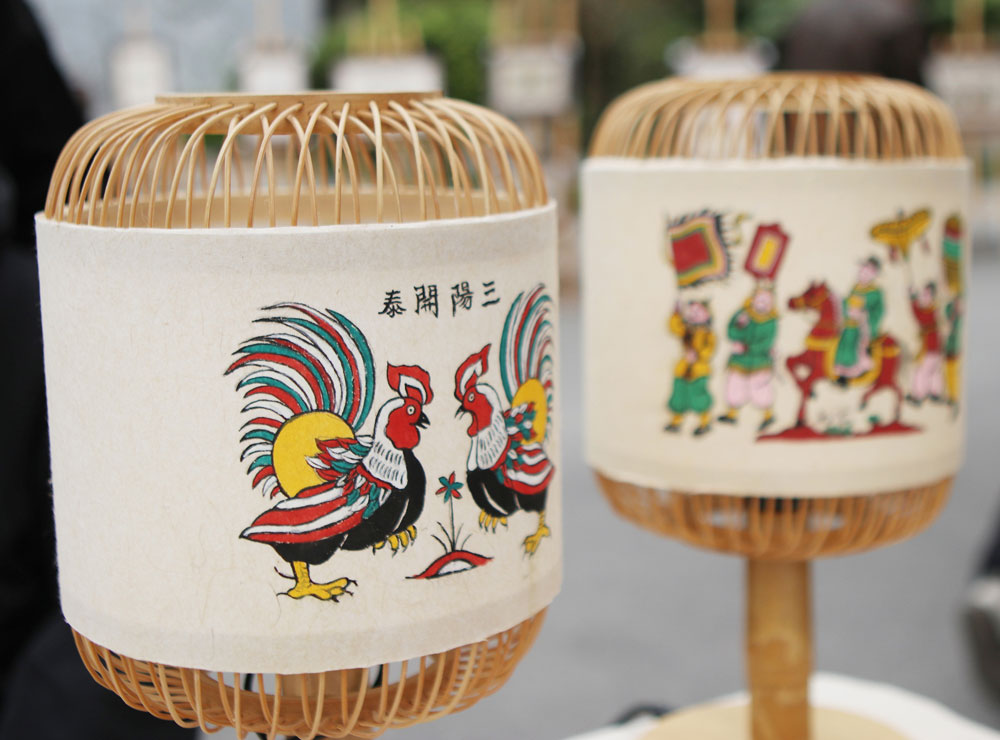
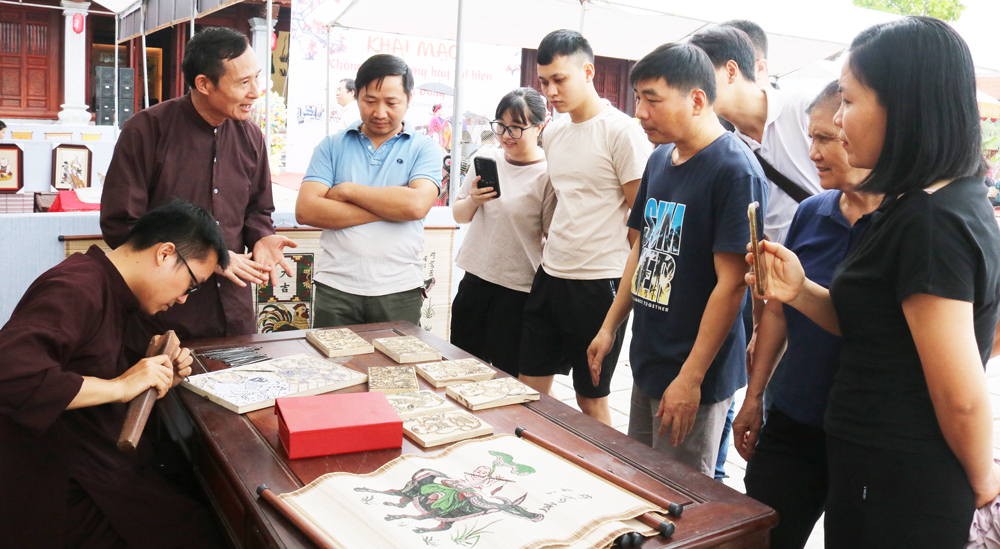
Recognised by UNESCO as an intangible cultural heritage in need of urgent safeguarding, Dong Ho folk paintings have increasingly become a source of creative inspiration across various fields, including fashion, fine arts, music and games.
 |
|
Dong Ho folk paintings are applied as decorative designs on night lamps. |
As aesthetic tastes, modes of cultural consumption and spaces for artistic appreciation continue to change rapidly, Dong Ho paintings face growing pressure to adapt.
While recent creative experiments remain early steps, they are contributing to a shift that brings the heritage beyond traditional exhibition spaces into cultural experiences, performance arts, education and digital platforms.
Such efforts are opening up new possibilities for deeper connections with audiences, particularly younger generations and international visitors, helping ensure that Dong Ho folk paintings remain a living heritage in contemporary society.



Reader's comments (0)