 Bắc Ninh


European business confidence in Vietnam climbs to near seven-year high
EuroCham's latest survey shows European business confidence rebounding to its highest level in nearly seven years, driven by stronger demand despite global uncertainty.
The EuroCham Business Confidence Index (BCI) rose to 79.7 points in the second quarter of 2026, its highest level in nearly seven years, according to a survey released on July 15 by the European Chamber of Commerce in Vietnam (EuroCham).
 |
|
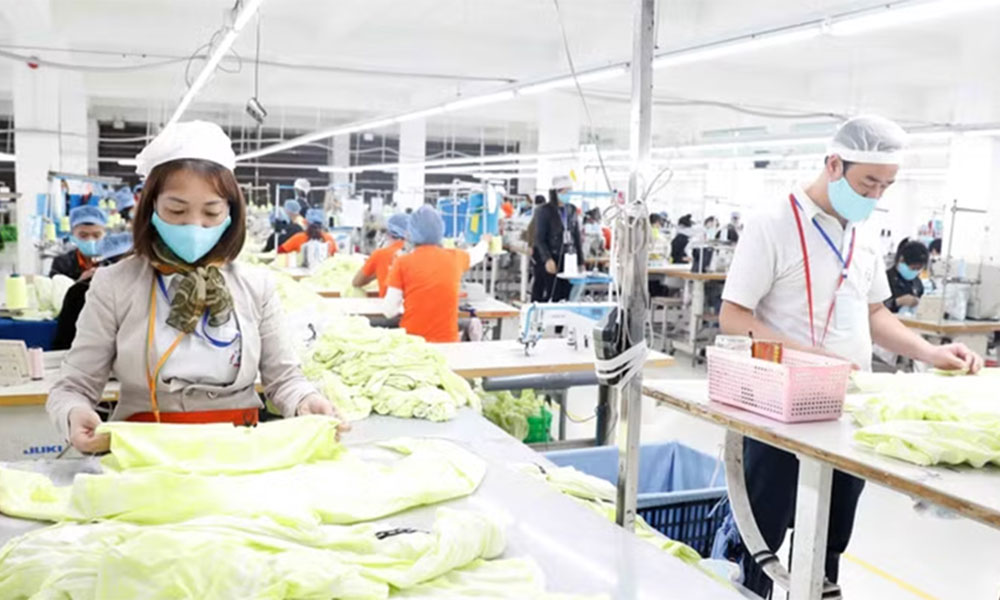
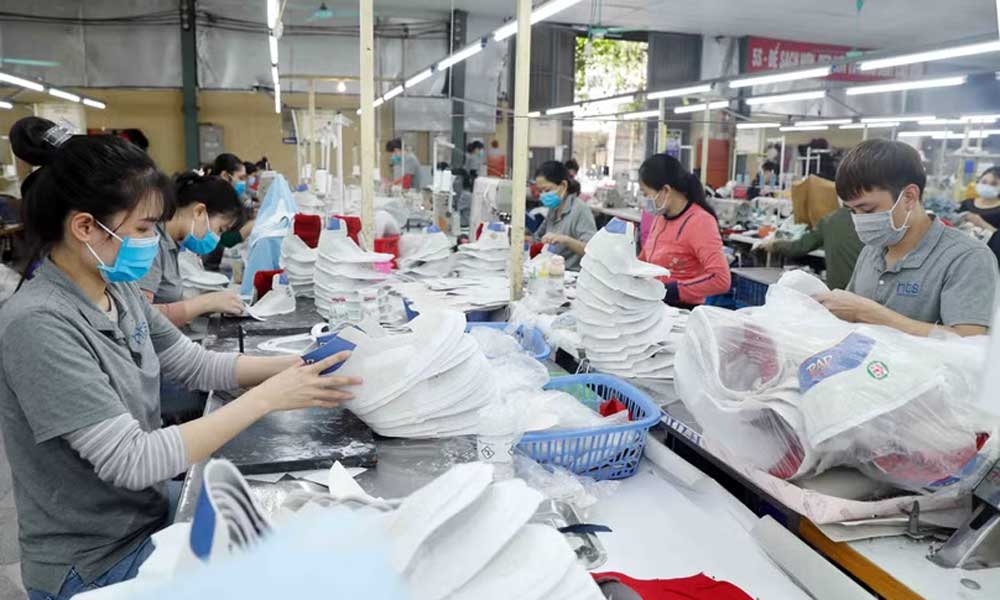
Producing garments for export at Hung Viet Garment Company in Hung Yen province. |
The figures were up seven points from the previous quarter and just below the record high of 80 points recorded in late 2025, reflecting growing optimism among European businesses despite global trade uncertainty.
Conducted in partnership with DXL Research and Consulting, the findings showed nearly two-thirds of surveyed European businesses said operating conditions improved during the April-June period, while 69% expect business conditions to remain favourable in the third quarter, up 11 percentage points from the previous survey.
The stronger outlook was supported by rising revenues, expanding orders and resilient domestic demand.
More than half of respondents now regard Vietnam as a core strategic market and operational base, while another 18% see the country as a major growth market.
The findings suggest European companies increasingly view Vietnam not only as a manufacturing hub but also as a regional platform for production, sourcing and business expansion across Southeast Asia.
EuroCham Chairman Bruno Jaspaert said the survey reflected the resilience of both Vietnam's economy and European businesses operating in the country despite geopolitical uncertainty and shifting global trade conditions.
He noted that the country's 8.18% GDP growth in the first half of 2026, together with ongoing institutional reforms and an improving investment environment, had reinforced investor confidence.
The improved sentiment was underpinned by stronger commercial performance across sectors.
Among companies reporting better business conditions in the second quarter, 36% cited higher revenue growth and improved profitability that exceeded internal expectations.
Another 32% attributed the improvement to expanding order books and new contract wins, while 24% pointed to stronger domestic consumer demand.
"Confidence has recovered across all sectors, confirming that the slowdown recorded in Q1 was broad-based but ultimately temporary," said Xavier Depouilly, General Manager of DXL Research and Consulting.
While the pace of recovery varied by industry, tourism and hospitality recorded the strongest improvement, with its sector index rising 8.7 points to 90.4, well above the overall BCI, while agrifood posted a more modest 5.5-point increase.
He said resilient domestic and international demand, together with higher public and private investment, had helped businesses outperform their own expectations despite an increasingly complex operating environment.
However, the survey found that regulatory and administrative obstacles remain the biggest concern for investors.
More than half of respondents identified regulatory delays, inconsistent policy implementation and opaque tax administration as the main barriers to long-term expansion.
Around one-third said cumbersome administrative procedures slowed project execution, while 29% reported that compliance requirements diverted resources away from core business activities.
Another 27% believed regulatory complexity reduced competitiveness and market access.
Businesses also pointed to talent shortages, inconsistent enforcement of regulations across authorities and prolonged VAT refund procedures as continuing operational challenges.
Among companies with registered intellectual property in Vietnam, nearly one-third reported difficulties related to registration or enforcement, although many acknowledged recent government efforts to strengthen intellectual property protection.
The report also showed that global geopolitical tensions continue to affect business operations, with 46% of surveyed executives reporting negative impacts on their international activities.
Rising freight, logistics and energy costs were the most frequently cited consequences, prompting many companies to extend supply chain buffer times and diversify sourcing strategies.
At the same time, some firms said global supply chain shifts had created new production and investment opportunities in Vietnam.
While global macro-economic and geopolitical uncertainty continues to weigh on business operations, the survey suggests these challenges are reshaping corporate strategies rather than weakening long-term investor confidence in Vietnam.
EuroCham said continued improvements in regulatory transparency and administrative efficiency would be crucial to sustaining investor confidence.
"The confidence radiating from this quarter's index is encouraging, but confidence alone is not the destination," EuroCham Chairman Jaspaert said.



Reader's comments (0)