 Bắc Ninh


Excavation unearths new artefacts of Chau Sa Citadel of ancient Cham people
The excavation was conducted as an emergency by the Quang Ngai provincial Museum since early June after a local man reported that he accidentally discovered artefacts suspected of being an ancient kiln relic.
The recent archaeological excavation at the ancient Chau Sa Citadel in the central province of Quang Ngai provides precious evidence of a large-scale production centre dating back to approximately the 2nd-3rd centuries AD, experts have confirmed.
 |
|
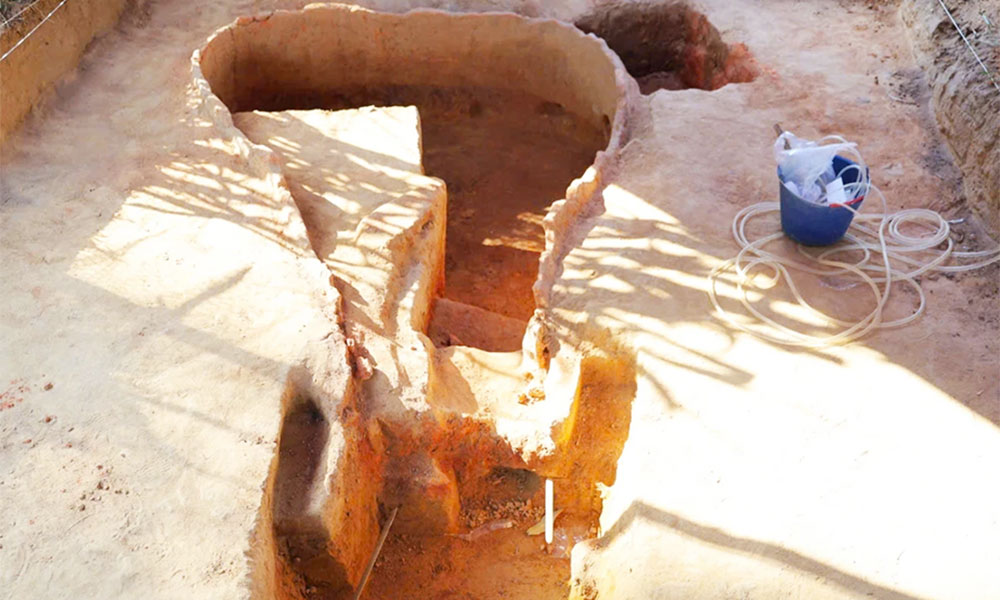
The artefact of an ancient kiln is found in the garden of a local man in Phu Binh ward, Tinh Khe commune, Quang Ngai province. |
The excavation was conducted as an emergency by the Quang Ngai provincial Museum since early June after a local man reported that he accidentally discovered artefacts suspected of being an ancient kiln relic.
While digging holes to plant trees in Thanh village, Phu Binh ward, Tinh Khe commune in April, a local man named Nguyen Kien and his family members found an ancient gourd-shaped kiln, measuring approximately 3.5m long and 1m wide.
Recognising the importance of the site and to prevent the risk of damage, the museum immediately conducted a survey and sought permission for urgent excavation.
Quang Ngai province's Department of Culture, Sports and Tourism on June 10, 2026, issued Decision No 296/QD-SVHTTDL, allowing the museum to conduct the urgent archaeological excavation on an area of 100sq.m, comprising two pits labelled H1 and H2 in Thanh village.
To facilitate in-depth research, the authorities extended the excavation period from July 9 to July 19. The museum has just completed the excavation in the inner site of the citadel, with results showing a large-scale pottery workshop complex along with important architectural remains.
The results have also opened up valuable documents to “decipher” the appearance of a transitional historical period that has been very little documented about the citadel, known as the only remaining relatively intact earthen citadel of the ancient Cham people.
According to Dr. Doan Ngoc Khoi, deputy director of the museum, who also led the excavation, the emergency research achieved many important results, clarifying previous findings during 2022.
At the site, the team discovered three more tile kilns, bringing the total number of kilns discovered in this area to four. Notably, in addition to the previously discovered kilns with walls of over 20cm thick, this research uncovered a new type of kiln with very thin walls of only about 4.2cm but still functioning properly for firing tiles.
The team also discovered a waste dump containing many tiles, gravel, and coal surrounding the kiln areas, which were used by the workers as drying and processing surfaces for their products.
These traces clearly demonstrate that the inner area of Chau Sa Citadel was once a complex of workshops, a large-scale centre for producing tiles for the construction of temples and palaces.
The artefacts were confirmed to date back to approximately the 2nd-3rd centuries AD, belonging to the post-Sa Huynh and pre-Cham period – the time when small kingdoms were being formed.
"In particular, right in the middle of the Chau Sa Citadel, we discovered traces of a new architectural structure located in a strategic position and believed to have been the workplace of a state-level power agency at that time," Dr. Khoi said.
Alongside architectural remains, a series of highly valuable artefacts, ranging from household pottery and roof tiles to religious and commercial items, have also been discovered.
These are crucial “keys” that help scientists decipher the urban structure, daily life and production techniques of ancient inhabitants, clarifying the cultural exchange and transformation of the Vietnamese people later on, the expert said.
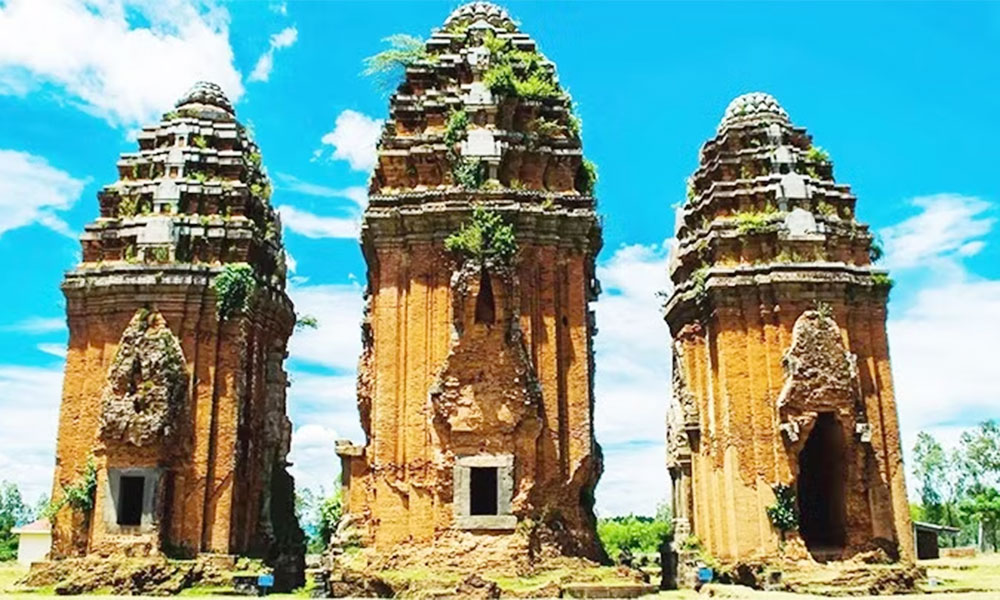
The Chau Sa Citadel, built before the 10th century, is the only relatively intact earthen citadel of the ancient Cham people remaining in Vietnam.
The citadel is large in scale, consisting of two inner and outer round walls, nestled against natural mountain ranges and directly connected to the waterway network leading to the Sa Ky and Dai Co Luy sea gates.
This site was recognised as a National Historical and Cultural Monument by the Ministry of Culture, Sports and Tourism in 1994.
To preserve and sustainably promote the heritage value of the groundbreaking discoveries, Dr. Khoi suggested that authorities should implement a special plan soon for the Chau Sa Ancient Citadel, and simultaneously prepare a dossier to propose upgrading the relic from a national to a special national monument.
Regarding the recently unearthed kiln complex, Khoi suggested that the cultural sector should coordinate with local authorities to hold a direct on-site assessment meeting to develop the most optimal preservation solution for the area.
Ho Duy Cu, 73, an elderly local, said that villagers were very proud to know that their residential area preserves historical values of their ancestors.
When the authorities carried out archaeological excavations and proposed conservation and expansion plans, the villagers all agreed and were ready to cooperate with the authorities to ensure the sustainable protection of the historical site as soon as possible, Cu said.
The archaeological team stated that, after completing the fieldwork, all artefacts and relics will be registered, inventoried, protected and temporarily stored at the provincial museum before being displayed to the public in the future.








































.jpg)



Reader's comments (0)