 Bắc Ninh


Footwear-leather industry seeks new drivers to sustain growth
Vietnam currently ranks third globally in footwear production, with around 1.4 billion pairs manufactured annually, behind China and India, and second in exports with approximately 1.3 billion pairs a year.
Entering 2026, the footwear and handbag market is forecast to remain stable, with major orders continuing to favour Vietnam. The key challenge now is how to add greater value along the production chain, rather than pursuing volume alone, thereby enhancing competitiveness and profitability for businesses.
 |
|
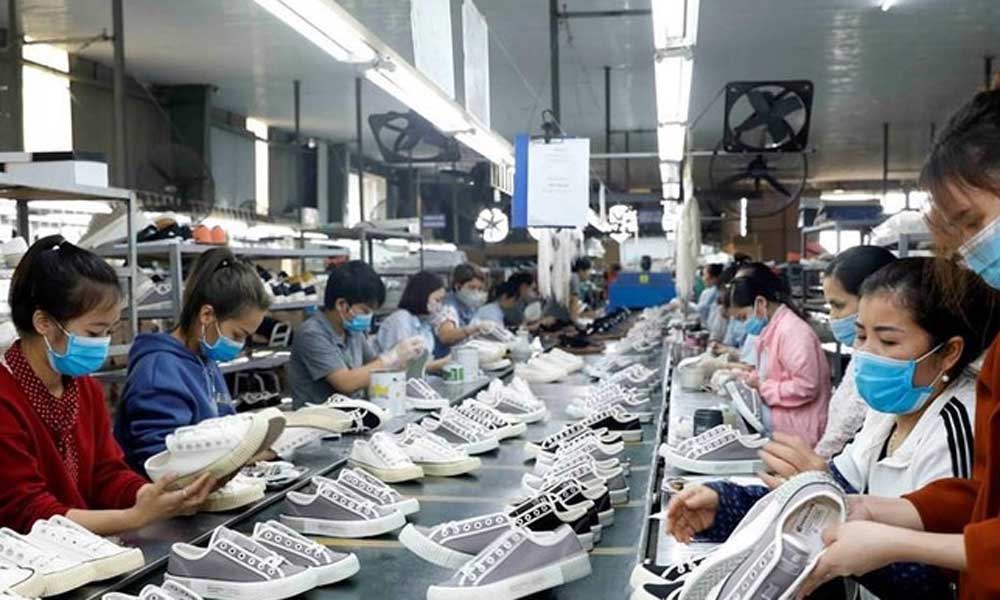
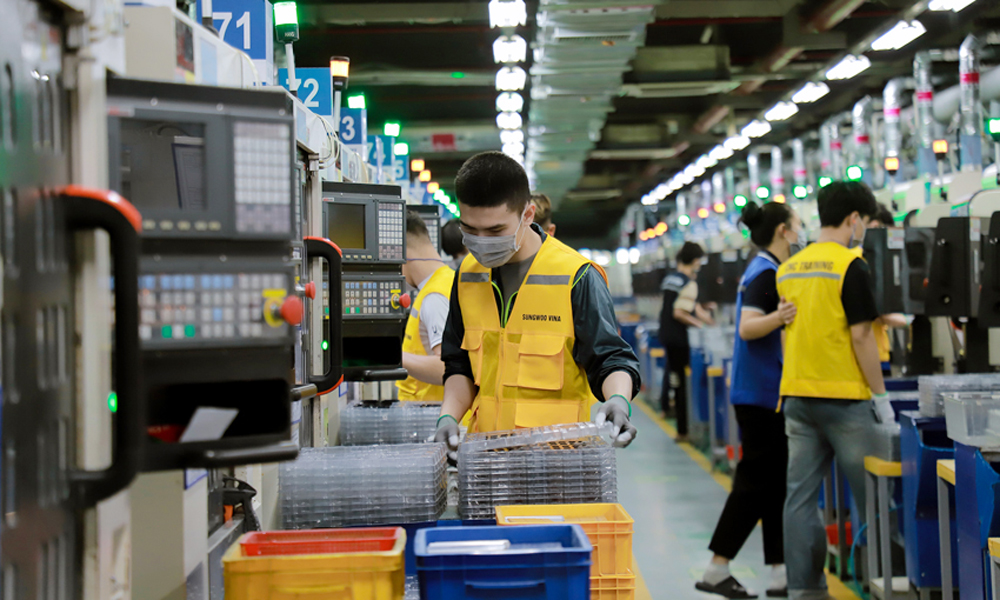
Production of footwear for export to the European market at Ha Tay Chemical Textile Co., Ltd. |
Vietnam currently ranks third globally in footwear production, with around 1.4 billion pairs manufactured annually, behind China and India, and second in exports with approximately 1.3 billion pairs a year.
This performance has been underpinned by an abundant workforce, helping the sector maintain strong production capacity and international competitiveness.
At present, Vietnamese leather and footwear enterprises are accelerating a shift towards green, circular and environmentally friendly production models.
Increasing the localisation rate of raw and auxiliary materials is also a top priority, aimed at reducing dependence on imports.
Pham Thi Thanh Tan, Director of Tan Bao Vu Co., Ltd., said the domestic market is moving towards higher-quality products to better serve export markets.
“We are progressing towards technologies that do not use traditional shoe glue, instead applying direct moulding techniques and materials such as PU and TPU, which are more sustainable,” she noted.
According to Phan Thi Thanh Xuan, Vice Chairwoman and Secretary General of the Vietnam Leather, Footwear and Handbag Association (Lefaso), one of the decisive factors for sustainable growth in the sector is the effective use of tariff preferences under the Free Trade Agreements (FTAs) signed by Vietnam.
These incentives provide a significant price advantage when accessing major importing markets. In addition, relatively low labour costs, ranging from about 181 to 200 USD per month, continue to bolster the industry’s competitiveness.
Xuan stressed that new growth momentum lies in strengthening the capacity of domestic enterprises, increasing the share of exports by local firms and reducing reliance on foreign direct investment (FDI).
This requires the localisation of the entire value chain, from production and materials to design, logistics and brand development.
She also called on the State to further refine policies to promote domestic supply chains, develop logistics infrastructure, and support innovation and technological adoption to improve productivity and product quality.
In practice, despite facing multiple pressures in 2024, including price reductions, stricter sustainability requirements, rising input costs and labour shortages, the Vietnamese leather and footwear industry still recorded export earnings of 26 billion USD, up 10% year-on-year.
In 2025, with an export target of 29 billion USD, the sector focused on increasing localisation rates and fully complying with rules of origin to maximise tariff benefits from Free Trade Agreements (FTAs), particularly the EU-Vietnam FTA, the Comprehensive and Progressive Agreement for Trans-Pacific Partnership (CPTPP), and agreements with the Republic of Korea (RoK), Japan and the UK.
Beyond the EU, the US and the RoK remain key markets. Rules of origin under FTAs with these partners have also helped Vietnamese businesses reduce tariffs and enhance the competitiveness of their exports.
As a result, Vietnamese footwear and handbags have not only maintained traditional markets but have also expanded into new ones.






Reader's comments (0)