 Bắc Ninh


Rare cave pearls discovered in UNESCO-listed Phong Nha-Ke Bang
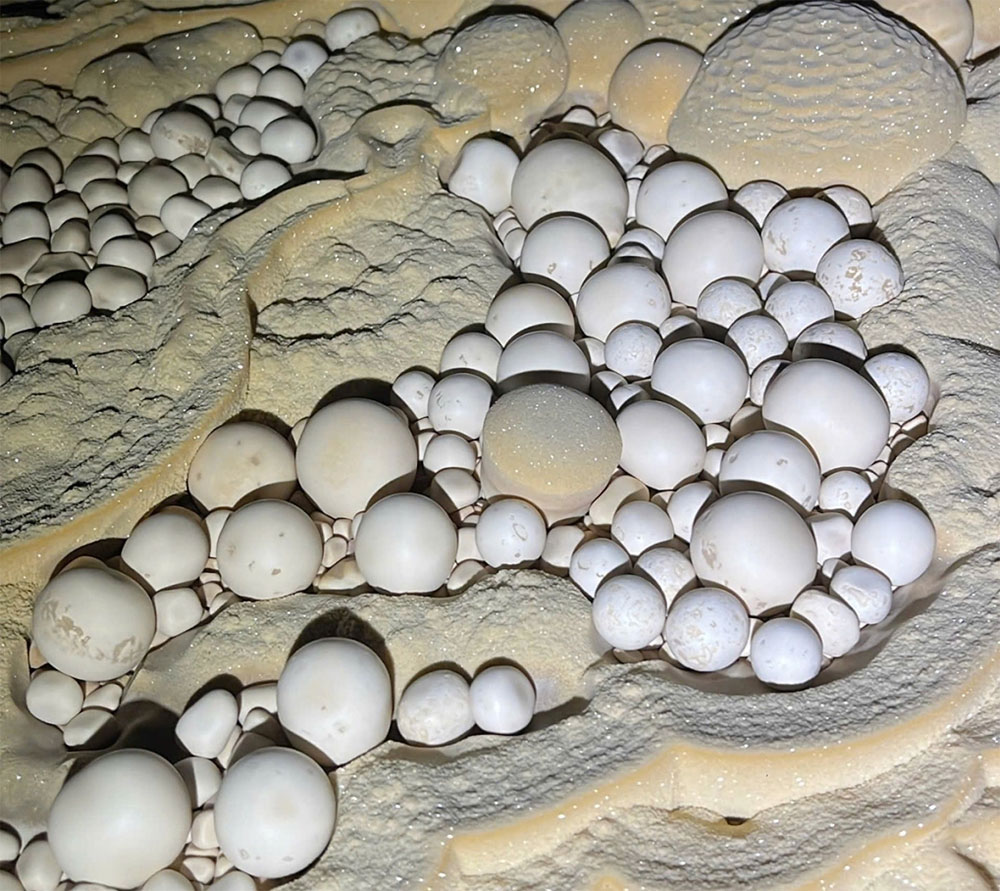
Hundreds of cave pearls, rare egg-shaped mineral formations in various colors, have been found in Hung Cave at the Phong Nha-Ke Bang National Park, a UNESCO world natural heritage site and home to the world's largest cave, Son Doong.
These are a rare type of speleothem formed when calcium-rich water drips from the ceiling onto mineral deposits below, gradually creating smooth rounded or oval structures that range in size from pea to baseball.
 |
|
Clusters of cave pearls in Hung Cave at the Phong Nha-Ke Bang National Park in Quang Tri Province, central Vietnam. |
Nguyen Van Uy, deputy director of adventure tourism company Jungle Boss, said Phong Nha-Ke Bang in Quang Tri Province, central Vietnam, is home to more than 400 caves, but only a few like Over and Son Doong are known to contain them.
But in Hung, they are more numerous and generally larger, forming clusters across the cave floor, hundreds of them arranged in a circle 2-3 meters across deep inside.
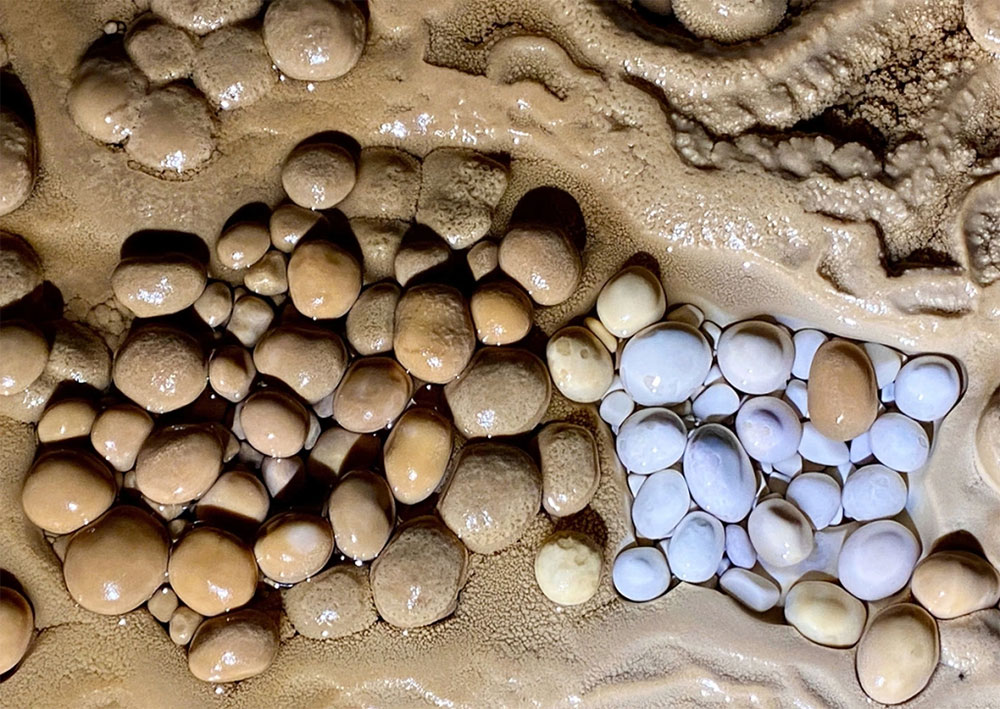
Uy said the color depends on the mineral content of the water. "This is one of the most unique speleothem formations, and takes longer to develop than most other cave formations. They are typically found in large caves."
 |
|
White and yellow cave pearls in Hung Cave. |
They are not commercially valuable, and only retain their appearance in their natural cave environment, and could quickly crack, fade, or deteriorate due to changes in temperature, humidity, or physical impact once removed, he said.
Hung is part of the Hung Thoong cave system discovered in 2002. Visitors are prohibited from touching or damaging cave formations, including cave pearls and stalactites.










Reader's comments (0)