 Bắc Ninh


Tho Ha communal house, pagoda, and Confucian temple complex recognised as special national relic site
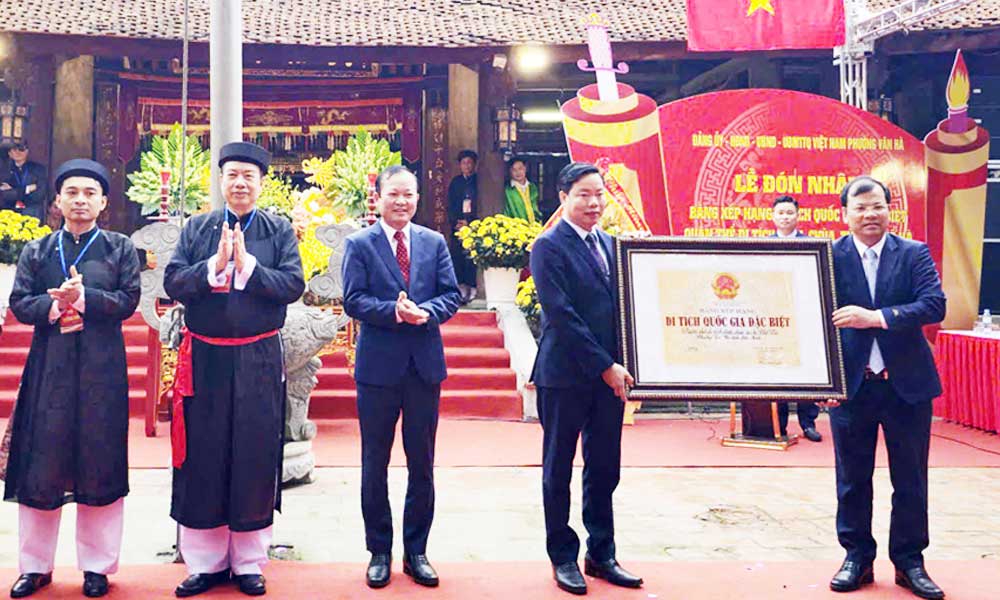
BAC NINH - The Party Committee, People’s Council, People’s Committee, and Vietnam Fatherland Front Committee of Van Ha ward, Bac Ninh province organised a ceremony at the Tho Ha communal house on March 9 to announce the decision and receive the certificate recognising the Tho Ha communal house, pagoda, and Confucian temple complex as a special national relic site.
The complex is located within the ancient village of Tho Ha on the northern bank of the Cau River - an area rich in the historical and cultural traditions of the Kinh Bac region.
 |
|
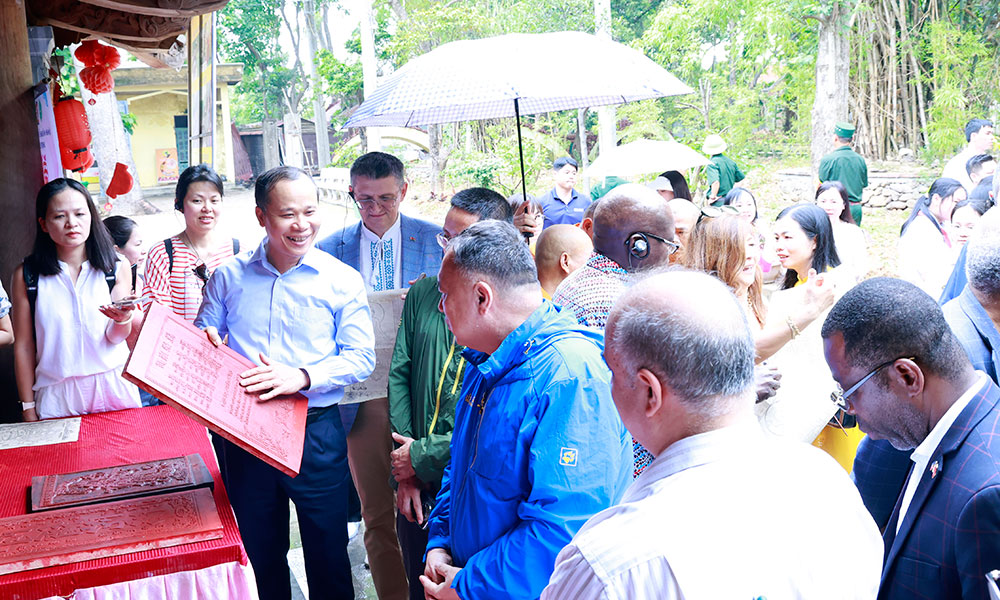
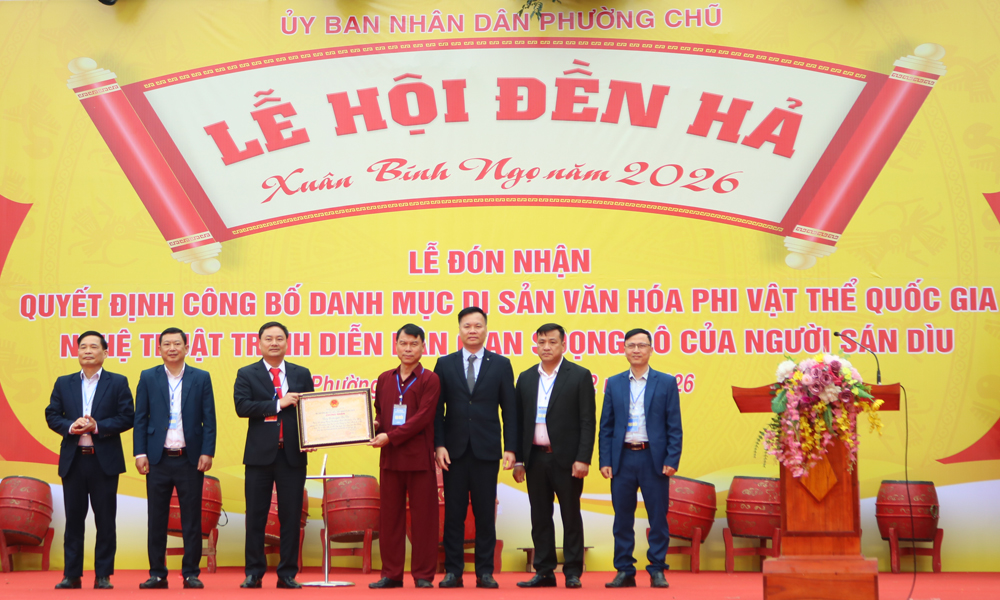
Authorised by the Prime Minister, Vice Chairman of the provincial People’s Committee Phan The Tuan presents the certificate recognising the Tho Ha communal house, pagoda, and Confucian temple complex as a special national relic site to local representatives. |
It consists of three main structures: Tho Ha communal house, dedicated to the village tutelary deity and serving as the centre of community activities; Tho Ha pagoda (Doan Minh pagoda), a place for Buddhist practice by local residents; and Tho Ha Confucian temple, which worships Confucius and distinguished scholars, reflecting the local community’s tradition of valuing education and respecting teachers.
According to historical records and preserved Sino–Nom inscriptions, Tho Ha communal house was built in 1692 during the Le Trung Hung period.
Tho Ha pagoda shows architectural traces dating back to the 17th century, while the Confucian temple was established to honour predecessors and encourage the village’s spirit of scholarship.
 |
|
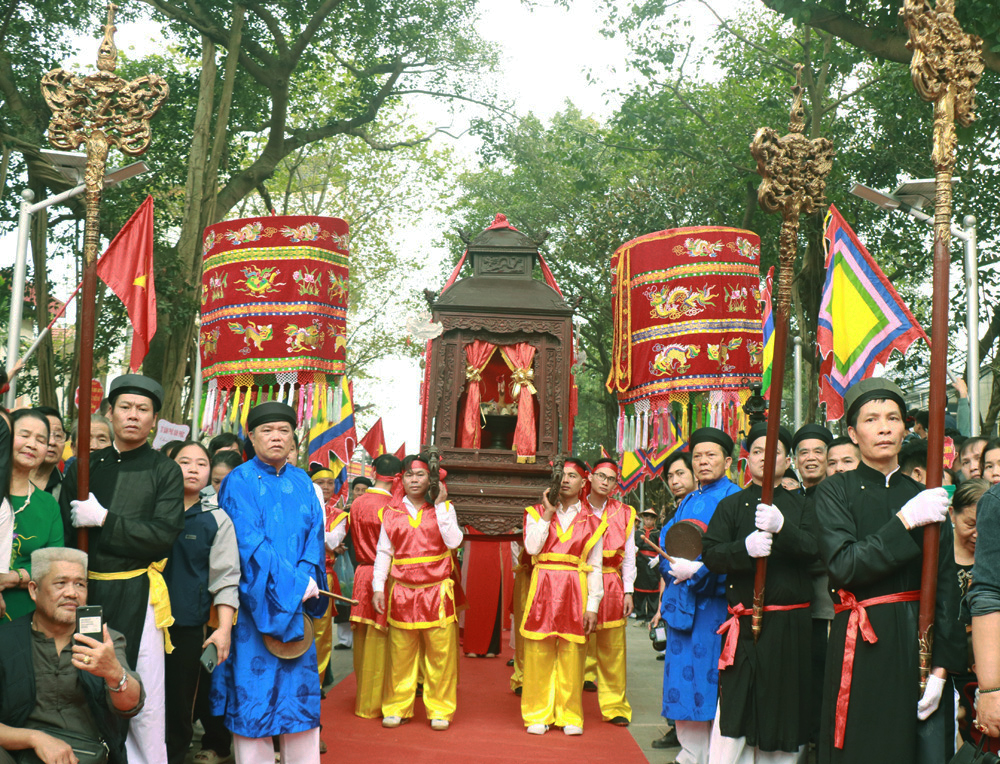
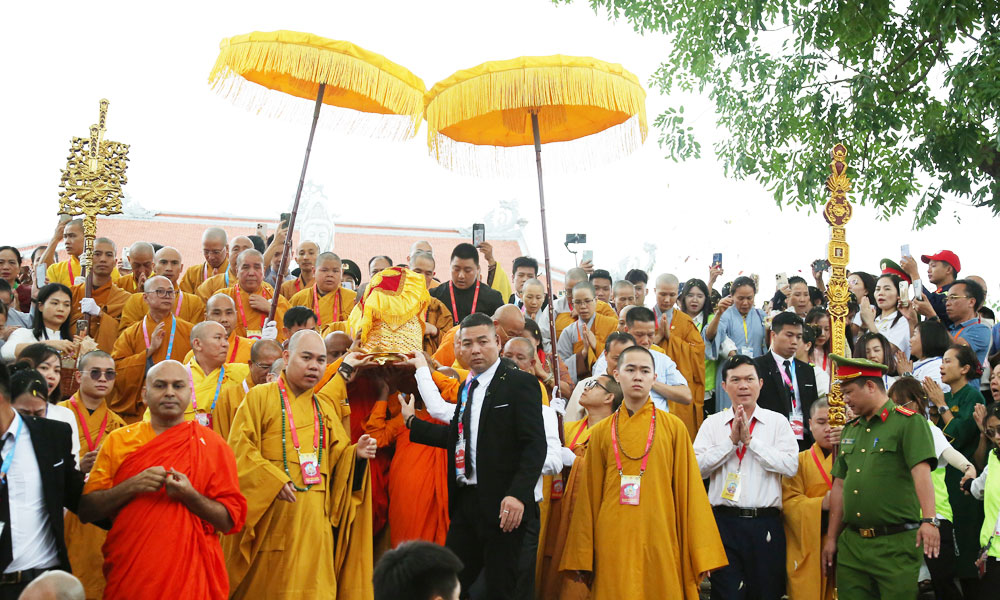
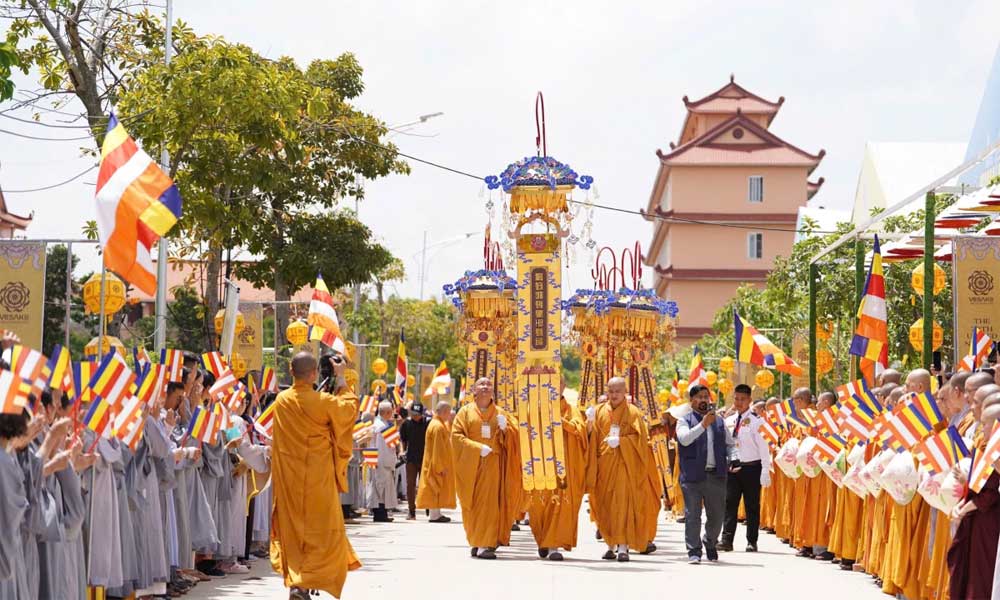
The procession ritual at the event. |
Over the centuries, these structures have been preserved, restored, and renovated by local residents through various historical periods.
The relic complex currently preserves many valuable artifacts and antiques, including a system of ancient stone steles dating from the 17th to the 19th centuries, ceremonial palanquins, ritual objects, gilded wooden worship items, and nearly 100 ancient Buddha statues at Tho Ha pagoda.
Notably, the ornamental wooden arch (cua vong) of Tho Ha communal house is a masterpiece of wood carving from the Le Trung Hung period, featuring intricate motifs of dragon, phoenix, and floral patterns. It has been recognised by the Prime Minister as a national treasure.
At the ceremony, a representative of the provincial Department of Culture, Sports and Tourism announced the Prime Minister’s Decision No. 266/QĐ-TTg dated February 11, 2026, officially recognising the Tho Ha communal house, pagoda, and Confucian temple complex as a special national relic site.
 |
|
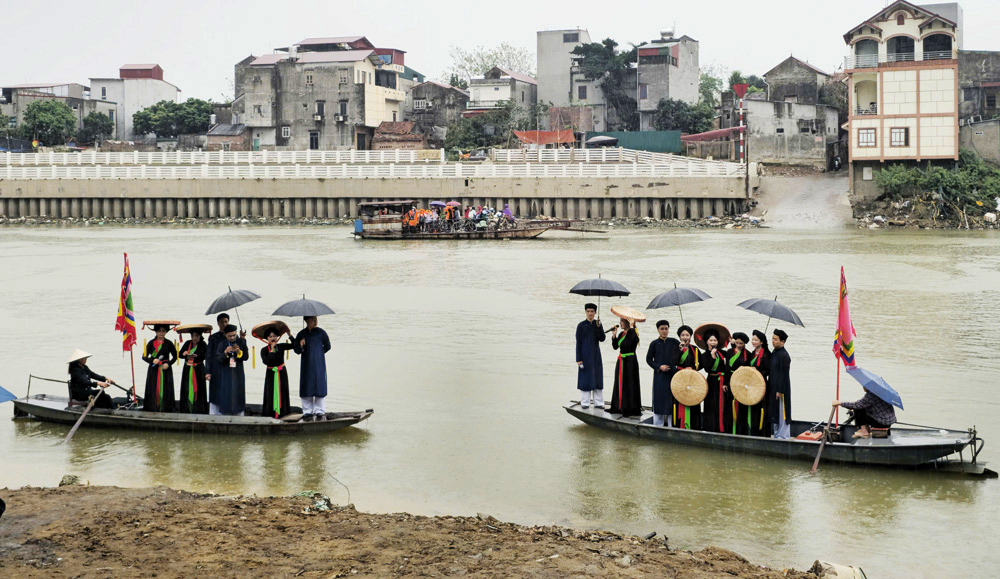
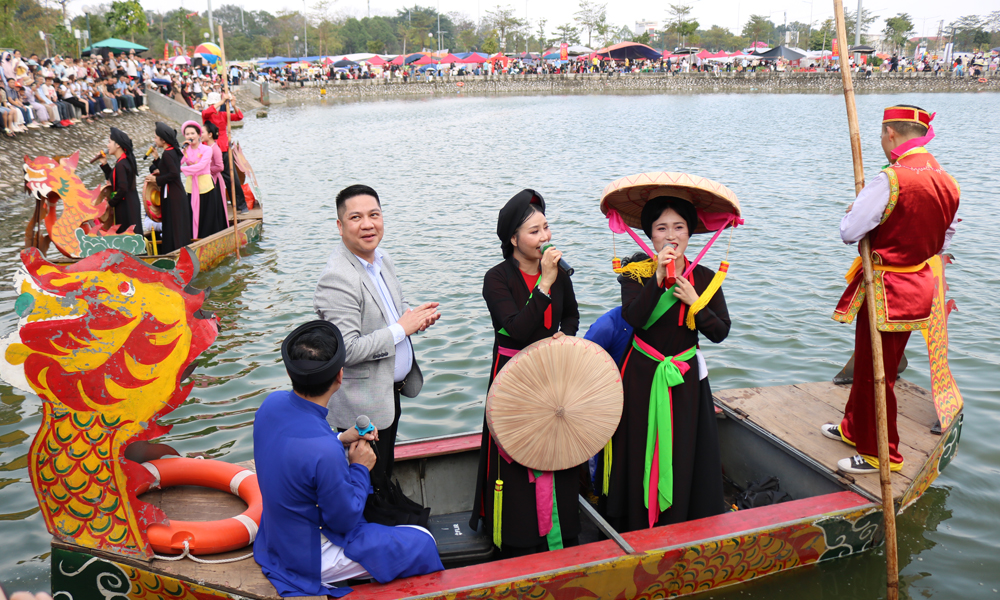
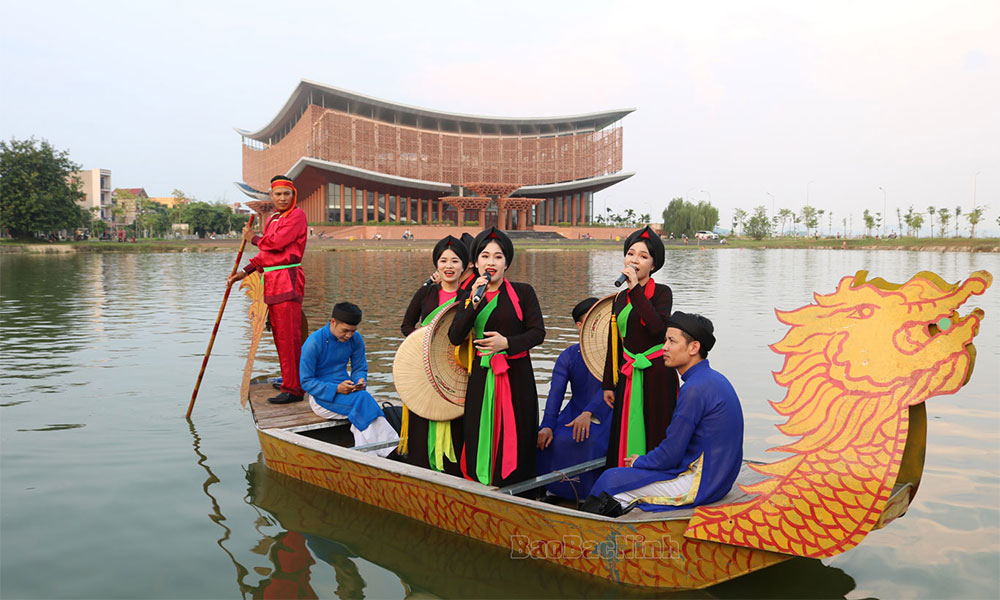
Performing Quan ho on boat on Cau river at Tho Ha festival. |
Speaking at the event, Nguyen Van Tinh, Chairman of the People’s Committee of Van Ha ward, stated that the recognition of the relic complex as a special national relic site is not only a great honor and pride for the local Party organisation and people but also an acknowledgment of the unique historical and cultural values preserved through many generations.
Van Ha ward will continue to coordinate with provincial professional agencies to develop a comprehensive plan for the preservation, restoration, and enhancement of the relic complex in accordance with the Law on Cultural Heritage, while strengthening management and safeguarding the original elements of the site to ensure its authenticity and long-term historical value.
The ceremony to receive the certificate took place as part of the Tho Ha Traditional Festival 2026, held over three days from March 8 to March 10. During the festival, various cultural and sports activities, folk games, and traditional art performances were organised.



Reader's comments (0)