 Bắc Ninh


Vietnam directs more credit to SMEs
With deposit rates still relatively high, banks’ room to cut lending rates sharply is limited. Lenders must stay efficient and cannot fund at high cost while lending at very low rates.
Credit is flowing increasingly to small and medium-sized enterprises (SMEs) as policymakers seek to support production, trade and economic growth.
 |
|
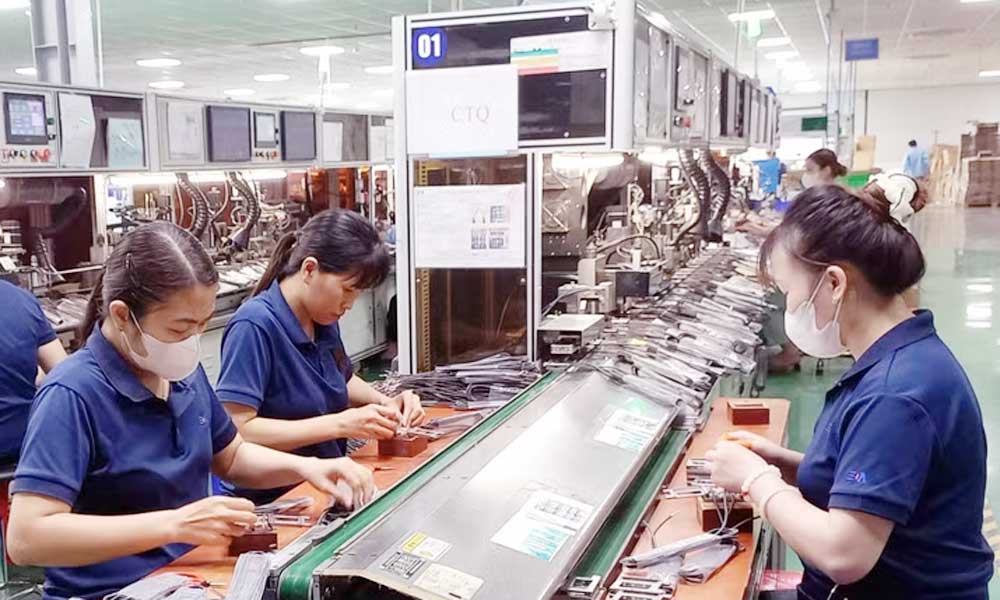
A factory in Bac Ninh province. |
But with the economy’s capital needs rising, the test is not just cheaper money. It’s ensuring funds reach the right companies, match their actual needs and fit their business cycles.
Banks ramp up SME lending
Under an August order from the State Bank of Vietnam, commercial banks must develop and announce credit packages targeting growth drivers and SMEs, with VND lending rates at least 1 percentage point below each bank’s average for loans of the same maturity.
Many banks followed with big SME packages, trimming rates by 1-2% percentage points per year.
State-owned Vietcombank, VietinBank and BIDV each rolled out 50 trillion VND (1.91 billion USD) packages with 1 percentage point reductions. Agribank set aside 70 trillion VND for preferential loans to SMEs for production and trade.
Among joint-stock lenders, Nam A Bank allocated 25 trillion VND at rates 1-1.8 percentage point below listed rates, while SHB launched a 45 trillion VND package with cuts of as much as 2 percentage point.
Nguyen Duc Lenh, Deputy Director of the SBV’s Region 2 branch, said access also hinges on cash flow, collateral, financial records and business plans. As a result, some banks are expanding supply chain financing tied to production, inputs and outputs.
Capital needs to reach the right firms
Pham Van Triem, Chairman of the Ho Chi Minh City Association of Small and Medium Enterprises (HCM-SME), said credit access remains a major hurdle for SMEs.
With deposit rates still relatively high, banks’ room to cut lending rates sharply is limited. Lenders must stay efficient and cannot fund at high cost while lending at very low rates.
Meanwhile, production and business costs keep climbing, from labour and machinery to raw materials. For thinly capitalised small firms, rising costs squeeze cash flow and reduce their capacity to absorb new loans.
According to HCM-SME, credit policies should be paired with direct support to ease cost pressures. It backs exempting firms with annual revenue below 10 billion VND from taxes, which would free up resources to sustain and expand operations.
Pham Binh An, Deputy Director of the Ho Chi Minh City Institute for Development Studies, said credit allocation should prioritise production, including contract manufacturing and assembly in Vietnam.
Such activity creates jobs, builds production capacity and underpins capital accumulation, he said. Rate cuts should come with clear prioritisation, funneling more capital into activities that build and expand productive capacity for sustainable growth.
Beyond production, infrastructure should also be prioritised, experts said. The focus should go beyond large projects to systems that directly cut business costs, including roads, seaports and logistics to keep goods moving smoothly.
Lower logistics costs would make Vietnamese products more competitive, helping firms expand markets and lift output, they said.
























Reader's comments (0)