 Bắc Ninh


Vietnam expands support for older people as population ages faster
Deputy Prime Minister Pham Thi Thanh Tra, Chairwoman of the National Committee on the Elderly, said the focus has so far been mainly on attention, support and care for older people. It must now shift toward treating them as a resource and a driver of sustainable development.
The Vietnamese Government and local authorities have rolled out a range of social welfare measures to improve older people's quality of life as the population ages rapidly.
 |
|
A mass dance performance featuring the highest number of the elderly in 2026 (Photo: VNA) |
A central pillar is the Politburo's Resolution 72-NQ/TW on protecting and caring for people's health, which puts a priority on healthcare for the elderly as the population ages.
The Government has also issued the National Strategy for the Elderly and Prime Minister's Directive 35/CT-TTg of December 23, 2025 on strengthening work related to older people.
Its Resolution 36/NQ-CP dated March 6, 2026 calls for quality healthcare services for the elderly, a key pillar of the "silver economy".
The 2025 Population Law, in force since July 1, 2026, sets requirements for older people's well-being.
It calls on individuals to prepare for old age in health, finances and mental well-being, join social and health insurance schemes, and keep learning to maintain physical and mental health and social functioning.
It also promotes diverse forms of elderly care, including self-care, home-based and community-based models, and calls for building a workforce of formal and informal caregivers.
The most recent step is Prime Minister's Decision 1116/QD-TTg dated June 22, 2026, which amends Decision 1579/QD-TTg dated October 13, 2020 and approves a scheme on elderly healthcare through 2030.
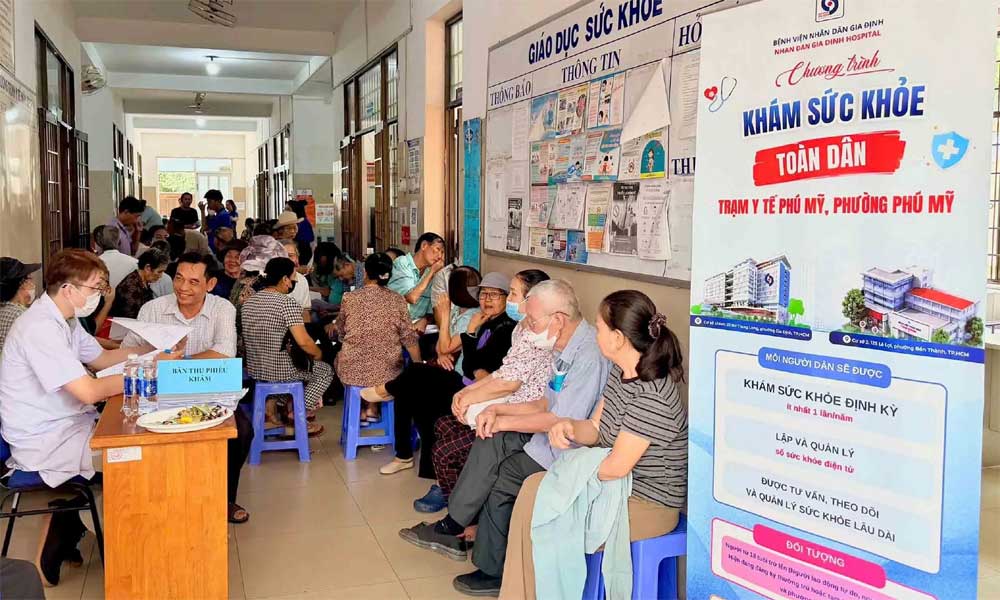
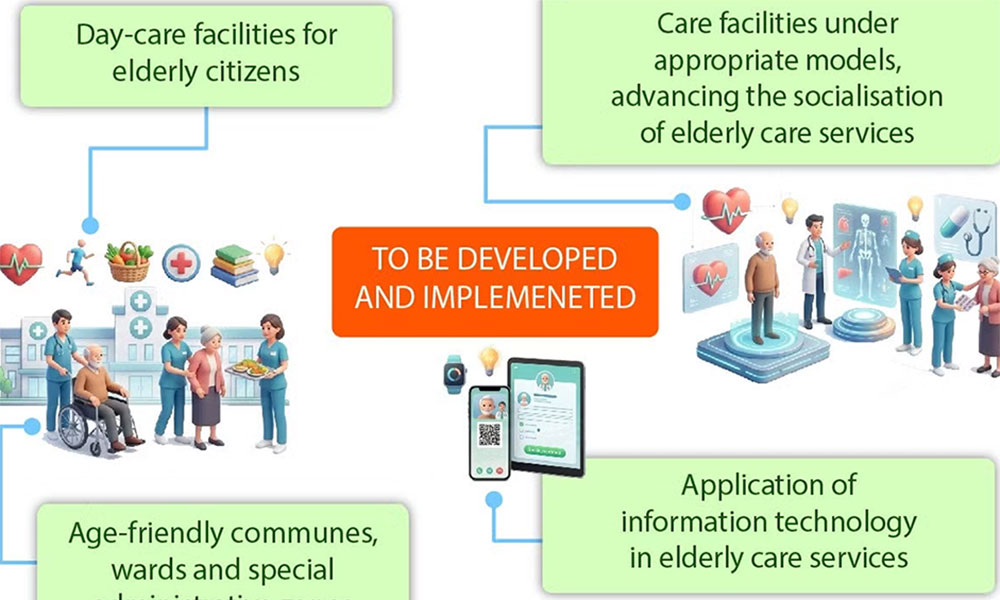
From 2026, senior citizens are entitled to at least one free periodic health check-up a year. Every commune, ward and special administrative zone must have at least one elderly care club, and day-care facilities for older people are targeted to reach at least 20% by 2030.
By then, every city and province is expected to have socialised elderly care facilities, along with geriatric hospitals or general hospitals with geriatric departments.
As of September 2026, more than 3.53 million older persons nationwide were receiving monthly social insurance benefits, according to the Vietnam Association of the Elderly (VAE).
They include about 2.35 million pensioners and 530,000 recipients of social insurance allowances. The State also offers social assistance to more than 1.2 million people.
Healthcare coverage has widened. Nearly 15.7 million older people hold health insurance cards, more than 69% receive regular check-ups and 80% have their health tracked through medical records.
Many remain active as more than 9 million work in employment, production or trade, over 733,000 take part in Party, Government and mass organisation activities, and more than 1.1 million help maintain public security and order.
Nearly 80,000 cultural and sports clubs have drawn more than 3 million older people, and over 9,000 intergenerational self-help clubs are fostering community ties.
Deputy Prime Minister Pham Thi Thanh Tra, Chairwoman of the National Committee on the Elderly, said the focus has so far been mainly on attention, support and care for older people. It must now shift toward treating them as a resource and a driver of sustainable development.







Reader's comments (0)