 Bắc Ninh


Vietnam has potential for integrated urban development
Industry insiders said the country’s urbanisation processes are being reshaped, with focus shifting from simple expansion to integrated urban development linked by modern infrastructure and higher value creation.
Vietnam has significant opportunities for integrated urban development, driven by a structural shift in economic growth model and robust investment, experts said at a recent conference held by Cushman & Wakefield Vietnam in Hanoi.
 |
|
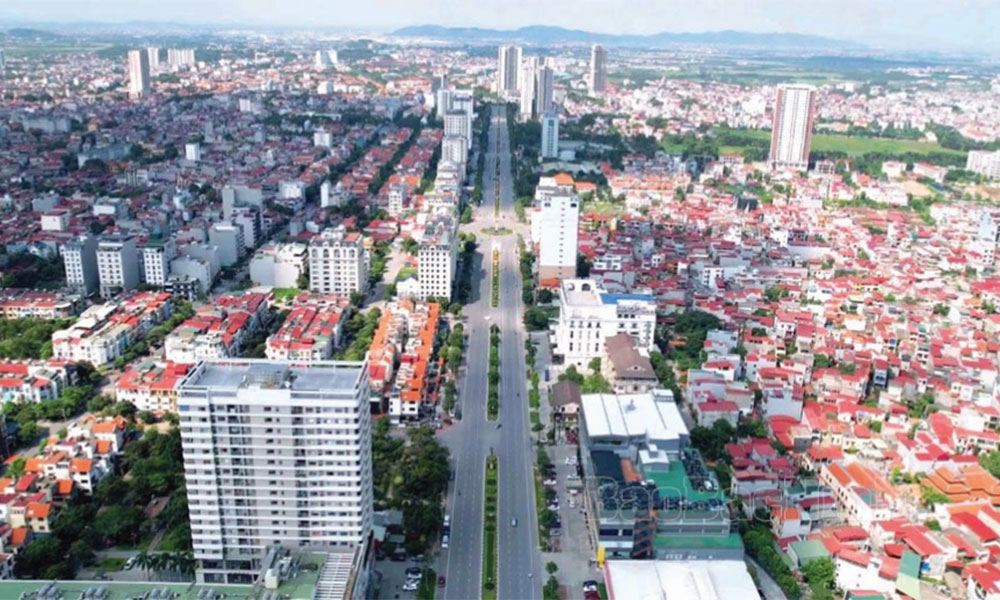
An urban area in Bac Ninh province. |
Industry insiders said the country’s urbanisation processes are being reshaped, with focus shifting from simple expansion to integrated urban development linked by modern infrastructure and higher value creation.
According to general director of Cushman & Wakefield Vietnam Hoang Nguyet Minh, the Southeast Asian nation has gradually emerged as one of the most dynamic economies in the region.
She cited statistics showing that Vietnam recorded GDP growth of 8.02% in 2025 and averaged about 6.2% annually over the past decade. Foreign direct investment reached 38.4 billion USD, while total trade turnover hit a record 930 billion USD, placing Vietnam among the world’s 25 largest trading economies.
GDP per capita has nearly doubled over the past decade from 2,290 USD to 5,026 USD. With a population of about 102.3 million and a rapidly expanding middle class, domestic consumption and urban demand continue to grow, Minh said.
Looking ahead to 2030 and beyond, experts said Vietnam is supported by improving legal transparency, more structured infrastructure strategies and national ambitions to become the third-largest economy in Southeast Asia before 2030 and a high-income developed country by 2045.
Experts emphasised that urban planning and infrastructure development must move in line with economic transformation, meaning that cities can no longer expand in a fragmented way.
Instead, planning should support integrated urban areas with stronger infrastructure connectivity, job clusters and ecosystems for education and health care, while improving overall living standards.
Le Hoang Lan Nhu Ngoc, also from Cushman & Wakefield Vietnam, said that successful urbanisation has never been solely about increasing housing supply.
“The core factor is to create a complete urban logic where infrastructure, employment, education, health care, public amenities and quality of life develop together,” she said.
Vietnam has significant opportunities to develop more efficient integrated mega-cities, but this will require long-term thinking, disciplined implementation and a focus on building complete urban ecosystems rather than isolated projects, Ngoc said.
Anshul Jain, chief executive for India, Southeast Asia, the Middle East and Africa at Cushman & Wakefield, said Vietnam remains one of the region’s most attractive long-term growth markets.
If urban planning, infrastructure investment and economic strategies remain closely aligned, the country will be well positioned to develop more competitive cities, stronger urban corridors and a solid foundation for long-term real estate growth, he noted.
Vietnam aims to increase its urban population to more than 50% and expand the number of urban areas to between 1,000 and 1,200 by 2030.
Statistics from the Ministry of Construction show that Vietnam currently has more than 900 urban areas, with an urbanisation rate of more than 44%. Urban areas have become key drivers of socio-economic growth, contributing about 75% of the country’s GDP.












Reader's comments (0)