 Bắc Ninh


Law expected to facilitate cross-border trade
Deputy Director of the Department of Customs Nguyen Thanh Hung said the draft law establishes a legal framework to convert fragmented customs documents into standardised digital data, enabling AI to process and analyse information for automated customs clearance.
The draft law amending and supplementing a number of articles of the Law on Customs, recently reviewed by the National Assembly Standing Committee at its fourth session, aims to modernise customs management by shifting from goods-based inspections to a compliance-based system driven by data and artificial intelligence (AI).
 |
|
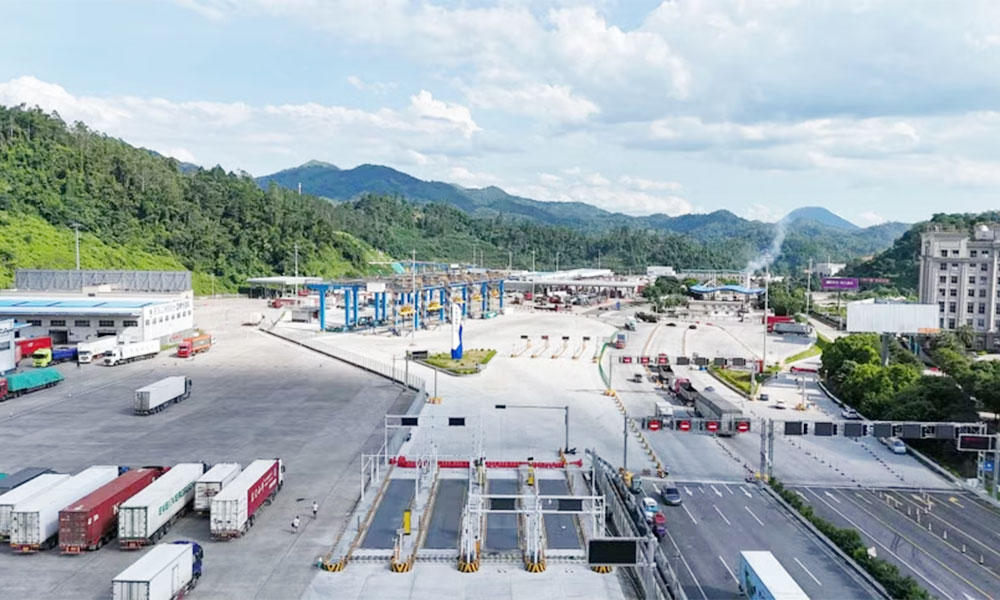
An overview of the smart Youyi Guan-Huu Nghi border gate pair. |
Businesses would no longer be treated primarily as subjects of inspection but as voluntary compliance partners receiving greater support from customs authorities.
Deputy Director of the Department of Customs Nguyen Thanh Hung said the draft law establishes a legal framework to convert fragmented customs documents into standardised digital data, enabling AI to process and analyse information for automated customs clearance.
Under the proposal, an AI-powered system would compare customs declarations with national databases and enterprises' compliance histories in real time before assigning shipments to green, yellow or red inspection channels.
The process would be fully automated, eliminating subjective human intervention and improving transparency.
For highly compliant businesses in the green channel, goods could be cleared within seconds, reducing clearance times and opportunities for administrative harassment.
The draft law also addresses legal gaps in the 2014 Law on Customs arising from the rapid growth of cross-border e-commerce.
Instead of focusing primarily on individual buyers, it places greater legal responsibility on e-commerce platforms, which would be required to connect their systems with customs authorities and provide advance information on orders and payment transactions. Buyers in Vietnam would also have to complete electronic identity verification.
Greater transparency in goods, payment and identity data would enable customs authorities to make clearance decisions as soon as shipments arrive, helping reduce congestion while preventing businesses from splitting orders to exploit tax exemptions, thereby protecting State revenue and ensuring fair competition.
The draft also seeks to reduce compliance costs in line with the Politburo's Resolution No. 68-NQ/TW on private sector development.
It proposes abolishing several administrative requirements related to customs brokerage agencies and their employees.
Instead, the Ministry of Finance would issue more flexible regulations based on professional capacity, helping expand a network of qualified customs brokers while reducing administrative burdens for businesses.
The maximum storage period for goods at bonded warehouses and duty-free shops would be extended to 24 months, with procedures for periodic extensions abolished.
Goods stored at container freight stations (CFS) could remain for up to 180 days under an automated monitoring system, giving businesses greater flexibility in managing supply chains and reducing warehousing costs.
The draft also removes most requirements for warehouse, seaport and logistics operators to submit periodic paper reports. Instead, businesses would connect warehouse layout and cargo location data directly to customs authorities through digital systems.
Continuous data-based supervision is expected to reduce physical inspections and increase cargo throughput at ports by at least 30%.
Hung said the draft law establishes only long-term principles, while issues requiring frequent updates, including e-commerce, customs procedures, risk management and compliance management, would be detailed in Government decrees and regulations issued by the Minister of Finance.
Kim Long Bien, head of the Legal Affairs Division under the Department of Customs, said delegating technical regulations to the Ministry of Finance would improve policy responsiveness.
However, he stressed that greater decentralisation must be accompanied by transparent oversight to ensure implementing regulations remain consistent with the amended Law on Customs and do not create hidden technical barriers for businesses.















Reader's comments (0)