 Bắc Ninh


France-based expert offers strategic insights for Vietnam’s semiconductor development
Dr Nguyen Van Minh, Founding Head, Hardware-Efficient AI & AI-Native Wireless, at Huawei’s Research Centre in France, suggested that Vietnam shift its focus from strategic planning to implementation.
As Vietnam accelerates the development of its semiconductor industry, building a strong technology ecosystem, identifying right strategic priorities and focusing on implementation capacity will be critical, rather than simply competing to produce the world’s most advanced chips, according to Dr Nguyen Van Minh, Founding Head, Hardware-Efficient AI & AI-Native Wireless, at Huawei’s Research Centre in France.
 |
|
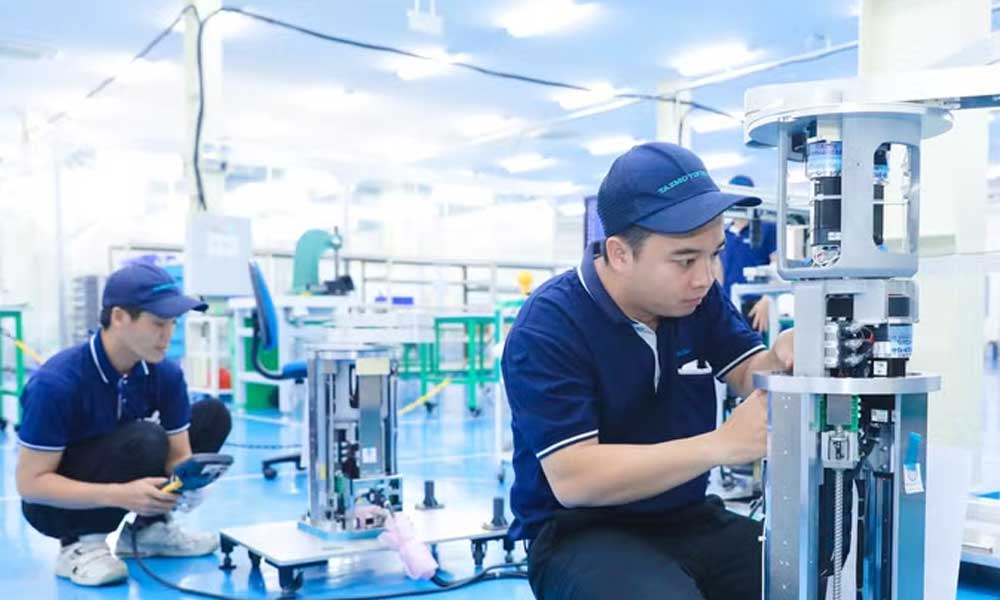
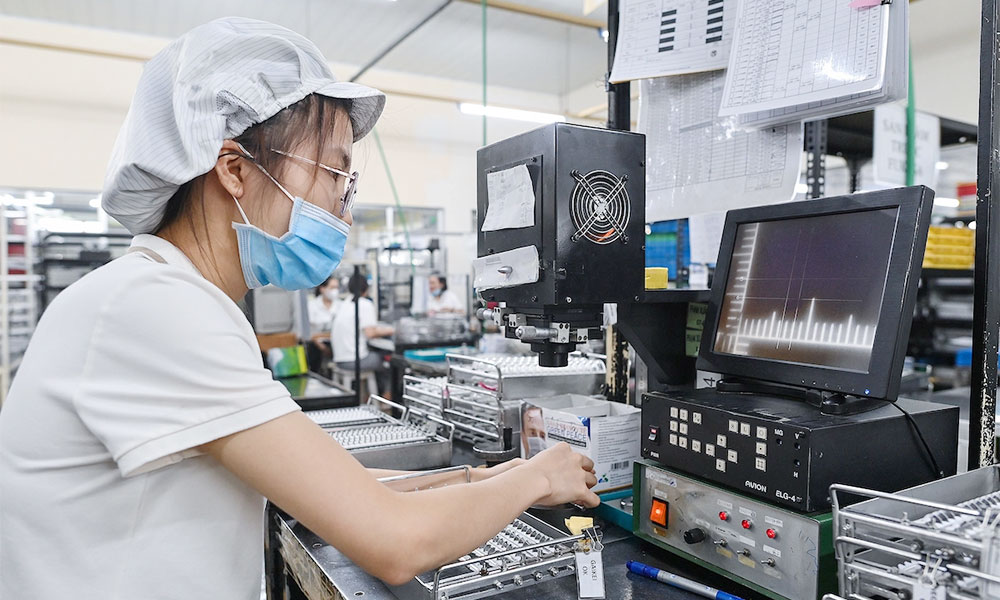
Robotic wafer conveyor assembly line in the semiconductor industry. |
Speaking to Vietnam News Agency (VNA) correspondents in Paris, Minh said that Vietnam and France have yet to establish joint programmes in core semiconductor technologies.
While cooperation between Vietnam’s National Innovation Centre (NIC) and France’s Dassault Systèmes has contributed to industrial digital transformation, digital twins and product lifecycle management, it has not yet extended to core semiconductor capabilities such as chip design, AI accelerator architecture, semiconductor intellectual property or advanced packaging.
He suggested that Vietnam shift its focus from strategic planning to implementation. Defining long-term priorities is only the first step, he said.
The real challenge lies in translating those visions into concrete programmes backed by investment, technical infrastructure, stronger links among industry, academia and research institutions, and commercially viable products, he added.
The expert also urged Vietnam to adopt a broader understanding of the semiconductor industry rather than equating it solely with cutting-edge 2-nanometre or 3-nanometre technologies.
The market encompasses a wide range of products, including power semiconductors, communication chips, sensors, memory devices and processors for industrial equipment, household appliances, the Internet of Things (IoT) and automotive applications.
Instead of attempting to compete immediately with the world's leading chipmakers in advanced manufacturing, Vietnam should pursue a phased approach.
This includes developing capabilities in semiconductor materials, wafers, and upstream supply chains, and strengthening advanced packaging and testing, chiplet technologies, and heterogeneous integration, before gradually moving into mature process technologies, such as the 28-nanometre node, to serve industrial, automotive, IoT, and edge AI applications.
He added that Vietnam should clearly define whether its semiconductor strategy prioritises strategic technological autonomy, global commercial competitiveness, or both.
If economic value creation is also an objective, the focus should be on products with clear market demand and competitive advantages rather than on chip design capabilities alone.
In the AI sector, Vietnam has significant opportunities to develop practical applications tailored to sectors such as manufacturing, agriculture, healthcare, transport, education and public services by combining local data, domain expertise and engineering capabilities.
At the same time, the country should gradually strengthen its capabilities in AI computing, including algorithm optimisation, computing architecture, AI accelerators, hardware design and energy-efficient computing solutions.
Dr Minh stressed that human resources remain the decisive factor for success. Vietnam should develop talent across the entire semiconductor value chain, from algorithm and system development to hardware architecture and chip design, and finally to semiconductor manufacturing, packaging, and testing.
He concluded that France offers Vietnam not only advanced technologies but also valuable experience in building a high-tech industrial ecosystem.
Ultimately, however, Vietnam’s success will depend less on adopting new strategies than on its ability to implement them effectively with clear objectives, adequate resources, skilled personnel and well-defined responsibilities.





















Reader's comments (0)