 Bắc Ninh


Organic farming: A sustainable path for Bac Ninh’s agricultural products
BAC NINH – Organic agricultural production is becoming an inevitable trend in modern farming. In Bac Ninh province, the application of organic fertilizers and biological products to crops has initially delivered high economic efficiency, opening up prospects for a green, safe, and sustainable agricultural sector.
Implementing the policy of restructuring crops and farming methods, since April 2025, the provincial Farmers’ Union has coordinated with Viet Green Environment and Technology Co., Ltd. (Tu Son ward) to pilot the use of microbial organic fertilizers and biological products on the province’s key crops. So far, many models have yielded positive results, clearly demonstrating their superiority over traditional farming practices.
 |
|
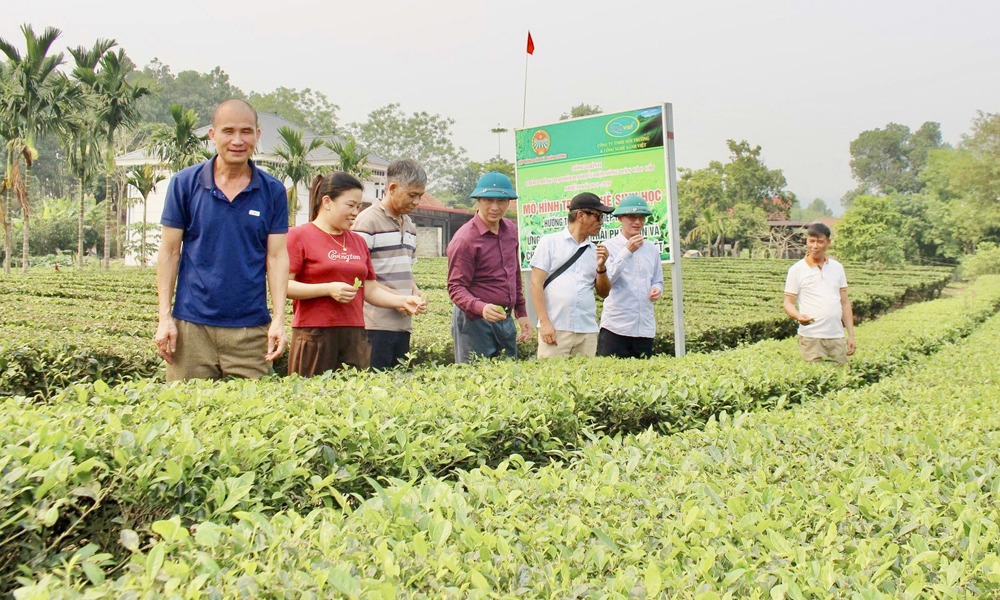
Officials from the provincial Farmers’ Union survey the pilot model using organic fertilizers and biological products on tea plants in Xuan Luong commune. |
A typical example is the custard apple model applying microbial organic fertilizers in Nghia Phuong commune, covering an area of 12 sao (1 sao = 360 square metres). Participating households received 70% financial support for materials and were guided by technical staff on scientific cultivation processes.
Actual results show yields of 600–700 kg per sao; labour and fertilizer costs decreased by 30%; notably, plant protection chemical costs dropped by up to 50%.
Thanks to the attractive appearance and sweeter taste of the fruit, farmers’ revenue increased by 30% compared to before applying this new technique.
Since April 2025, the provincial Farmers’ Union, in collaboration with Viet Green Environment and Technology Co., Ltd., has piloted microbial organic fertilizers across seven key crop models: custard apple (Nghia Phuong commune), guava and ginseng (Phuc Hoa commune), pineapple (Kep commune), tea (Xuan Luong commune), orange (Luc Ngan commune), and commercial rice (Hop Thinh commune). Each model involves 4–10 households cultivating 1–3 sao per household.
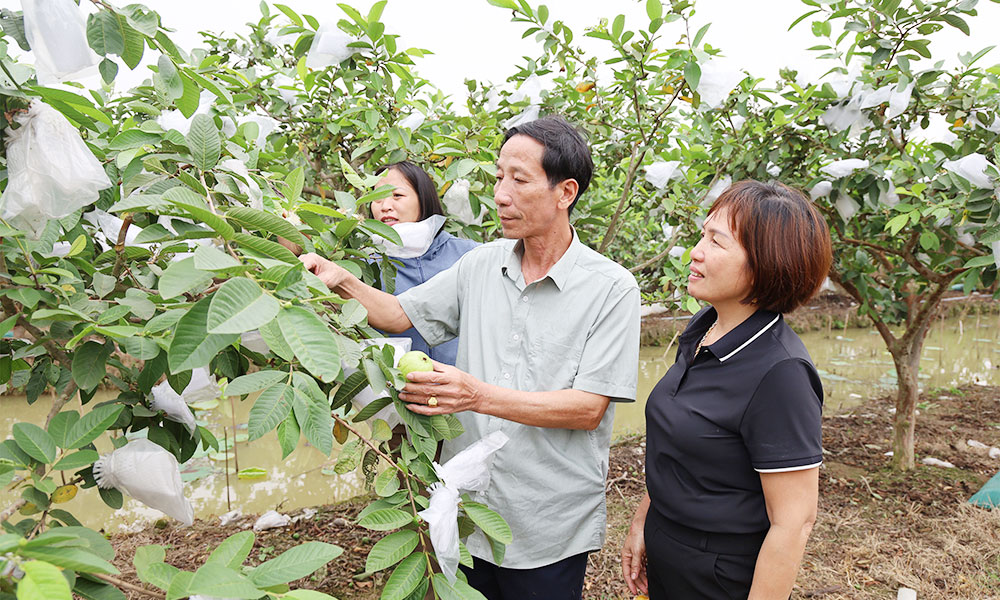
Similarly, in Phuc Hoa commune, the Taiwanese pear guava model, spanning 18 sao, has also recorded impressive figures. The average yield reached nearly 1 tonne per sao, 1.5 times higher than the reference model.
A reduction of 35–40% in input costs helped increase farmers’ profits by 50%. Nguyen Quoc Sang, a participating farmer, noted that guava trees using organic fertilizers recover quickly after flooding, and the fruits are noticeably crunchier and sweeter.
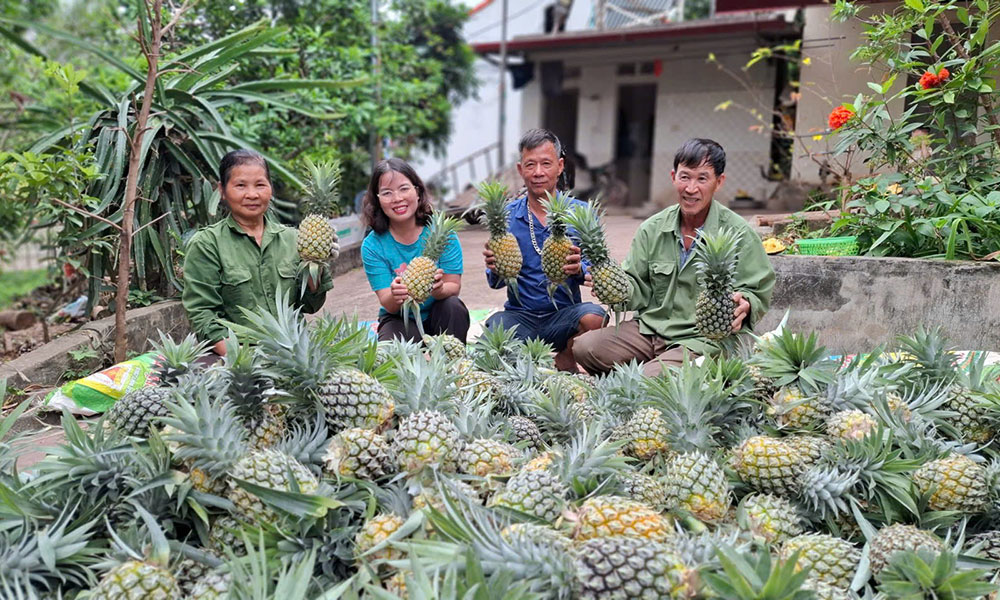
The effectiveness of microbial organic fertilizers has also been confirmed in pineapple fields in Kep commune and tea plantations in Xuan Luong commune.
According to farmers Hua Van Teo (Kep commune) and Hoang Van Ha (Xuan Luong commune), the shift to organic farming enhances product quality and better meets the clean agriculture standards the province is aiming for.
In addition to direct economic benefits, the use of microbial organic fertilizers also addresses a core issue of sustainable agriculture: soil improvement.
Reducing chemical fertilizers helps make the soil more porous, minimises nutrient leaching, and increases crops’ resilience to diseases and extreme weather conditions.
With the active participation of the “four stakeholders” (the State, farmers, scientists, and businesses), organic agriculture in Bac Ninh is expected to create breakthroughs, improve farmers’ livelihoods, and protect a sustainable ecosystem.



Reader's comments (0)