 Bắc Ninh


Supporting industry infrastructure map launched to promote global supply chain integration
The platform aims to strengthen domestic supply chain linkages, increase localisation rates and improve the competitiveness of Vietnamese manufacturers in global production networks.
The Vietnam Association of Supporting Industries (VASI) recently launched the “VASI 2026 Supporting Industry Infrastructure Map”.
 |
|
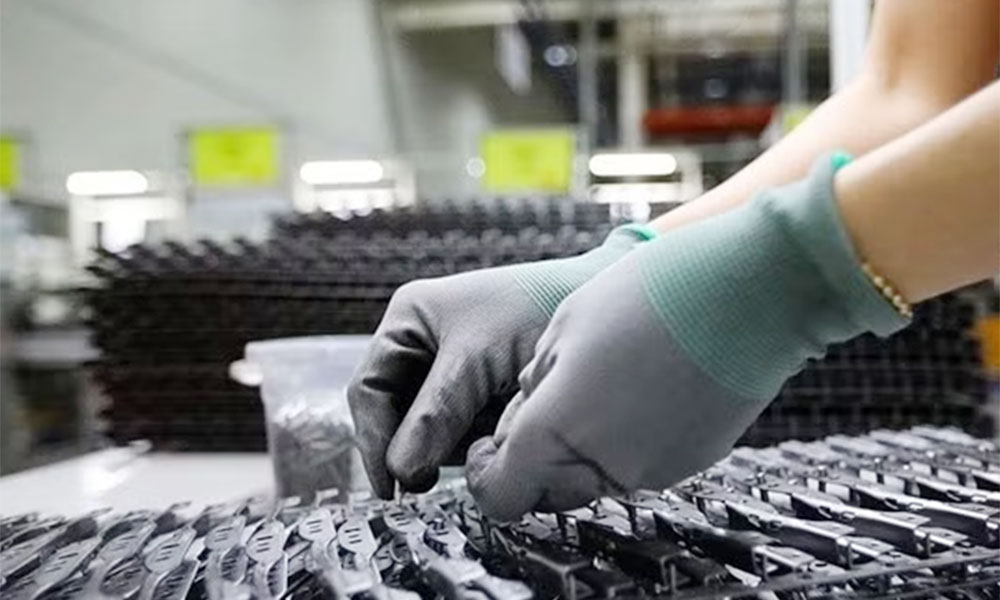
Production at Cap Global Co. Ltd. in Luong Son Industrial Park, Phu Tho province. |
The platform aims to strengthen domestic supply chain linkages, increase localisation rates and improve the competitiveness of Vietnamese manufacturers in global production networks.
Organised in cooperation with DTJ Industrial, the initiative is seen as a milestone in the development of a concentrated supporting industry ecosystem in Vietnam, with a focus on building an integrated, modern and environmentally sustainable industrial network capable of meeting international standards.
The map is designed to help enterprises not only gain access to industrial land and manufacturing infrastructure, but also connect with supply chains, technology providers, logistics services and strategic investment resources.
Deputy President and General Secretary of VASI Truong Thi Chi Binh said the association had pursued the idea of building supporting industry clusters and an industrial infrastructure map for more than 20 years with the aim to gather manufacturers of components and spare parts into concentrated industrial hubs to create integrated supply chains and production ecosystems.
She said Vietnam’s supporting industry sector made significant progress over the past two decades, with some enterprises reaching annual revenues worth trillions of VND and gradually expanding into international markets.
In the long term, VASI expected specialised industrial parks for supporting industries would be formed in Vietnam where enterprises in the supply chain could cluster production and connect directly with customers and partners.
Le Minh Son, a representative from DTJ Industrial, said that the infrastructure map was developed amid growing demand for industrial clusters and supporting industry ecosystems.
Logistics costs account for around 20% of GDP in Vietnam, putting pressure on businesses, especially amid geopolitical instability and supply chain disruptions that have pushed logistics costs higher, according to Son.
In addition, most Vietnamese supporting industry enterprises are of small and medium-sizes that face difficulties in accessing industrial land and managing environmental, fire prevention and operational requirements independently.
To address these challenges, VASI has proposed the development of concentrated industrial clusters integrating shared infrastructure, logistics and support services under ESG and smart factory standards.
The model is expected to help enterprises reduce costs related to technical infrastructure, electricity systems, fire prevention, wastewater treatment, logistics and factory support services by between 10 and 20%.
The infrastructure map focuses on key industrial localities in the Red River Delta region, including Hai Phong, Bac Ninh, Thai Nguyen, Hung Yen, Phu Tho and Ninh Binh.
It provides information on industrial land rental prices, available land, transport connectivity and industrial development orientations in each locality.
The map also introduces two pilot industrial cluster projects for supporting industries, including 72-ha Tan Duc Industrial Cluster in Thai Nguyen province, and 75-ha Chinh Nghia Industrial Cluster in Hung Yen province.
Nguyen Quoc Khanh, VASI’s deputy president, said the map was expected to become a specialised investment and data connection platform for Vietnam’s supporting industry community.
“It will help improve localisation rates, enhance competitiveness, boost exports and support Vietnamese enterprises in integrating more deeply into global supply chains,” Khanh said.
Pham Van Quan, deputy director general of the Industry Agency under the Ministry of Industry and Trade, said most Vietnamese supporting industry enterprises would require only a few hundred to several thousand square metres of production space, while existing industrial parks are typically designed for much larger tenants, making access difficult for smaller firms.
The initiative could mark the beginning of a new generation of supporting industry parks in Vietnam, he said, adding that these industrial clusters would not only provide land for production but also integrated ecosystems that are green, modern and internationally competitive.
Phung Thi Thu Huong, Deputy President of the Vietnam Green Transformation Association, said the initiative was in line with global industrial development trends.
The new generation of foreign investment attraction was shifting toward factors such as integrated infrastructure, on-site supply chains, environmental, social and governance (ESG) standards, green energy and the ability to connect with global manufacturing networks, Huong said.
This required Vietnam to quickly develop highly specialised supporting industry ecosystems capable of meeting international standards, she added.



Reader's comments (0)