 Bắc Ninh


Bac Ninh accelerates shift to renewable energy
BAC NINH – The Northern industrial hub Bac Ninh is stepping up efforts to promote renewable energy and improve power efficiency as electricity demand continues to surge, particularly during peak summer months.
As a key manufacturing center, the province faces consistently high power consumption, with mounting pressure on supply amid rising loads. Authorities say efficient electricity use is a crucial solution to ensure energy security and help businesses cut costs.
 |
|
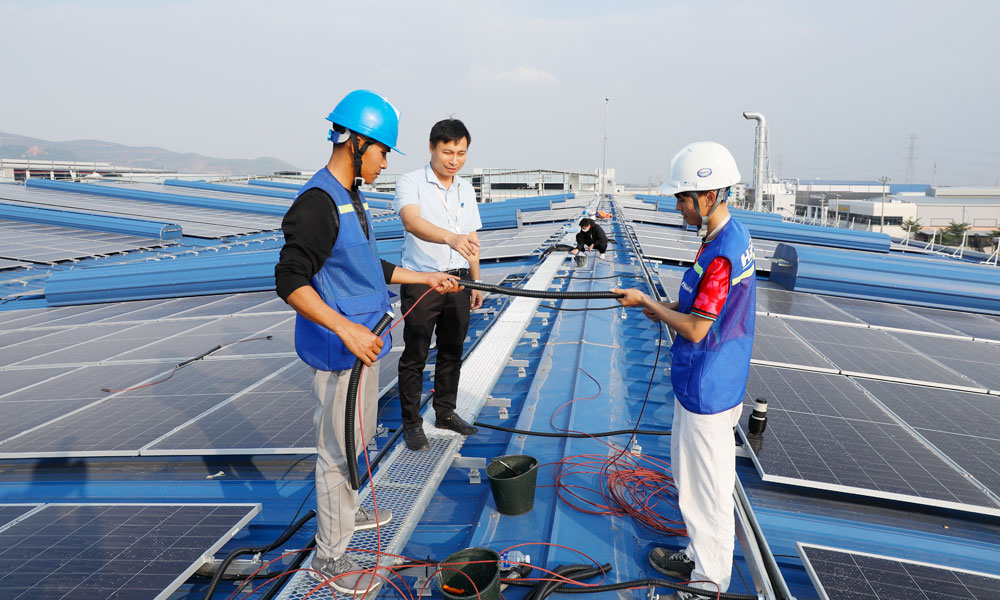
The whole rooftop of Yonz Technology Vietnam Investment Co., Ltd.’s factory (Yen Lu Industrial Park) has been used to install solar power. |
In 2025, Bac Ninh’s commercial electricity output reached 16.6 billion kWh, up 3.78% from 2024. Industry and construction accounted for 74.94% of total consumption, with industrial parks alone using about 62.67%. Demand is expected to rise further in 2026 in line with the province’s industrial expansion.
“The sharp increase in electricity demand, especially during extreme heat periods, puts significant pressure on the national grid,” said Do Binh Duong, Deputy Director of Bac Ninh Power Company. “We hope to continue receiving cooperation from customers to ensure stable and safe power supply for socio-economic development.”
To address the challenge, the provincial People’s Committee has identified 247 major energy-consuming facilities for 2025, urging them to adopt energy-saving practices to help reduce peak load pressure.
At many large enterprises, energy efficiency measures have been integrated into production plans. Fuyu Precision Technology Co., Ltd., based in Quang Chau Industrial Park, has implemented multiple solutions in coordination with the local power utility.
The company, which manufactures electronic components and employs around 30,000 workers, produces an average of 21 million units per month.
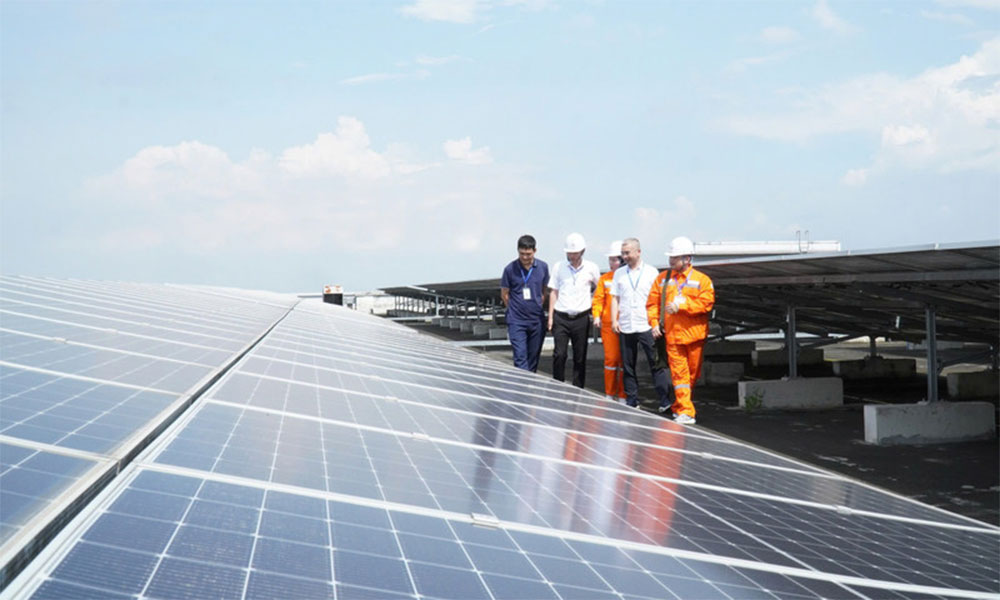
It has invested in a rooftop solar power system with a capacity exceeding 18.1 MWp, helping reduce reliance on the grid during daytime peak hours.
Huarong Industry Co., Ltd., a wood pellet producer, is also recognized for effective energy use. In 2025, it produced more than 61,100 tonnes of output while consuming nearly 12.5 million kWh of electricity, averaging 204.1 kWh per tonne.
The company plans to raise output to 70,000 tonnes in 2026 while reducing energy intensity through a “smart energy” strategy, including a 1 MW solar system and a battery energy storage system (BESS) with a capacity of 2.65 MW, requiring total investment of about 29 billion VND (1.1 million USD).
Public service units are also stepping up energy-saving efforts. Bac Ninh General Hospital No.1, for example, has required all staff to follow electricity-saving practices, including limiting air conditioning use and setting temperatures at 26 degrees Celsius or higher.
To drive broader change, the province earlier this month issued a plan to implement a government directive on energy conservation, energy transition and the development of electric transport.
By 2030, Bac Ninh aims to cut energy consumption per unit of GRDP by 1-1.5% annually, achieve at least 3% annual electricity savings among major energy users, and ensure all such facilities conduct regular energy audits and adopt energy management systems.
Nguyen Minh Hieu, Director of the provincial Department of Industry and Trade, said the province is committed to supporting businesses in efficient energy use and demand management, while encouraging investment in rooftop solar systems to ease pressure on the national grid.
So far, 46 enterprises have installed rooftop solar systems with a combined capacity of 150.4 MW. In the first phase of 2026, installation targets totaling 4.68 MW have been assigned to 27 communes and wards and 12 public healthcare units.
Yonz Technology Vietnam Investment Co., Ltd., located in Yen Lu Industrial Park, is among firms benefiting from solar adoption.
After completing a rooftop system with capacity exceeding 10 MW in late 2025 and putting it into operation in January 2026, the company has cut monthly electricity costs by more than 3 billion VND, or nearly 10%.
Alongside efforts by consumers, Bac Ninh Power Company is continuing to upgrade the grid, improve operational reliability and promote energy-saving awareness, working with authorities to ensure stable electricity supply for production and daily life.
Officials say enhanced oversight of major energy users, combined with coordinated efficiency measures and solar expansion, is helping Bac Ninh take a more proactive approach to energy challenges, laying the groundwork for sustainable industrial growth, lower production costs and improved environmental protection.







Reader's comments (0)