 Bắc Ninh


Innovation – Driver for new development phase
The draft action programme of the Party Central Committee to implement the Resolution of the 14th National Party Congress identifies the shift to a new growth model, economic restructuring, and accelerated industrialisation and modernisation, with science, technology, innovation and digital transformation as the core engines, as key tasks.
Innovation has been affirmed as a key driver and powerful strong lever for economic growth as Vietnam enters a new development phase marked by transformation.
 |
|
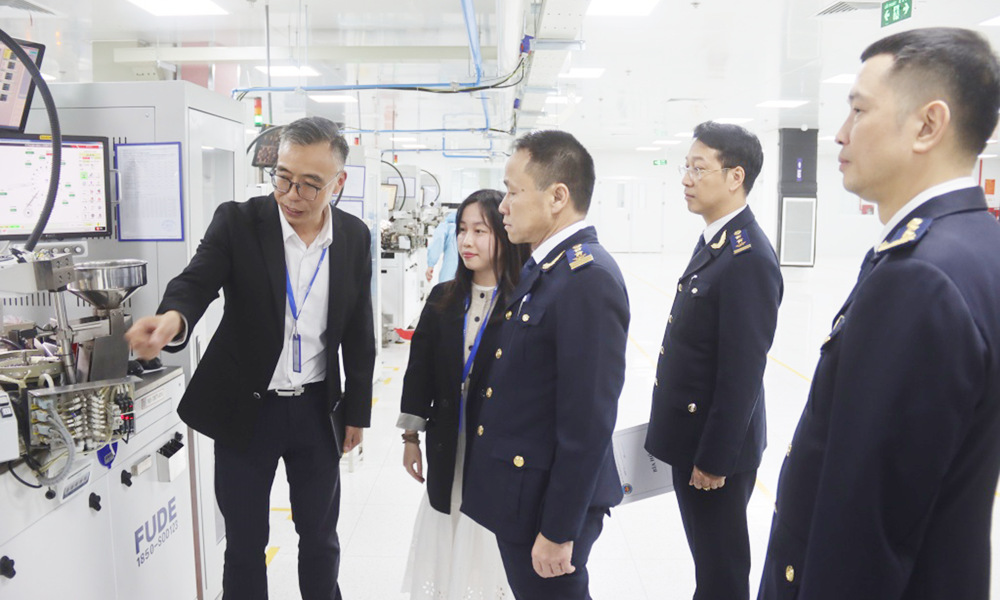
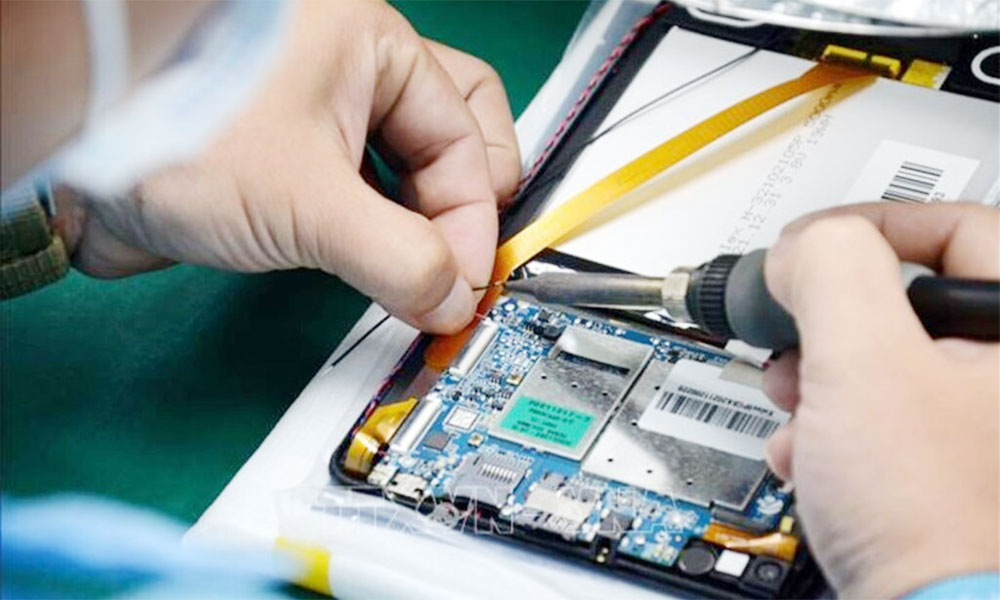
Workers are operating a robotic wafer conveyor assembly line in the semiconductor industry. |
The draft action programme of the Party Central Committee to implement the Resolution of the 14th National Party Congress identifies the shift to a new growth model, economic restructuring, and accelerated industrialisation and modernisation, with science, technology, innovation and digital transformation as the core engines, as key tasks.
Ambitious growth targets are intensifying the need to raise productivity and efficiency, pushing enterprises to embed innovation deep into their organisational culture and develop it as a core capability.
A recent survey by the Enterprise Development Institute (EDI) under the Vietnam Chamber of Commerce and Industry (VCCI) shows that cultural values promoting innovation in enterprises scored an average of 3.81 out of five.
This suggests that an innovation culture has begun to take shape, especially amid rapid technological change, though its depth remains moderate and requires stronger promotion.
According to EDI Director Luong Minh Huan, private enterprises record the highest levels of innovation culture, followed by foreign-invested firms, while State-owned enterprises lag behind.
Innovation is most pronounced among young businesses. Firms operating for under two years tend to focus on stabilisation and market access, resulting in lower scores, while those in the two-to-five-year development phase show the strongest emphasis on innovation-supportive cultural values.
In practice, many Vietnamese enterprises still associate innovation primarily with major breakthroughs or entirely new solutions, often implementing it through short-term programmes or initiatives. Yet innovation is not exclusive to large firms or high-tech sectors.
It can emerge from incremental improvements in processes, coordination and ways of working that gradually reshape thinking and generate new value.
The VCCI survey also indicates that about 40.4% of enterprises prioritise fostering a learning mindset and transforming into learning organisations in their upcoming cultural strategies.
Globally, the World Economic Forum (WEF) forecasts that 39% of core workforce skills will change by 2030, while 63% of employers see skills gaps as the main obstacle to business transformation.
Therefore, learning is no longer limited to skill upgrading but extends to redefining organisational behaviour and operating models.
Dr. Ngo Dac Thuan, Chairman of IPGroup, citing the WEF’s Future of Jobs 2025 report, noted that critical thinking and adaptability will be the most important skills in 2025, alongside leadership and social influence.
AI, big data, cybersecurity and technological competence are also expected to dominate demand through 2030.
This combination requires workers to be proficient with digital tools while retaining sound judgement and accountability when working with AI.
If 2023–2025 marked the experimentation phase for AI adoption, 2026 is set to usher in standardisation, with AI becoming a routine component of work.
As Vietnam refines its AI-related policies and legal frameworks to ensure safety and ethics, enterprises are increasingly required to establish internal AI standards while sustaining innovation as a growth driver.
Entering 2026, businesses must balance rapid adaptation with stability for employees. Building flexible learning systems, encouraging experimentation, setting clear internal rules on AI use, and reinforcing core organisational foundations will be essential to maintaining innovation momentum and long-term performance.










Reader's comments (0)