 Bắc Ninh


Resolution 57: Pilot models spread to boost productivity, quality
From 2021 to 2025, assistance reached more than 6,400 enterprises in adopting productivity and quality enhancement solutions, while 102 pilot models were rolled out, hitting targets five years ahead of schedule.
The national programme to support enterprises in improving productivity and product quality for the 2021–2030 period, known as Programme 1322, serves as a core tool to bolster competitiveness, efficiency and standards, helping them meet increasingly stringent demands in both domestic and foreign markets.
 |
|
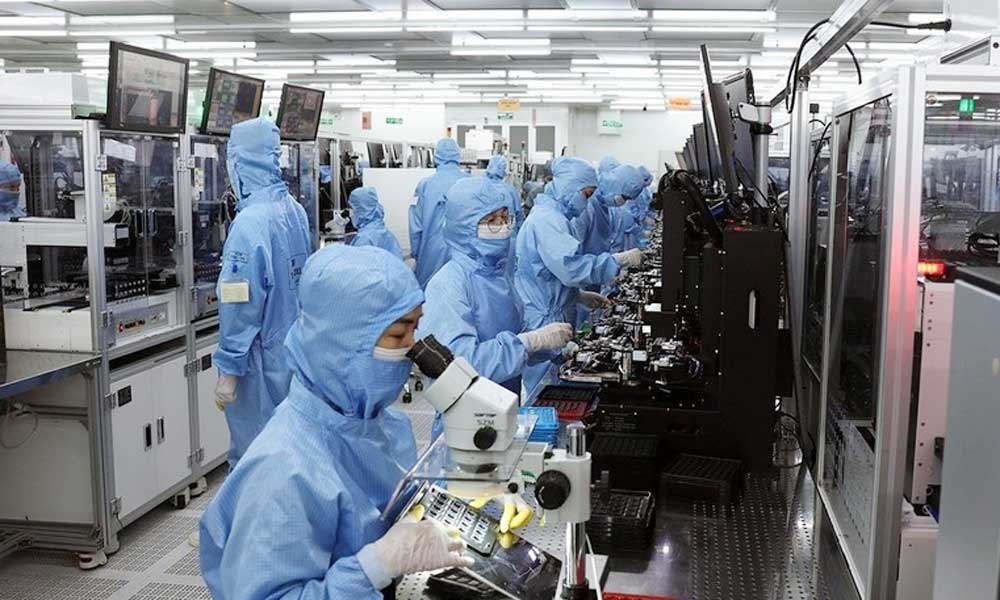
At THACO auto assembling factory. |
From 2021 to 2025, assistance reached more than 6,400 enterprises in adopting productivity and quality enhancement solutions, while 102 pilot models were rolled out, hitting targets five years ahead of schedule.
These outcomes provide a strong base for the 2026-2030 stage, which will focus on digital transformation, environmental, social and governance (ESG) criteria, automation, artificial intelligence, talent development and global partnerships to drive sustainable expansion.
Pilot models proliferate under supportive policies
Nguyen Nam Hai, Chairman of the Commission for Standards, Metrology and Quality of Vietnam (STAMEQ), highlighted how the Politburo's Resolution No. 57-NQ/TW on breakthroughs in sci-tech, innovation and digital transformation, along with the Directive of the Party Central Committee’s Secretariat on advancing national standards, metrology and quality through 2030 and beyond, created vital policy momentum, enabling the formation of 102 pilot productivity–quality models.
He noted that the pilot models adopted solutions in standards, technical regulations, management systems, and productivity tools, boosting total factor productivity's role in growth while elevating overall economic efficiency, quality and competitiveness.
In addition, over 1,700 new Vietnamese national standards were issued during 2021-2025, raising the total to 14,306 with a 63% harmonisation rate to international and regional benchmarks, largely aligning with national goals.
Nguyen Tung Lam, Director of the Vietnam Productivity Institute, said the programme has built capacity for conformity assessment bodies.
Notably, the Conformity Certification Centre received accreditation from the Italian Accreditation Body on December 16, 2024, confirming its ability to certify organic products under the EU's EN/ISO/IEC 17065:2012 standard.
Going forward, the centre plans to secure international accreditation for the FSSC 22000 organic standard, aiding Vietnamese firms in exporting organic farm produce to the US and EU markets and substantially fulfilling the programme’s goals.
Focus shifts to scaling pilots, AI-driven productivity gains
STAMEQ Vice Chairman Tran Hau Ngoc called on ministries, agencies, and localities to issue detailed schemes and action plans for the 2026–2030 period.
Alongside expanding pilot models, efforts will ramp up training, evaluation and certification of domestic and international productivity experts, targeting the programme's overall 2021-2030 goal of certifying 1,000 such specialists to support government bodies, localities and businesses, he added.
By late November, pilot deployments for productivity and quality improvements already met targets set for the full period through 2030.
In the 2026-2030 phase, however, the programme's standing body will work with ministries and localities to broaden pilots, disseminate proven models nationwide and sustain support so enterprises can replicate successes.
Ngo Quy Viet, head of the programme steering committee, said Vietnam must maintain its productivity and quality drive while placing stronger emphasis on urgent societal needs like safety, hygiene, green and circular economies.
Bolstering organisational and human resource capabilities is critical for coordinated, effective and lasting initiatives.
During 2026–2030, the STAMEQ, together with the programme’s standing body, will work closely with ministries, localities, research institutes, universities, and enterprises to review policies and legal frameworks under the Law on Science, Technology and Innovation.
This aims to reform business support toward more flexible, direct mechanisms centred on enterprises, prioritising small and medium-sized firms and leading companies while advancing standardisation, quality infrastructure, green growth, Halal standards, digital transformation, pilot dissemination and international cooperation to establish productivity and quality as key economic growth engines.







Reader's comments (0)