 Bắc Ninh


International financial centre development plan through 2035 approved
During the 2026-2030 period, Vietnam will work to complete a specialised legal and institutional framework, as well as governance, management and supervision mechanisms for the IFC in line with international standards, ensuring transparency, safety and efficiency.
Vietnam aims to develop its international financial centre into a major driver for mobilising, allocating and using effectively domestic and international financial resources, helping to promote rapid and sustainable growth, and gradually enhance the country’s position and role in regional and global financial networks, under a development plan through 2035.
 |
|
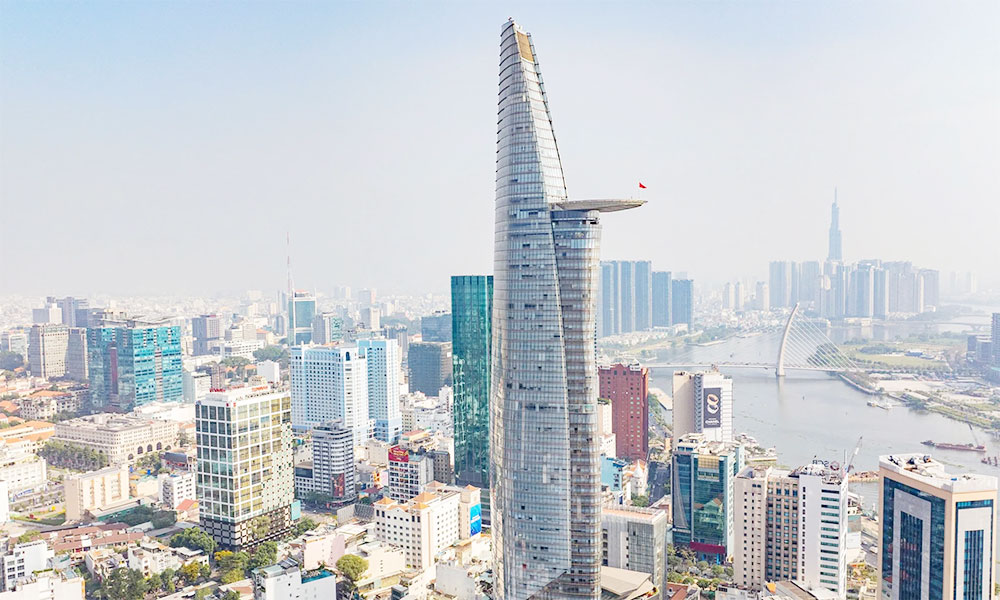
Bitexco Fiancial Tower in Ho Chi Minh City. |
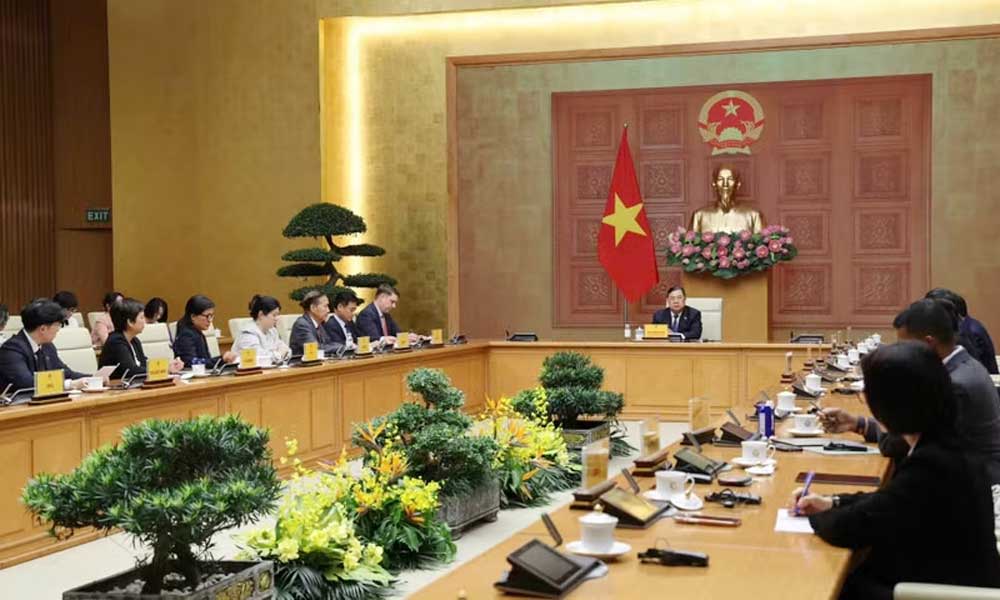
Deputy Prime Minister Nguyen Van Thang, Chairman of the Executive Council for the Vietnam International Financial Centre (IFC), signed a decision on July 22, approving the development plan for the centre through 2035.
During the 2026-2030 period, Vietnam will work to complete a specialised legal and institutional framework, as well as governance, management and supervision mechanisms for the IFC in line with international standards, ensuring transparency, safety and efficiency.
The country will pilot and initially operate priority financial products and services, while developing and putting into operation core financial, digital, social and legal infrastructure for the centre.
Efforts will also be made to attract major financial organisations and institutions, investment funds, international banks, professional market participants and high-quality financial personnel, laying a foundation for the centre’s sustainable development and integration in subsequent stages.
Vietnam aims to rank among the world's top 75 financial centres
During the 2031-2035 period, Vietnam aims to expand and complete a modern financial ecosystem encompassing capital markets, green finance, digital finance and fintech, while increasing the diversity, depth and connectivity of the IFC.
The country will strive to develop the centre into a hub connecting capital flows and establishing a clear position within the Asia-Pacific and global financial networks.
It also aims to rank among the world's top 75 financial centres, the Asia-Pacific region's top 25 and third in ASEAN in accordance with to the Global Financial Centres Index (GFCI) or an equivalent international index.
The plan sets out distinct development orientations for the IFC in Ho Chi Minh City and Da Nang city.
The IFC in Ho Chi Minh City is to develop a comprehensive and diverse financial ecosystem, focusing on developing capital markets; supplying traditional and specialised financial services; asset and fund management; green and digital finance; and commodity markets and commodity derivatives linked to international trade and logistics.
Meanwhile, the IFC in Da Nang city is to develop as an innovation- and fintech-based financial centre, concentrating on digital assets, digital payments and asset tokenisation.
It will also develop specialised platforms and exchanges; financial services linked to innovation and startups; trade finance, supply-chain finance and sustainable finance; and conduct controlled trials of technologies, products, services, and business models in the financial sector.
Incentive policies to create favourable environment for investors
The Executive Council will develop the IFC under a unified institutional, governance and supervisory framework, while promoting the comparative advantages of each locality and strengthening connectivity and complementarity.
Attention will be paid to improving a specialised and internationally competitive legal framework; expanding the institutional space for new financial technologies, products, services and business models; ensuring consistency, transparency and stability compatible with international practices and Vietnam’s conditions, while providing recognised dispute-settlement mechanisms and enforcement of international rulings to build investors' confidence.
Competitive incentive policies and favourable access to infrastructure will also be developed.
Administrative procedures will be standardised and digitised, processing time shortened and public services improved to create a favourable business environment for investors and members of the IFC.
The governance, management and supervision model will be streamlined and made more effective, with clear decentralisation while ensuring unified leadership and direction from the central level and promoting the initiative and creativity of localities.
The plan also calls for stronger macro- and micro-level supervision, accountability, periodic reporting and mid-term assessments, along with effective risk control and safe, transparent operations.
Developing financial ecosystem and high-quality workforce
Vietnam will develop diverse and deep financial and commodity markets, with quality, efficiency and international integration as key criteria.
It will selectively attract leading financial institutions, major intermediaries and investment funds from the region and the world to core market segments and key financial products.
The plan also seeks to link finance, technology, data and innovation; gradually integrate the IFC more deeply into global financial value chains; and synchronously develop high-quality financial, digital, data, transport and urban infrastructure to ensure domestic and international connectivity and safe, continuous operations.
Priority will be also given to developing a high-quality workforce for the centre through special visa, residency and remuneration policies to attract international financial, technological and legal experts.
It will also strengthen training and capacity building in policymaking, risk management and international integration, while developing interconnected training, research and practical ecosystems aligned with market needs.
Relevant agencies will further build the brand of the IFC and promote international integration through proactive cooperation with international financial centres, financial institutions, regulators and international standard-setting organisations, aiming to improve governance capacity, access international practices, and strengthen market connectivity.














Reader's comments (0)