 Bắc Ninh


Vietnam targets cashless payment value reaching 30 times GDP by 2030
Vietnam targets that by 2030, 95% of people aged 15 and above will have bank transaction accounts, while the value of cashless payments will reach 30 times GDP.
To help achieve the goal of maintaining average GDP growth of over 10% annually and increasing the value of cashless transactions to approximately 30 times GDP by 2030, the Government has identified cashless payments not only as a convenient tool but also as a key driver of digital finance development.
 |
|
Vietnam aims for cashless payment value of 30 times GDP by 2030. |
This was emphasised by Deputy Prime Minister Nguyen Van Thang at a seminar entitled “Smart Payments Drive Digital Finance,” jointly organised by the State Bank of Vietnam and Tuoi Tre (Youth) Newspaper in Ho Chi Minh City on June 6.
According to Deputy PM Thang, Vietnam has witnessed a revolution in consumer behaviour and cash-flow management across society.
What was once considered a novel payment option has now become an essential requirement of the economy and society, supporting the development of a comprehensive, modern, and secure financial ecosystem centred on serving citizens and businesses.
Within this ecosystem, cashless payments have become the lifeblood of the digital economy, connecting banks with sectors such as commerce, healthcare, education, transportation, tourism, public services, and other digital platforms.
“Digital data, digital identification, digital connectivity, and digital payments are gradually shaping a more modern, transparent, and convenient financial system for citizens and businesses. Digital payments are a crucial condition for accelerating money circulation, expanding access to financial services, improving management efficiency, and creating momentum for digital economic growth in the new era,” Thang stressed.
On May 25, 2026, the Prime Minister signed Decision No. 928/QD-TTg approving the National Financial Inclusion Strategy for the 2026–2030 period.
The strategy sets a number of important targets, including ensuring that by 2030, 95% of people aged 15 and above will have bank transaction accounts, while the value of cashless payments will reach 30 times GDP.
“According to statistics from the State Bank of Vietnam, by the end of 2025, 88.96% of citizens aged 15 and above had bank accounts. The value of cashless transactions in 2025 reached 28 times GDP. Therefore, the likelihood of achieving the targets set by the National Financial Inclusion Strategy for 2026–2030 is highly promising,” the Deputy PM stated.
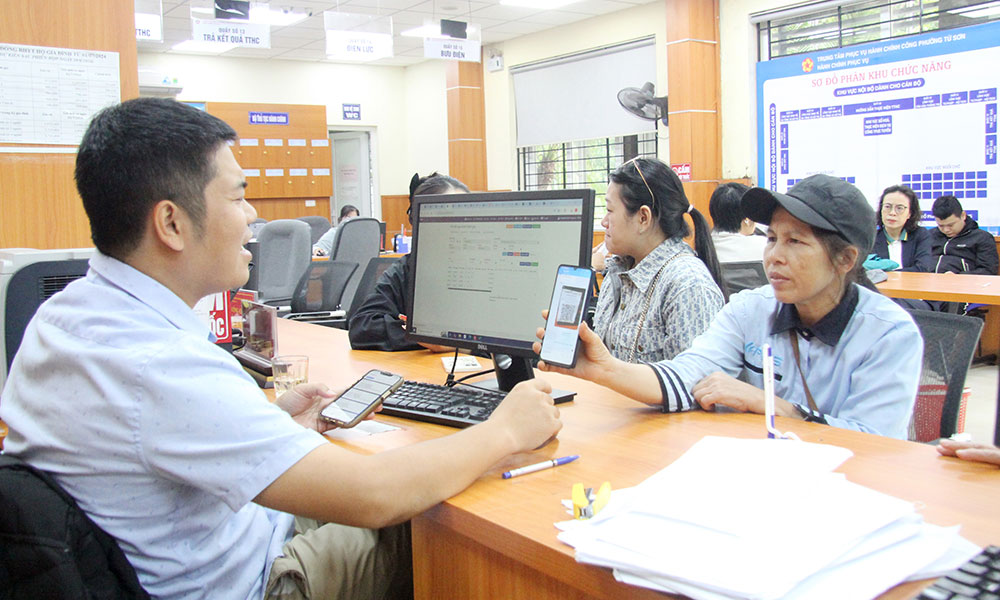
However, he also pointed out that the development of digital payments still faces significant challenges. These include disparities in access to cashless payment services between urban and rural areas, while some groups, particularly the elderly and low-income individuals, remain hesitant or have yet to gain access to modern payment methods.
At the same time, expanding payment infrastructure, enhancing interoperability, ensuring cybersecurity, and protecting personal data have become increasingly urgent requirements amid the growing complexity of high-tech crimes, he added.
To achieve the strategic goals, particularly the target of cashless payment value reaching 30 times GDP by 2030, Thang stated that the Government has instructed ministries, agencies, and local authorities to accelerate the completion of regulatory frameworks, policies, and technical standards that promote the application of digital technology in banking activities and strengthen connectivity among credit institutions, fintech companies, and financial service providers.
According to him, relevant agencies are also tasked with expanding digital financial and digital banking products, increasing access to services in rural and remote areas, promoting cashless payments across all aspects of social and economic life, and encouraging salary payments and transactions for goods and services through bank accounts.
In addition, efforts must be intensified to ensure information security, cybersecurity, personal data protection, consumer rights, and the development of shared digital financial infrastructure.
Furthermore, ministries and agencies have been assigned to promote electronic payments in public services, improve mechanisms for protecting users of digital financial services, and implement solutions to ensure that every citizen has access to a digital account.
Local authorities are expected to expand cashless payment adoption among household businesses and citizens, while banks and technology companies continue to innovate products, reduce costs, and improve service quality, he added.


.jpg)














.jpg)






































Reader's comments (0)