 Bắc Ninh


Bac Ninh to submit proposal for centrally governed city status
BAC NINH - Bac Ninh province is finalising a proposal to establish itself as a centrally governed city based on its current conditions, with submission to the Party Central Committee expected next week.
At a meeting on May 4 to discuss the plan, a representative of the Department of Home Affairs said Bac Ninh meets all statutory requirements.
 |
|
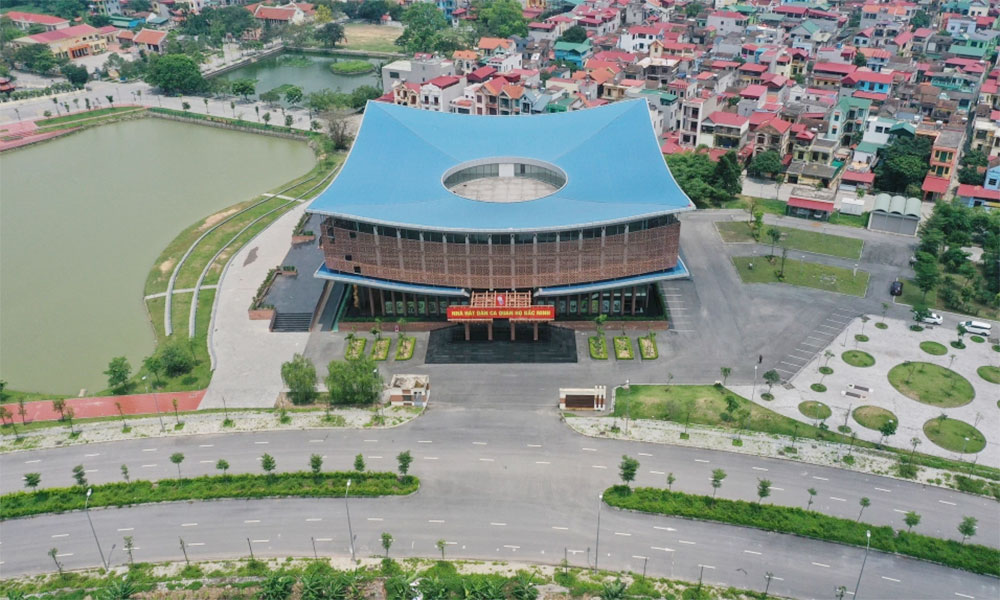
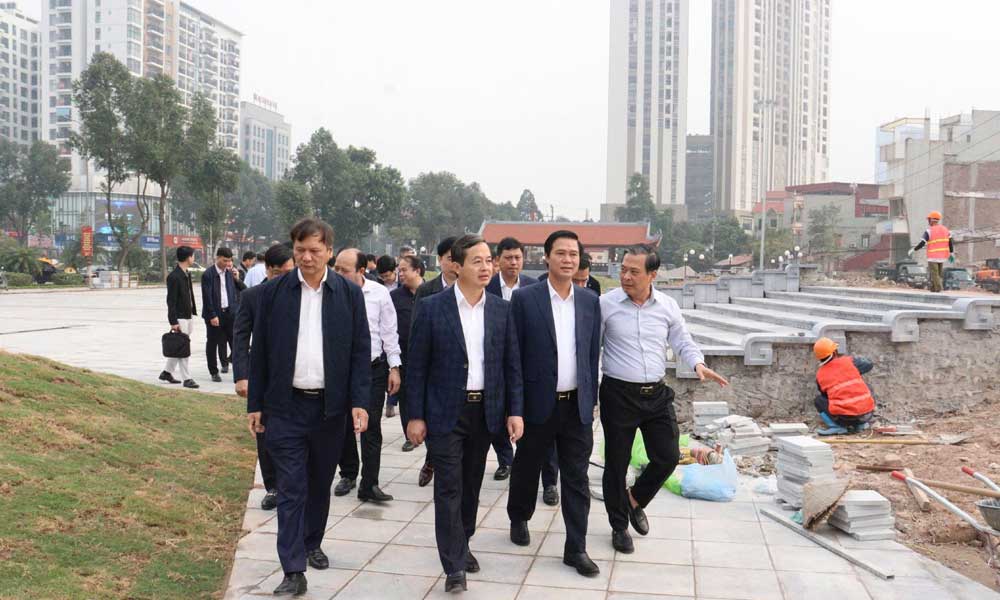
The campus of the Bac Ninh Quan Ho Theatre. |
Specifically, the locality satisfies all seven criteria for centrally governed cities set by the National Assembly Standing Committee, including a projected area of 4,700 sq.km, a population of around 4 million, an urbanisation rate exceeding 55%, a ward ratio of 33%, along with benchmarks on economic structure and socio-economic development.
Regarding Grade I urban standards, Bac Ninh has met 13 out of 15 criteria, with the remaining two - relating to the proportion of wards meeting Grade II urban standards and new-style rural development, still being completed.
The province plans to establish 13 additional wards from existing communes, raising the total number of commune-level administrative units to 99, including 46 wards and 43 communes.
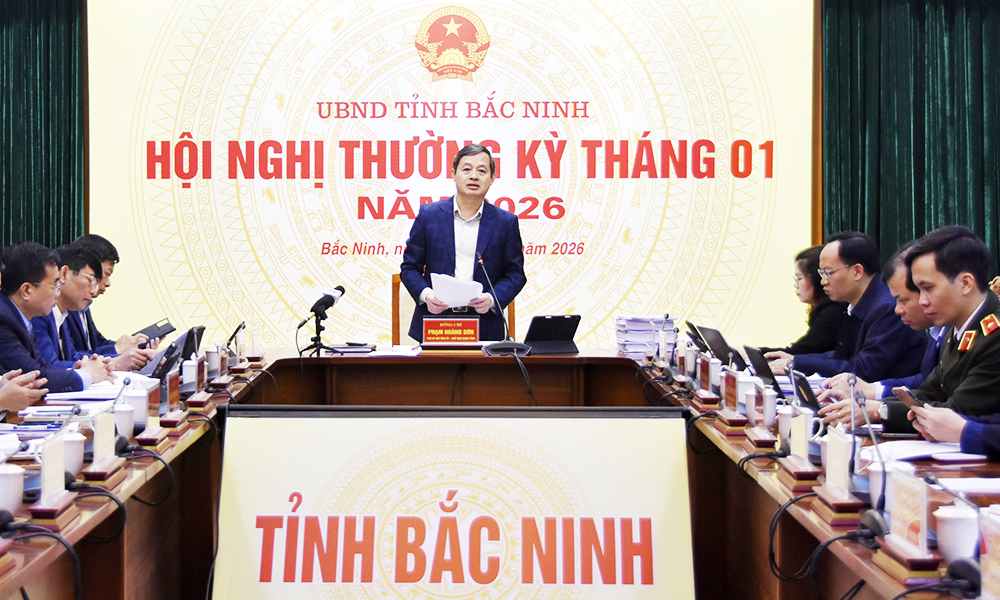
Standing Vice Chairman of the provincial People’s Committee Mai Son urged departments and agencies to expedite the completion of documentation, suggesting the engagement of professional consultants to improve the quality of the dossier.
The report is expected to be finalised for submission to the Party Central Committee next week.
Chairman of the provincial People’s Committee Pham Hoang Son said that if the proposal gains approval in principle, Bac Ninh will become the eighth centrally governed city in Vietnam.
Following its merger with Bac Giang in mid-2025, Bac Ninh’s new administrative centre is located in Bac Giang ward, about 50 km from central Hanoi.
The province borders Lang Son, Thai Nguyen, Hanoi, Hai Phong, Hung Yen and Quang Ninh, and lies along key economic corridors including Kunming–Lao Cai–Hanoi–Hai Phong–Quang Ninh and Nanning–Lang Son–Hanoi–Hai Phong–Quang Ninh.
In recent years, Bac Ninh has emerged as a major industrial hub, with a modern network of industrial parks and clusters attracting numerous multinational corporations, particularly in electronics, high technology and component manufacturing.
In 2025, the province’s GRDP grew by 10.27%, ranking fifth among 34 localities. Industry accounted for around 70% of value added, while construction made up 11%.
Bac Ninh attracted approximately 5.73 billion USD in foreign direct investment, ranking second nationwide after Ho Chi Minh City. More than 7,600 new enterprises were established during the past year, bringing the total number of active firms to nearly 50,000.
The Resolution of the provincial Party Congress for the 2025–2030 term sets a target for Bac Ninh to become a centrally governed city before 2030, and by 2045 to develop into a green, civilised urban area imbued with the cultural identity of Kinh Bac.
For the 2026–2030 period, the province aims to sustain annual GRDP growth of 11–12%, with per capita GRDP reaching 8,700–9,200 USD.
Vietnam currently has seven centrally governed cities: Hanoi, Ho Chi Minh City, Hai Phong, Hue, Da Nang, Can Tho and Dong Nai.
Under a 2024 decision by the Prime Minister, provinces oriented to become centrally governed cities by 2030 include Quang Ninh, Khanh Hoa, Bac Ninh and Ninh Binh.










.jpg)



















Reader's comments (0)